Pour-over · 7 min read
What Is Pour Over Coffee? A Clear Guide
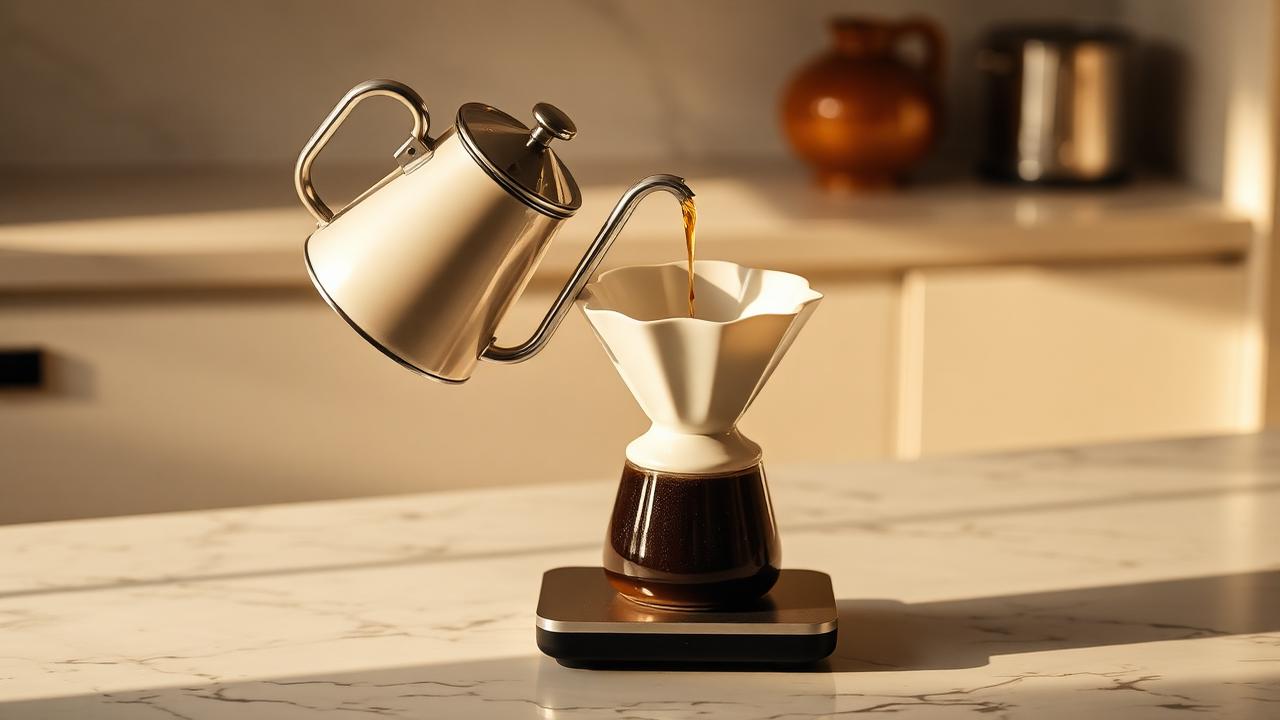
Short answer
Pour over coffee is a manual brewing method in which hot water is poured gradually over ground coffee held in a paper, cloth or metal filter. Water passes through the coffee by gravity, producing a clean, aromatic cup with control over grind size, water temperature, pouring speed and brew time.
Key takeaways
- Pour over uses gravity and a filter to brew coffee manually.
- Paper filters create a particularly clean, bright cup.
- A reliable starting ratio is 15 g coffee to 250 ml water.
- Most pour overs brew best in about 2 minutes 30 seconds to 3 minutes 30 seconds.
- Grind size, water temperature and pouring pace all affect flavour.
What is pour over coffee?
Pour over coffee is coffee brewed by hand with hot water, ground coffee and a filter. The brewer places coffee in a filter set inside a dripper, then pours water over the bed in measured stages. Gravity draws the brewed coffee through the filter and into a cup, server or carafe below. It is sometimes called filter coffee, although filter coffee is a wider category that also includes batch brewers and drip machines.
The defining feature of pour over is control. Rather than pressing a button and accepting a fixed recipe, the brewer chooses how much coffee to use, how finely to grind it, how hot the water should be and how quickly to pour. These choices change how much flavour is extracted from the coffee. A well-made pour over can taste clear, sweet and layered, revealing fruit, floral, chocolate or nut notes with unusual definition.
Pour over is not automatically stronger or weaker than espresso, French press or instant coffee. Strength depends mainly on the coffee-to-water ratio, while flavour character depends on extraction and filtration. Because most pour overs use paper filters, they remove much of the fine sediment and coffee oils that remain in a French press. The result is usually lighter-bodied but cleaner on the palate.
How does pour over coffee work?
Brewing begins when hot water meets roasted, ground coffee. Water dissolves flavour compounds from the grounds, including acids, sugars, aromatic compounds and, later in the process, more bitter and drying compounds. The goal is not to extract everything. Good brewing draws out enough sweetness and complexity without pulling excessive bitterness, harshness or astringency.
A pour over dripper controls the path water takes through the coffee bed. Its shape, ridges, holes and flow rate affect how long water stays in contact with the grounds. A V-shaped dripper such as a V60 encourages a deeper coffee bed and can reward careful pouring. A flat-bottom brewer such as a Kalita Wave often provides a more even, forgiving flow. Neither design is universally better; they simply present different brewing behaviour.
The filter has a major influence on the finished cup. Paper filters catch fine particles and absorb some oils, making the coffee look bright and taste clean. Metal filters allow more oils and very fine particles through, creating more body and texture. Cloth filters sit between the two, often giving a round, smooth cup, but they need thorough cleaning and careful storage.
What equipment do you need for pour over coffee?
You can make a basic pour over with a dripper, filter, fresh coffee, a kettle and a mug. However, a few additional tools make the process more repeatable. A digital scale matters more than an expensive dripper because it lets you measure coffee and water accurately. A burr grinder is also a worthwhile upgrade, as evenly ground coffee extracts more consistently than coffee crushed unevenly by a blade grinder.
A gooseneck kettle is useful because its narrow spout gives steady, precise control over where water lands. It is helpful, not compulsory. A normal kettle can work if you pour slowly and carefully. For temperature, use water just off the boil for most light and medium roasts. If you do not have a thermometer, allow boiled water to stand for roughly 30 to 60 seconds before brewing.
Choose filters designed for your brewer and rinse paper filters before adding coffee. Rinsing removes papery flavour, warms the dripper and vessel, and helps the filter sit flat. Use freshly roasted coffee where possible, ideally ground immediately before brewing. Coffee usually tastes most lively after it has rested for several days after roasting and before it becomes stale through long exposure to air.
- 01Dripper: V-shaped, flat-bottom or cone brewer
- 02Filter: paper, metal or cloth matched to the brewer
- 03Scale: accurate to at least 1 g
- 04Burr grinder: medium to medium-fine grinding range
- 05Kettle: ideally a gooseneck kettle
- 06Server or mug: warmed before brewing
What is a good pour over coffee recipe?
A dependable starting point for one serving is 15 g of coffee to 250 ml of water. This is a ratio of about 1:16.7, which produces a balanced cup for many coffees. For a stronger, fuller cup, try 15 g to 225 ml. For a lighter cup, try 15 g to 270 ml. It is best to change one variable at a time, otherwise it becomes difficult to understand why the flavour changed.
Start with a medium-fine grind, similar to fine sand but not as powdery as espresso. Use water at 92 to 96 °C for light and medium roasts. A darker roast often benefits from slightly cooler water, around 88 to 92 °C, because it extracts more readily. Aim for a total brew time around 2 minutes 30 seconds to 3 minutes 30 seconds, depending on brewer, dose and grind.
This recipe suits a single-cup cone brewer, but it is a foundation rather than a rule. The coffee itself matters. A dense, lightly roasted Kenyan or Ethiopian coffee may need hotter water or a slightly finer grind. A more developed chocolate-led coffee may taste better with a coarser grind or a shorter brew. Taste the cup, then adjust with purpose.
- 011. Rinse the filter with hot water and discard the rinse water.
- 022. Add 15 g freshly ground coffee and level the bed.
- 033. Start the timer and pour 45 ml water at 92 to 96 °C.
- 044. Let the coffee bloom for 30 to 45 seconds.
- 055. Pour slowly in circles until the scale reads 150 ml.
- 066. Continue pouring until you reach 250 ml total water by about 1 minute 30 seconds.
- 077. Let the coffee drain completely, aiming for a total time of 2 minutes 30 seconds to 3 minutes 30 seconds.
Why does the bloom matter in pour over brewing?
The bloom is the first small pour of water over dry coffee. During this stage, the coffee releases trapped carbon dioxide created during roasting. Fresh coffee can visibly swell, bubble and rise as gas escapes. Giving the grounds time to bloom helps later water reach the coffee more evenly, reducing the chance that gas pockets repel water and leave parts of the bed under-extracted.
For a 15 g dose, use roughly 30 to 45 ml water for the bloom. Ensure all grounds are wet, then wait 30 to 45 seconds before continuing. Very fresh coffee may benefit from a longer bloom of up to 60 seconds. Older coffee may show little activity, but it is still worth wetting the grounds evenly before the main pours.
Do not confuse a dramatic bloom with guaranteed quality. Bloom height depends on roast freshness, roast development, grind size and coffee density. A coffee can bloom enthusiastically and still be poorly brewed if the water is too cool, the grind is unsuitable or the pouring method creates uneven channels. The useful purpose of blooming is even saturation, not visual theatre.
How should you adjust pour over coffee when it tastes wrong?
If a pour over tastes sour, sharp, thin or salty, it is often under-extracted. The water has not dissolved enough sweetness and balance from the grounds. Try grinding slightly finer, using hotter water, extending the brew time or pouring more evenly. Make small changes: one or two clicks finer on a burr grinder, or a 2 °C increase in water temperature, is often enough to reveal whether you are moving in the right direction.
If the coffee tastes bitter, dry, rough or hollow, it may be over-extracted. In that case, grind slightly coarser, lower the water temperature or shorten the contact time. Excessive agitation can also contribute to uneven extraction, particularly with fine grinds. Avoid aggressive stirring or forceful pouring unless your recipe specifically calls for it.
A coffee can also taste weak without being under-extracted. Weakness usually means there is too much water for the amount of coffee, while under-extraction means the flavour itself is sharp and incomplete. To make a cup stronger, increase the coffee dose or reduce total water. To make it sweeter and more balanced, work first on grind, temperature and pouring consistency.
- 01Sour or sharp: grind finer, use hotter water or brew longer.
- 02Bitter or dry: grind coarser, use cooler water or brew faster.
- 03Weak but pleasant: use more coffee or less water.
- 04Muddy or slow-draining: grind coarser and reduce agitation.
- 05Uneven flavour: improve saturation during the bloom and pour steadily.
How is pour over different from drip coffee, French press and espresso?
Pour over and drip coffee both use gravity and filters, but pour over is made manually while drip coffee is usually produced by an automatic machine. A quality batch brewer can make excellent filter coffee, especially for several servings, but manual pouring offers more direct control over water flow and recipe choices. It is also easier to make one carefully tuned cup without brewing a full pot.
French press coffee is immersion brewed. The grounds sit in water for several minutes before a mesh plunger separates them from the liquid. It produces a heavier texture and more coffee oils than a paper-filter pour over. Espresso is made by forcing pressurised water through finely ground coffee in roughly 25 to 35 seconds. It is concentrated, intense and usually served in much smaller volumes.
Pour over is often the best method for drinkers who want to notice the character of a particular coffee. A washed Ethiopian may show jasmine-like aroma and citrus clarity, while a Colombian coffee may present red fruit, caramel and cocoa. At Capra Café, this is why pour over works especially well for rotating single-origin coffees: the brewing method leaves room for origin and processing to speak clearly.
Is pour over coffee worth the effort?
Pour over is worth the effort if you enjoy making coffee as a small daily ritual and want more influence over the final cup. The method takes roughly three to four minutes once water is hot, and the learning curve is manageable when you use a scale and repeat the same recipe. You do not need perfect pouring technique on day one; consistency matters more than elaborate movements.
It may be less suitable when speed, large quantities or total convenience are the priority. A good automatic brewer is easier for a busy household, while espresso may suit someone who mainly drinks milk-based coffee. Pour over is also less forgiving when measurements are guessed. Without a scale, a variable grinder or reasonably fresh coffee, the results can swing from excellent to disappointing.
The practical advantage is that pour over teaches you how coffee responds to brewing choices. Once you learn to recognise sourness, bitterness, strength and body, you can make better coffee with almost any method. Start with one simple recipe, use clean water and fresh grounds, then make only one adjustment after each brew. That approach produces reliable progress without turning breakfast into a laboratory.
Frequently asked questions
Is pour over coffee stronger than regular coffee?
Pour over coffee is not inherently stronger than regular coffee. Its strength depends on the coffee-to-water ratio. A common pour over recipe uses 15 g coffee to 250 ml water, but using more coffee or less water makes it stronger. Compared with espresso, pour over is less concentrated, though a full serving may contain a similar amount of coffee.
What grind size should I use for pour over coffee?
Use a medium-fine grind for most pour over brewers, similar to fine sand. If the coffee drains in under about 2 minutes 30 seconds and tastes sour or thin, grind finer. If it takes longer than about 3 minutes 30 seconds and tastes bitter or dry, grind coarser. The ideal setting varies with the brewer and coffee.
Can you make pour over coffee without a gooseneck kettle?
Yes, you can make pour over coffee without a gooseneck kettle. A standard kettle works if you pour slowly and avoid dumping water into one spot. A gooseneck kettle simply makes water flow easier to control, especially with V-shaped drippers. Use a steady, low stream and keep the coffee bed evenly wet for the most consistent result.
Why is my pour over coffee sour?
Sour pour over coffee is usually under-extracted, meaning the water did not dissolve enough sweetness and balance from the grounds. Try grinding slightly finer, raising water temperature to around 94 to 96 °C, or allowing a longer brew time. Also check that all grounds are saturated during the bloom and that water is not running quickly down the sides of the filter.
How long should pour over coffee take to brew?
Most single-cup pour overs take about 2 minutes 30 seconds to 3 minutes 30 seconds from the first pour to the final drip. This is a useful guide rather than a strict rule. Faster brews often need a finer grind, while very slow brews often need a coarser grind. Different drippers, filters and coffee doses naturally change the timing.
Keep reading
- Best Pour Over Technique for Sweetness
- How Many Grams of Coffee for Pour Over?
- How to Bloom Coffee and Why It Matters