Pour-over · 8 min read
Best Pour Over Technique for Sweetness
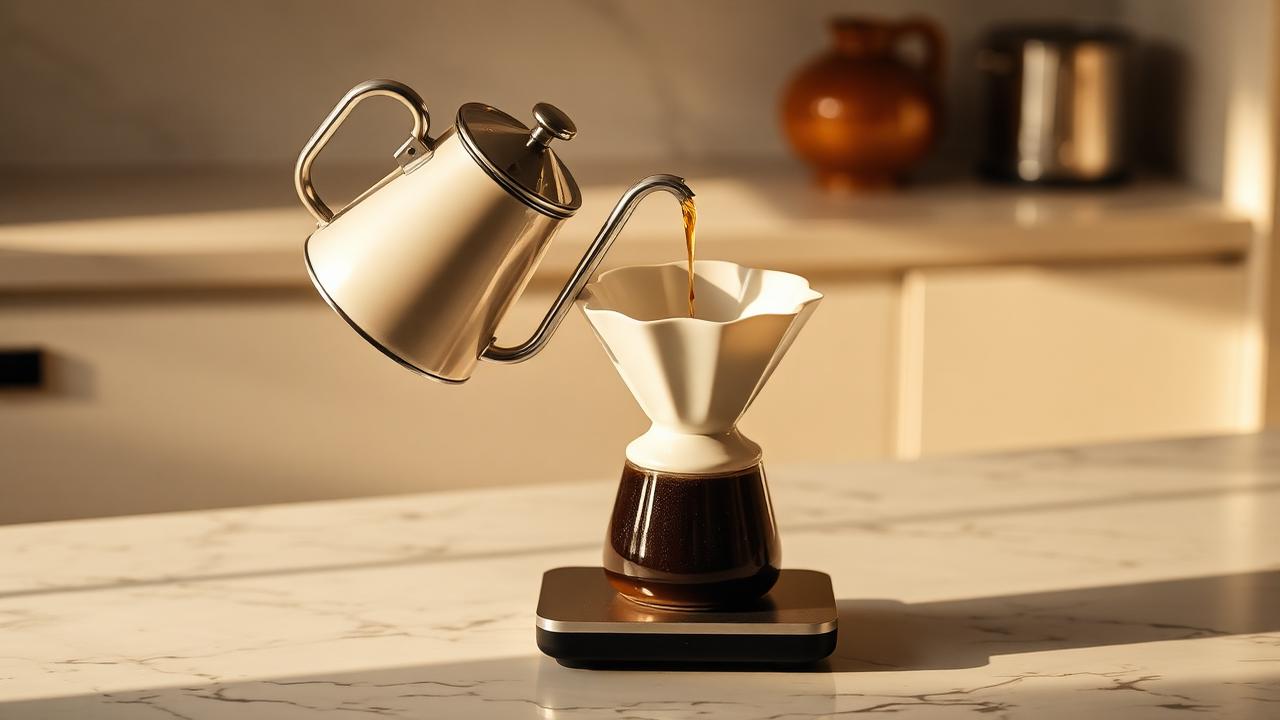
Short answer
The best pour over technique for sweetness uses fresh light-to-medium roast coffee, a 1:16 ratio, 93–95 °C water, a thorough 35–45 second bloom, and slow, gentle pulse pours that keep the slurry level stable. Grind medium-fine and aim for a 2:45–3:30 total brew time to extract sugars evenly without bitterness or dryness.
Key takeaways
- Start with a 1:16 coffee-to-water ratio for reliable sweetness.
- Use 93–95 °C water and a medium-fine, even grind.
- Bloom with two to three times the coffee weight for 35–45 seconds.
- Pour gently in controlled pulses to avoid channelling and harsh extraction.
- Adjust grind before changing ratio when sweetness is missing.
What is the best pour over technique for sweetness?
Sweetness in pour-over coffee comes from balanced extraction: enough water contact to dissolve sugars and rounded flavours, but not so much that bitterness and woody dryness take over. The most dependable approach is a controlled pulse-pour recipe with moderate water temperature, a full bloom and a stable brew bed. It works especially well for washed coffees with citrus, stone-fruit, caramel or floral notes, and for naturally processed coffees that can become heavy or fermenty when brewed too aggressively.
Use 20 g coffee and 320 g water, giving a 1:16 ratio. Begin with a 50–60 g bloom, wait 40 seconds, then add water in three gentle pulses until you reach 320 g. Keep the water level reasonably consistent rather than letting the bed run nearly dry between pours. Target a total drawdown of roughly 2 minutes 45 seconds to 3 minutes 30 seconds, depending on brewer, dose and coffee density.
The technique matters because fast, forceful pouring can disturb the coffee bed, drive fines towards the filter and create uneven pathways for water. That often produces a cup that is simultaneously sharp, bitter and hollow. Gentle, repeatable pulses help every particle receive a similar level of extraction, which is where perceived sweetness becomes clearer and more sustained.
- 01Coffee dose: 20 g
- 02Water weight: 320 g
- 03Ratio: 1:16
- 04Water temperature: 93–95 °C
- 05Bloom: 50–60 g for 35–45 seconds
- 06Target brew time: 2:45–3:30
Why does sweetness depend on even extraction?
Coffee contains acids, sugars, aromatic compounds and bitter compounds that dissolve at different stages of brewing. In a balanced pour-over, lively acidity appears alongside fruit sweetness, and the finish feels clean rather than dry. When extraction is too low, the cup can taste sour, salty, thin or sharply vegetal. When extraction is too high, it can taste bitter, papery, astringent or dull. Sweetness sits in the useful middle ground.
Even extraction is not only about total brew time. It depends on particle size, water temperature, pouring force, filter flow and how evenly water reaches the grounds. A coffee bed with dry patches or deep channels will contain under-extracted areas, while water travelling through a narrow route can overwork other areas. The result is less sweetness even if the final time looks correct on a timer.
For this reason, the best adjustment is often to simplify rather than add more agitation. Stirring aggressively, swirling repeatedly or pouring from too high above the brewer can make a recipe feel active, but it can also create a muddy bed and a slow, astringent drawdown. Aim for calm, deliberate movement and evaluate the taste before changing several variables at once.
Which coffee, roast level and water work best for a sweet cup?
Choose coffee that has an inherent sweet profile. Look for flavour descriptions such as brown sugar, honey, chocolate, ripe berry, peach, apricot, red apple, nougat or caramel. A light-to-medium roast is usually the best starting point for pour-over sweetness because it retains origin character while remaining soluble enough for home brewing. Very light roasts may need hotter water or a finer grind, while darker roasts can taste sweet at first but quickly become bitter if over-extracted.
Freshness matters, but coffee does not need to be brewed immediately after roasting. Most filter coffees become easier to brew after about 7 to 21 days of rest, although the ideal resting period varies by roast and processing method. Coffee that is extremely fresh releases a great deal of carbon dioxide during the bloom, which can interfere with even saturation. Older coffee may taste flatter and lose aromatic sweetness.
Use clean, filtered water with no strong chlorine smell or heavy mineral taste. Water that is very hard can mute acidity and create a chalky, heavy cup; water that is too soft can make the coffee seem thin or sour. If your tap water is inconsistent, a trusted brewing-water recipe or suitable filter can make your sweetness-focused recipe far more repeatable. At Capra Café, we treat water as a core brewing ingredient rather than an afterthought.
What grind size gives the sweetest pour over?
For most cone brewers, start at a medium-fine grind: finer than coarse sea salt, but not powdery. The grounds should look relatively uniform, with enough resistance to slow the brew without causing a stalled drawdown. Flat-bottom brewers usually tolerate a slightly coarser setting because they tend to retain water differently and have a wider bed. There is no universal grinder number, so use time and taste rather than copying a setting from another machine.
If the cup is sour, sharp, watery or short-lived, grind a little finer. This increases surface area and slows water movement, allowing more sweetness to dissolve. Change only a small increment at a time, especially with a capable burr grinder. A large adjustment can turn a bright, under-extracted brew into a bitter one before you have identified the useful middle point.
If the coffee tastes dry, bitter, rough or overly dark, grind a little coarser. Also inspect the spent bed after brewing. A deeply cratered bed can suggest channelling, while a thick layer of fines stuck high on the filter may explain a slow drawdown. Do not judge a brew solely by the bed, but use it as a clue alongside flavour, brew time and the way water moved through the coffee.
How should you bloom coffee for more sweetness?
A proper bloom prepares the coffee bed for even extraction. Pour two to three times the dry coffee weight in water, ensuring every part of the grounds is wet. For a 20 g dose, use 50–60 g water. Start your timer as the water first touches the coffee, then give the brewer a gentle swirl or use a spoon to wet any visible dry pockets. The aim is saturation, not vigorous mixing.
Allow the bloom to last 35–45 seconds for most filter coffees. A very fresh coffee may benefit from 50–60 seconds because it releases more gas, while a coffee that has rested longer may be ready after 30–35 seconds. During this stage, carbon dioxide escapes from the grounds. If it remains trapped, it can repel incoming water and leave parts of the bed under-extracted, reducing sweetness and clarity.
Avoid treating the bloom as a fixed ritual that must look dramatic. Some coffees rise high and bubble actively; others remain quieter. What matters is that the bed is evenly wetted and that the first main pour does not strike dry coffee. A well-executed bloom often makes the later drawdown smoother, with fewer sudden channels and a more balanced final cup.
- 01For 20 g coffee, add 50–60 g water.
- 02Pour in 8–12 seconds, covering the full bed.
- 03Swirl once gently or stir only to remove dry pockets.
- 04Wait until 35–45 seconds before the first main pour.
- 05Use 50–60 seconds for unusually fresh coffee if needed.
What pouring pattern produces the most sweetness?
A low, gentle pulse-pour pattern is usually the most forgiving way to highlight sweetness. Keep the kettle spout close to the slurry, around 2–4 cm above the surface, and pour in slow circles from the centre towards the edge, then back towards the centre. Avoid repeatedly pouring directly onto the paper filter, as this can allow water to bypass the coffee and reduce extraction.
For the 20 g to 320 g recipe, pour from 60 g to 150 g after the bloom, then from 150 g to 235 g, then from 235 g to 320 g. Begin the next pulse when the water level has dropped noticeably but before the coffee bed is exposed. This maintains a stable temperature and water pressure while avoiding long pauses that can create uneven extraction.
Keep the pour rate calm, roughly 4–6 g per second if you are using a scale and want a reference point. A rapid stream can dig into the bed and migrate fine particles towards the filter. That may lengthen drawdown and introduce a drying finish. After your final pour, one small, controlled swirl can level the bed. Do not spin the brewer hard; the goal is a flat, even bed, not turbulence.
- 010:00: Add 50–60 g water for the bloom.
- 020:40: Pour to 150 g total.
- 031:05: Pour to 235 g total.
- 041:30: Pour to 320 g total.
- 052:45–3:30: Aim for the final drips to finish in this range.
How do water temperature and ratio change perceived sweetness?
For a sweetness-led pour-over, begin with water at 93–95 °C. This range has enough energy to dissolve sugars and deepen the cup without pushing many light-to-medium roasts into bitterness. If you do not have a temperature-controlled kettle, bring water to the boil and leave it uncovered for around 45–90 seconds, depending on kettle size, room temperature and starting water temperature. A thermometer is still the more reliable option.
Lower temperatures, around 90–92 °C, can work well with darker roasts or coffees that become bitter easily. However, they may leave light roasts tasting sharp and underdeveloped unless the grind is made finer or contact time increases. Higher temperatures, around 96–98 °C, can help dense, very light roasted coffees open up, but use them carefully. If bitterness appears, lower the temperature before making dramatic changes to the recipe.
A 1:16 ratio is a useful central point because it delivers enough concentration to perceive sweetness while retaining clarity. A tighter ratio such as 1:15 can taste richer and more syrupy, but may make acidity or roast character feel more intense. A longer ratio such as 1:17 can reveal delicate florals, yet it can become tea-like if extraction is not increased. Change ratio for strength; change grind primarily for extraction.
How do you troubleshoot a pour over that is not sweet?
If your coffee is sour and thin, it is likely under-extracted. First, grind slightly finer and keep the same ratio. If it still lacks sweetness, raise water temperature by 1–2 °C or extend the bloom slightly for very fresh coffee. Confirm that your pours are reaching all of the grounds. Under-extraction is often caused by uneven wetting rather than simply a brew that is too fast.
If your coffee is bitter, dry or harsh, coarsen the grind slightly and reduce agitation. Pour lower and more gently, and avoid extra stirring or swirling. Check whether your drawdown is running well beyond the target window. A slow finish can result from an overly fine grind, too many fines from a poor grinder, excessive movement of the slurry or a filter that is becoming clogged.
If the coffee tastes balanced but merely lacks intensity, adjust the ratio rather than immediately changing grind. Try 20 g coffee to 300 g water for a 1:15 ratio. If it tastes heavy or obscures delicate sweetness, return to 320 g water or try 340 g for 1:17. Keep a simple log of coffee dose, water, temperature, grind change, total time and flavour. One well-recorded adjustment is more valuable than several guesses.
- 01Sour or thin: grind finer, improve saturation, or raise temperature slightly.
- 02Bitter or dry: grind coarser and reduce agitation.
- 03Weak but balanced: use less water, such as 20 g coffee to 300 g water.
- 04Heavy or intense: use more water, such as 20 g coffee to 340 g water.
- 05Inconsistent cups: weigh every dose and every pour, then change one variable at a time.
How can you make this sweet pour over recipe repeatable?
Repeatability begins with weighing coffee and water. Measuring by scoops makes it difficult to know whether a disappointing cup came from the recipe or the dose. Use a scale accurate to 0.1 g if possible, a burr grinder, a timer and a kettle with a narrow spout. Rinse the paper filter thoroughly with hot water before brewing, then discard the rinse water. This removes papery flavours and preheats the brewer and server.
Keep your setup consistent. Use the same brewer, filter type, water source and serving vessel while learning a coffee. Filter papers can alter flow rate, and a change from one dripper to another can require a new grind setting. Preheat a ceramic brewer and carafe so the slurry does not lose heat quickly, especially in cooler rooms or when making a small dose.
Taste the coffee as it cools. A pour-over that seems bright when very hot may become distinctly sweeter around 55–65 °C, when flavours are easier to separate. If sweetness only appears after the cup is cool, your extraction may still be slightly low. If bitterness grows as it cools, reduce extraction or agitation on the next brew. Good brewing is an iterative practice, built through attention rather than complexity.
Frequently asked questions
What is the best coffee-to-water ratio for a sweet pour over?
Start with a 1:16 ratio, such as 20 g coffee to 320 g water. It gives a balanced cup with enough concentration to perceive caramel, fruit and sugar-like notes clearly. Use 1:15 for more body and intensity, or 1:17 for a lighter cup. Adjust grind first when flavour is sour or bitter; adjust ratio when the cup is simply too weak or too strong.
Should I use hotter water to make pour-over coffee sweeter?
Usually, use 93–95 °C water for a sweet light-to-medium roast pour-over. Hotter water can improve extraction from very light, dense coffees, but it can also bring bitterness and dryness if the grind is already fine or the brew runs slowly. If a coffee tastes sour, raise temperature by 1–2 °C. If it tastes bitter, lower it slightly before changing several other variables.
Why does my pour-over taste sour instead of sweet?
A sour pour-over is commonly under-extracted. The grind may be too coarse, water may be too cool, the bloom may have left dry pockets, or water may be channelling through the bed. Start by grinding slightly finer while keeping your 1:16 ratio unchanged. Then make sure the bloom fully wets the coffee and use gentle pulse pours that cover the entire bed.
Is a single pour or pulse pouring better for sweetness?
Gentle pulse pouring is generally better for sweetness because it gives more control over water level, temperature and agitation. Three pulses after the bloom are an effective starting point for a 20 g dose. A single continuous pour can also work, especially with a steady hand and a forgiving brewer, but it is easier to pour too fast or disturb the coffee bed unevenly.
How long should a sweet pour-over take to brew?
For 20 g coffee and 320 g water, aim for a total brew time of about 2 minutes 45 seconds to 3 minutes 30 seconds. This is a guide, not a rule: different brewers, filters and coffees flow differently. If the cup is sour and finishes very quickly, grind finer. If it is bitter, dry and runs very slowly, grind coarser or reduce agitation.
Keep reading
- How Many Grams of Coffee for Pour Over?
- How to Bloom Coffee and Why It Matters
- How to Make Pour Over Coffee for Two