Pour-over · 7 min read
How Many Grams of Coffee for Pour Over?
Short answer
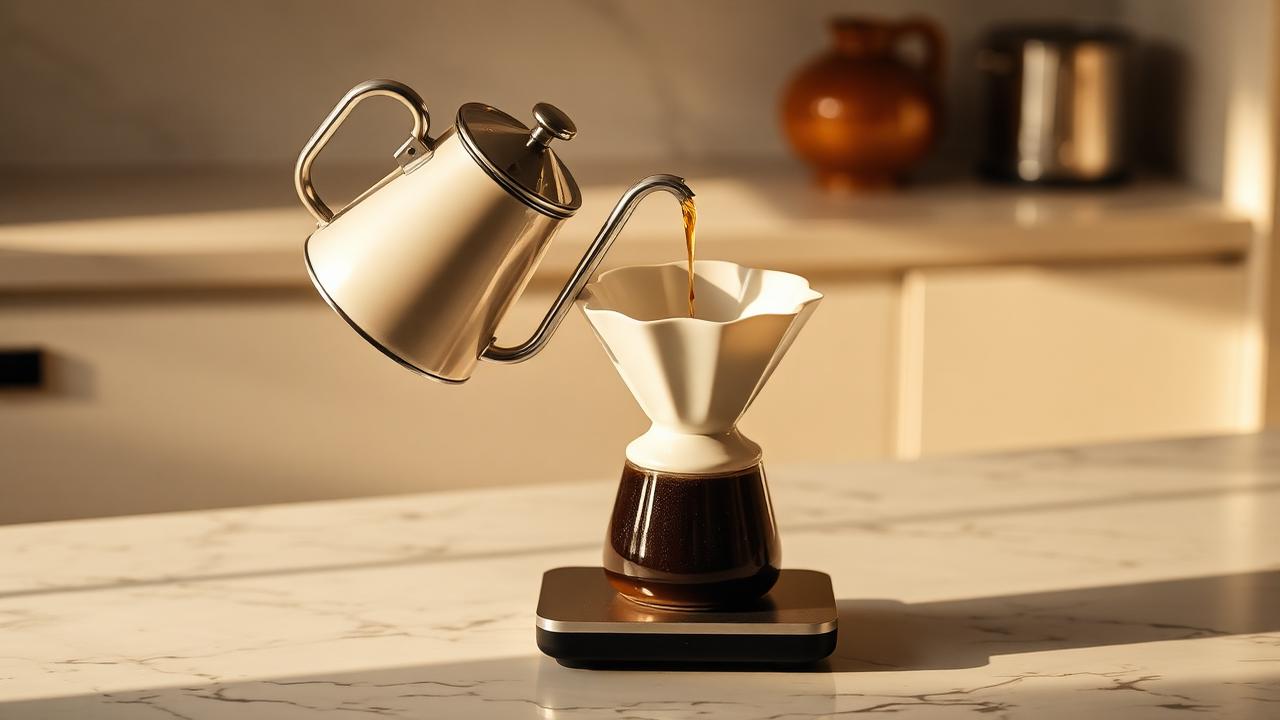
For a standard 250 ml pour over, use 15 to 18 g of coffee. A dependable starting point is a 1:16 coffee-to-water ratio: 15 g coffee to 240 ml water, or 18 g to 288 ml. Grind medium-fine, use water at 92 to 96 °C, and aim for a total brew time of 2 minutes 30 seconds to 3 minutes 30 seconds.
Key takeaways
- Start with a 1:16 coffee-to-water ratio for balanced pour over.
- Use 15 g coffee for 240 ml water or 18 g for 288 ml water.
- Measure coffee and water with a digital scale rather than spoons.
- Use medium-fine grounds and water between 92 and 96 °C.
- Change the ratio before changing many other variables at once.
How many grams of coffee should you use for pour over?
Most pour-over brewers work well with 15 to 18 g of coffee for one regular cup. That amount usually pairs with 240 to 300 ml of water, depending on how strong you like the finished drink. For an easy, balanced starting point, use 15 g of coffee and 240 ml of water. This is close to a 1:16 ratio, meaning one part coffee to 16 parts water by weight.
If you prefer a fuller, more concentrated cup, use a 1:15 ratio. For example, 20 g of coffee needs 300 ml of water. If you want a lighter cup with more yield, try 1:17, such as 15 g of coffee with 255 ml of water. The best amount is not a fixed number; it is a repeatable ratio matched to your brewer, coffee and preferred strength.
Coffee dose and extraction are different things. Adding more coffee makes a stronger drink if the water amount stays the same, but it can also alter flow through the coffee bed. A good dose should leave enough depth in the brewer for even water distribution. Very small doses can be difficult in larger drippers because the bed is too shallow, while oversized doses can stall or channel.
- 01Small cup: 12 g coffee to 200 ml water
- 02Standard cup: 15 g coffee to 240 ml water
- 03Larger mug: 18 g coffee to 288 ml water
- 04Two cups: 30 g coffee to 480 ml water
- 05Strong two-cup brew: 32 g coffee to 480 ml water
What is the best coffee-to-water ratio for pour over?
A 1:16 ratio is the most useful place to begin for pour over. It gives enough water to show sweetness, acidity and aroma without making the cup thin. In practical terms, divide your water weight by 16 to find the coffee dose, or multiply your coffee dose by 16 to find the water weight. For 300 ml of water, use about 19 g of coffee; 18.75 g is exact, but 19 g is easier to weigh and repeat.
A 1:15 ratio generally tastes stronger and more intense. It can suit naturally processed coffees, milk-free drinkers who enjoy body, or recipes where you want a shorter final beverage. A 1:17 ratio is more diluted, but not necessarily weak. With a well-extracted light roast, it can produce a clean, delicate cup with more floral detail. The correct ratio is the one that tastes balanced to you, not the one with the most precise-looking number.
Keep ratio separate from grind size and brew time. When a cup tastes too strong but otherwise balanced, add water or use a higher ratio. When it tastes weak but pleasant, lower the ratio. If the cup tastes sour, sharp or underdeveloped, changing the ratio alone may not solve it; you may need a finer grind, hotter water, more agitation or a longer brew time.
- 011:15: stronger and fuller, 20 g coffee to 300 ml water
- 021:16: balanced everyday starting point, 18 g coffee to 288 ml water
- 031:17: lighter and more delicate, 18 g coffee to 306 ml water
- 041:18: tea-like and high-yield, 15 g coffee to 270 ml water
How do you calculate grams of coffee from water volume?
For brewed coffee, 1 ml of water weighs almost exactly 1 g, so you can treat millilitres and grams as interchangeable for recipe calculations. To calculate coffee dose, divide water by your chosen ratio. For a 1:16 recipe with 250 ml water, 250 divided by 16 equals 15.6 g. You can use 15.5 g if your scale allows it, or round to 16 g and use 256 ml of water for a neat recipe.
To calculate water from coffee dose, multiply the coffee weight by the ratio. If you have 22 g of coffee and want a 1:16 brew, use 352 ml of water. This calculation is especially helpful when brewing for two people or when working with a dripper that has a practical capacity. It also prevents the common habit of using a random scoop and then trying to judge water by eye.
A scale is more useful than a measuring spoon because coffee bean size and roast density change the volume of a scoop. A tablespoon of dense light-roasted coffee does not weigh the same as a tablespoon of larger, darker-roasted beans. Weighing the dose and water lets you make one deliberate adjustment at a time, which is how you learn what your coffee needs.
- 01Coffee dose = water weight divided by ratio
- 02Water weight = coffee dose multiplied by ratio
- 03250 ml water at 1:16 = 15.6 g coffee
- 04350 ml water at 1:16 = 21.9 g coffee
- 0525 g coffee at 1:15 = 375 ml water
What is a reliable pour-over recipe for one cup?
This recipe works as a dependable foundation for a V60-style cone, Kalita Wave or similar single-cup dripper. Use freshly roasted coffee that has rested for at least several days after roasting, ideally grind immediately before brewing, and use filtered water if your tap water tastes heavily chlorinated or mineral-heavy. The target is a cup with clear sweetness, moderate body and enough extraction to avoid a sour finish.
Paper preparation matters because a dry paper filter can add a papery taste and cool the brewer. Place the filter in the dripper, rinse it thoroughly with hot water, then discard the rinse water before adding coffee. Level the coffee bed with a gentle shake. Start the timer as soon as the first bloom water touches the grounds, and pour steadily rather than in a single fast stream.
The recipe is designed to finish around 3 minutes, but a difference of 20 to 30 seconds is normal across grinders and coffees. Focus first on taste. A brew that runs quickly and tastes salty, sour or thin usually needs a finer grind. A brew that takes much longer and tastes dry, bitter or harsh usually needs a coarser grind. Adjust one small grinder step at a time.
- 01Coffee: 18 g, medium-fine grind
- 02Water: 288 ml at 94 °C
- 030:00 to 0:30: pour 45 ml for the bloom
- 040:30 to 1:15: pour steadily to 170 ml
- 051:15 to 1:50: pour steadily to 288 ml
- 06Target total brew time: 2 minutes 45 seconds to 3 minutes 30 seconds
Should you use more coffee for a stronger pour over?
Use more coffee when you want a stronger beverage, but decide whether you want more concentration or more extraction. For concentration, increase the dose while keeping water constant. Moving from 15 g to 17 g coffee with 240 ml water changes the ratio from 1:16 to about 1:14. This gives a heavier, more intense cup, but it may also slow the drawdown because the coffee bed is deeper.
Another option is to brew at your normal ratio and add less water after brewing, or use bypass water carefully if the cup is over-intense but well extracted. For example, brew 18 g coffee with 270 ml water, then add 20 to 30 ml hot water to taste. This approach can preserve extraction while letting you set final strength. It is particularly useful when a coffee tastes good but feels too dense.
Do not simply increase coffee indefinitely. A very high dose in a small dripper can create uneven flow, with some grounds over-extracted and others under-extracted. The result can taste both sour and bitter. If you need a significantly stronger drink, choose a smaller water dose, brew a concentrated pour over, or make two separate brews rather than overfilling the filter.
- 01For a stronger 240 ml brew, try 17 g coffee at 1:14
- 02For a balanced 240 ml brew, use 15 g coffee at 1:16
- 03For a lighter 240 ml brew, use 14 g coffee at about 1:17
- 04Change coffee dose by 1 to 2 g before making larger adjustments
Does the pour-over brewer change the coffee dose?
The basic ratio remains useful across pour-over devices, but brewer shape affects the most practical dose. Cone brewers such as the V60 tend to work well with 15 to 25 g doses for single servings, because the coffee bed can be deep enough to support controlled flow. Flat-bottom brewers such as the Kalita Wave often give a more even bed and can be forgiving at moderate doses, especially around 18 to 25 g.
Small immersion-assisted brewers, including the Clever Dripper and some steep-and-release devices, may tolerate different grind settings and contact times, but the same 1:15 to 1:17 range is still useful. For large batch brewers, a dose below about 30 g can be too shallow, depending on the basket size. In that case, brew a smaller batch with a smaller brewer or use enough coffee to create a stable, even bed.
Filter material also changes how a recipe behaves. Thick paper filters generally produce cleaner cups and can slow drawdown, while thinner papers may run faster and allow more body. Metal filters let more oils and fine particles into the cup, which increases texture but can reduce clarity. When changing brewer or filter, begin with your familiar ratio and adjust grind size before abandoning the dose.
- 01V60-style cone: commonly 15 to 25 g for one or two cups
- 02Kalita Wave-style flat bed: commonly 18 to 25 g
- 03Large dripper: commonly 30 to 45 g for 500 to 750 ml
- 04Metal filter: often needs a slightly coarser grind than paper
How do roast level and freshness affect coffee grams?
Roast level does not require a completely different coffee dose, but it changes the way you should extract that dose. Light roasts are denser and often benefit from hotter water, usually 94 to 96 °C, and a slightly finer grind. Medium roasts are usually comfortable around 92 to 95 °C. Dark roasts extract more readily and can taste bitter when brewed too hot, so 88 to 92 °C and a slightly coarser grind may be more suitable.
Keep the dose stable when comparing coffees. If you switch from a medium roast to a light roast, begin with the same 1:16 ratio rather than changing dose, temperature and grind together. Taste the result, then adjust the grind finer if the coffee is tart or hollow. This gives you a clearer understanding of whether the coffee needs more extraction rather than simply more grounds.
Freshness matters too. Coffee releases carbon dioxide after roasting, and very fresh coffee can bloom dramatically and resist water penetration. If a coffee is only a day or two off roast, it may brew unevenly even with a sound recipe. Most filter coffees become easier to dial in after several days. Store beans sealed, away from heat and direct light, and grind only what you need.
- 01Light roast: start at 94 to 96 °C
- 02Medium roast: start at 92 to 95 °C
- 03Dark roast: start at 88 to 92 °C
- 04Keep the same ratio first, then adjust grind and temperature
How do you fix a pour over that tastes weak, sour or bitter?
A weak pour over can mean two different things. If it tastes watery but clean and pleasant, it is probably under-concentrated, so use more coffee or less water. If it tastes watery, sour and lacking sweetness, it is likely under-extracted. In that case, use a finer grind, pour more evenly, increase water temperature or extend contact time. Do not add extra coffee before identifying which problem you have.
Sourness is commonly caused by insufficient extraction, especially with light roasts. Try grinding finer, using water 1 to 2 °C hotter, or slowing the pour slightly. Bitterness and dryness often point to over-extraction. Grind coarser, reduce agitation, lower water temperature for darker roasts, or shorten the drawdown. Astringency, which feels like a drying sensation on the tongue, can also come from uneven pouring or excessive stirring.
Keep a simple record while dialling in: coffee dose, water weight, grind setting, temperature, brew time and tasting notes. At Capra Café, we teach this approach because it replaces guesswork with a repeatable process. Once you find a recipe that works, use it as your baseline whenever you buy a new coffee, then make small changes rather than starting from zero.
- 01Watery but pleasant: lower the ratio or use more coffee
- 02Sour and thin: grind finer or use hotter water
- 03Bitter and dry: grind coarser or use cooler water
- 04Uneven flavour: improve pouring consistency and bed preparation
- 05Change one variable per brew and record the result
Frequently asked questions
How many grams of coffee do I need for 300 ml of pour-over coffee?
For 300 ml of water, use 18 to 20 g of coffee. At a balanced 1:16 ratio, use 18.75 g, which you can round to 19 g. For a stronger cup, use 20 g at a 1:15 ratio. Grind medium-fine and use water around 92 to 96 °C, then adjust grind size according to taste rather than changing the dose immediately.
How many tablespoons of coffee are in 15 grams?
Fifteen grams of whole coffee beans is roughly 2 to 2.5 tablespoons, but this is only an estimate. Bean size, roast level and whether the coffee is ground all change the volume. A tablespoon is not reliable enough for consistent pour over. Use a digital scale if possible, because a difference of 2 g can noticeably change strength and flow in a small brew.
Is 20 grams of coffee too much for pour over?
Twenty grams is not too much for pour over. It is a common dose for 300 to 340 ml of water, depending on the strength you want. Use 300 ml for a stronger 1:15 brew or 320 ml for a balanced 1:16 brew. Check that your dripper can hold the dose comfortably and that the coffee bed does not become so deep that it slows or channels.
What grind size should I use for pour over?
Start with a medium-fine grind, similar to fine sand but not as powdery as espresso. The exact setting depends on the brewer, filter and coffee. If the brew finishes in under about 2 minutes 30 seconds and tastes sour or thin, grind finer. If it takes longer than about 3 minutes 45 seconds and tastes bitter, dry or harsh, grind coarser.
How much water should I use for 15 grams of coffee?
Use 240 ml of water for 15 g of coffee at a 1:16 ratio. This makes a balanced single serving. For a stronger cup, use 225 ml at 1:15. For a lighter cup, use 255 ml at 1:17. Begin with 240 ml, then change the water amount in 15 ml increments after tasting rather than making large adjustments.
Keep reading
- Best Pour Over Technique for Sweetness
- How to Bloom Coffee and Why It Matters
- How to Make Pour Over Coffee for Two