Brewing basics · 7 min read
How to Brew Specialty Coffee at Home
Short answer
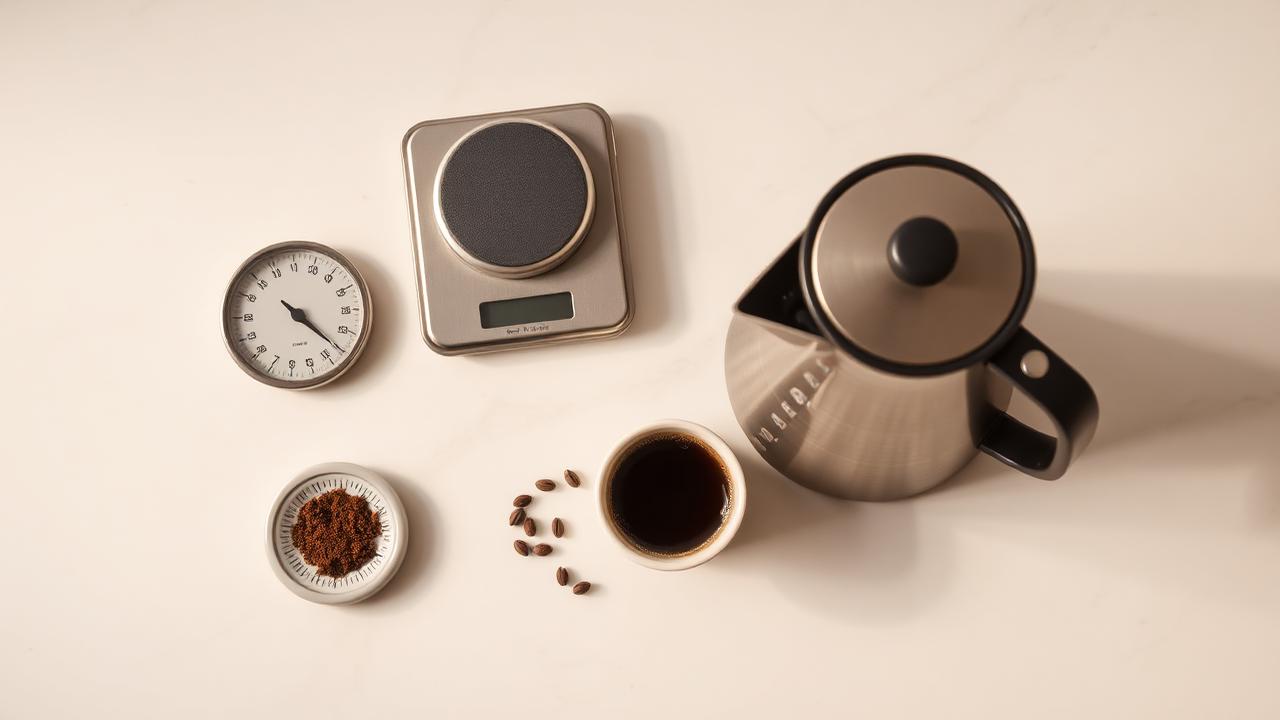
To brew specialty coffee at home, use freshly roasted whole beans, filtered water, a burr grinder and a scale. Start with a 1:16 coffee-to-water ratio, such as 15 g coffee to 240 ml water, then match the grind and water temperature to your brewer. Control time, taste the result and adjust one variable at a time.
Key takeaways
- Use a burr grinder and weigh both coffee and water.
- Begin with a 1:16 ratio for balanced filter coffee.
- Use water at 92–96 °C for most light and medium roasts.
- Adjust grind before changing several variables at once.
- Keep beans fresh, equipment clean and notes on each brew.
What do you need to brew specialty coffee at home?
Specialty coffee at home does not require an elaborate bar setup, but it does benefit from a few reliable tools. The essentials are whole-bean coffee, a burr grinder, a digital scale accurate to 0.1 g, a kettle, clean water and a brewer. A timer is equally useful because brew time affects extraction as much as dose and grind. Start with one manual method rather than buying several brewers at once.
The biggest upgrade is usually a burr grinder. Blade grinders chop beans into uneven pieces, so some grounds extract too quickly while others remain under-extracted. Burr grinders produce a more consistent particle size and make it easier to repeat a recipe. Hand grinders can make excellent coffee and are a sensible starting point if counter space or budget is limited.
Choose freshly roasted beans from a roaster that gives a roast date and brewing guidance. Coffee is generally at its most expressive after a short resting period, often around 7 to 21 days after roasting, depending on the coffee and roast profile. Store beans in an airtight container away from heat, direct sunlight and strong odours. Buy enough for two to four weeks rather than keeping a large stash open for months.
- 01Essential kit: burr grinder, scale, kettle, timer and brewer.
- 02Useful additions: gooseneck kettle, thermometer and filtered-water jug.
- 03Coffee starting point: 15 g whole beans for one 240 ml cup.
- 04Avoid pre-ground coffee when possible; it loses aroma quickly after grinding.
Why do coffee beans, water and freshness matter so much?
A carefully brewed cup cannot overcome stale beans or poor water. Coffee is more than 98 percent water, so its mineral content and cleanliness have a direct effect on flavour. Water that smells strongly of chlorine, tastes metallic or leaves heavy scale in a kettle can make a coffee taste muted, harsh or chalky. If your tap water is unpleasant to drink, it is unlikely to make a satisfying brew.
For most home brewing, use filtered water that is fresh, odour-free and not extremely soft or hard. Avoid distilled water because it has too few minerals to extract coffee well. Bottled water can work, but its mineral profile varies, so use a brand you enjoy drinking and keep it consistent while learning. A clean kettle also matters; descale it regularly according to the manufacturer’s instructions.
Freshness is not only about the roast date. Once coffee is ground, oxygen reaches far more surface area and aroma fades rapidly. Grind immediately before brewing. Keep the bag closed between uses, avoid refrigerating opened beans because condensation and odours are risks, and do not leave coffee in a hopper for days. A small routine of weighing, grinding and brewing on demand makes a noticeable difference.
- 01Use water that tastes clean and pleasant on its own.
- 02Grind beans just before brewing.
- 03Keep opened beans airtight, cool and dry.
- 04Descale kettles and clean brewers to prevent old flavours.
What coffee-to-water ratio should you use?
The coffee-to-water ratio is the most useful starting point for consistent brewing. For most filter methods, begin with 1 g of coffee for every 16 g of water. Since 1 ml of water weighs approximately 1 g, 15 g coffee with 240 ml water is a practical single-cup recipe. This produces a balanced cup for many coffees, then gives you a clear reference point for adjustments.
A stronger drink is not necessarily better extracted; it simply has more dissolved coffee relative to water. If your cup tastes balanced but too light, try 1:15, such as 16 g coffee to 240 ml water. If it tastes pleasant but too intense, try 1:17, such as 14 g coffee to 240 ml water. Keep the ratio fixed while adjusting grind when the issue is sourness, bitterness or a dry finish.
Espresso uses a much more concentrated ratio. A common starting recipe is 18 g ground coffee in, producing 36 g liquid espresso out in about 25 to 30 seconds. Espresso is less forgiving than filter coffee because small changes in dose, grind and machine temperature have a larger effect. If you are new to specialty coffee, pour-over, French press or AeroPress will usually make the learning process easier.
- 01Balanced filter starting point: 1:16.
- 02Single cup: 15 g coffee to 240 ml water.
- 03Larger brew: 30 g coffee to 480 ml water.
- 04Stronger filter cup: 1:15.
- 05Lighter filter cup: 1:17.
How fine should you grind coffee for each brewing method?
Grind size controls how quickly water extracts flavour from coffee. Finer grounds have more surface area and slow the flow of water, so they extract more readily. Coarser grounds have less surface area and allow water to move faster, so they extract more slowly. The correct setting is not a fixed number because every grinder is different; use texture, brew time and taste to find the right range.
For a pour-over dripper, begin with a medium-fine grind resembling granulated sugar or slightly finer. For a French press, use a coarse grind similar to coarse sea salt. For AeroPress, a medium to medium-fine grind is a flexible starting point, depending on whether you use a short or long brew. Espresso needs a fine grind, close to powdered sugar in feel, but not all fine settings are suitable for every espresso machine.
Change the grind in small steps and keep your recipe stable. If a pour-over finishes far too quickly and tastes thin or sour, grind finer. If it stalls, tastes harsh or leaves a dry, astringent sensation, grind coarser. A good target is a cup that is sweet, clear and pleasant as it cools. The exact drawdown time is a guide, not a substitute for tasting.
- 01Pour-over: medium-fine, roughly granulated sugar.
- 02French press: coarse, roughly coarse sea salt.
- 03AeroPress: medium to medium-fine.
- 04Espresso: fine, adjusted to yield and shot time.
- 05Change one grind step at a time and record the result.
How do you brew a reliable pour-over coffee?
Pour-over is an excellent way to learn how to brew specialty coffee at home because it makes the relationship between grind, pouring and flavour easy to observe. A cone dripper such as a V60-style brewer gives a clean, aromatic cup with clear acidity and sweetness. Use a paper filter, rinse it thoroughly with hot water, then discard the rinse water before adding ground coffee. This removes paper flavour and warms the brewer and server.
The key is even saturation. Start with a short bloom, then pour steadily in controlled stages. Fresh coffee releases carbon dioxide when hot water first reaches it; blooming allows that gas to escape so later water can contact the grounds evenly. A gooseneck kettle makes pouring easier, but a standard kettle can work if you pour gently and avoid splashing water directly down the paper wall.
Aim for a total brew time of about 2 minutes 30 seconds to 3 minutes 30 seconds for a 15 g dose, then taste and adjust. A faster brew may need a finer grind; a slow, bitter brew may need a coarser grind. Do not chase a specific time at the expense of flavour. The purpose of a recipe is to create a stable baseline that you can improve deliberately.
- 011. Rinse the paper filter with hot water and discard the rinse water.
- 022. Add 15 g medium-fine coffee and level the bed.
- 033. Pour 45 ml water at 93–96 °C and bloom for 30–45 seconds.
- 044. Pour steadily to 150 ml by 1 minute 15 seconds.
- 055. Continue pouring to 240 ml, keeping the coffee bed evenly wet.
- 066. Let the brew finish by about 2 minutes 30 seconds to 3 minutes 30 seconds, then swirl the server and serve.
Can you make excellent coffee with a French press or AeroPress?
Yes. A French press is forgiving, affordable and well suited to people who enjoy a fuller-bodied cup. Its metal mesh filter allows oils and fine particles into the drink, creating more texture than paper-filter brewing. Use coarse grounds, allow enough steeping time and plunge slowly. If your coffee tastes muddy, do not assume the method is at fault; a cleaner pour, a better grinder and a short settling period can improve the cup considerably.
For a French press, use 30 g coffee to 500 ml water at 92–96 °C. Stir gently after adding water, steep for 4 minutes, then break the crust and remove floating grounds with a spoon if desired. Place the lid on, press the plunger slowly and pour immediately into cups or a separate server. Leaving brewed coffee in the press allows continued contact with grounds and can make the final cups bitter or woody.
An AeroPress offers more flexibility. It can make a concentrated, espresso-like base for milk drinks or a longer, clean cup when diluted. Start with 15 g medium-fine coffee and 200 ml water at 85–92 °C. Stir for 10 seconds, steep for 1 minute 30 seconds, then press gently for 20 to 30 seconds. For lighter roasts, use hotter water or a slightly longer steep; for darker roasts, use cooler water to reduce bitterness.
- 01French press recipe: 30 g coffee, 500 ml water, 4 minutes, 92–96 °C.
- 02AeroPress recipe: 15 g coffee, 200 ml water, 1 minute 30 seconds, 85–92 °C.
- 03Pour French press coffee out after plunging rather than storing it in the brewer.
- 04Press an AeroPress gently; forcing it can push excess fines into the cup.
How do you fix sour, bitter or weak coffee?
Sour coffee is often under-extracted, meaning the water did not dissolve enough of the coffee’s sweeter, more developed flavours. This can happen when the grind is too coarse, the water is too cool, the brew time is too short or the ratio is too weak. Before changing everything, make one controlled adjustment. For example, grind slightly finer while keeping dose, water amount and temperature the same.
Bitter, harsh or drying coffee is often over-extracted. The grind may be too fine, the water may have spent too long in contact with the grounds, or the coffee may be brewed too hot for its roast level. Darker roasts are especially prone to harshness at very high temperatures. Grind slightly coarser first, then consider reducing water temperature by 2 to 4 °C if bitterness remains.
Weak coffee can mean two different things. It may be under-extracted and watery, in which case a finer grind or longer brew can help. Or it may be properly extracted but simply too dilute, in which case use more coffee or less water. Taste before deciding. A watery cup with sharp acidity needs better extraction; a sweet but light cup may only need a stronger ratio.
- 01Sour and thin: grind finer, extend contact time or raise water temperature slightly.
- 02Bitter and dry: grind coarser, shorten contact time or lower water temperature slightly.
- 03Sweet but too light: move from 1:16 to 1:15.
- 04Heavy and intense: move from 1:16 to 1:17.
- 05Record coffee, dose, water, grind setting, time and tasting notes.
How can you build a repeatable home coffee routine?
Consistency is the foundation of improvement. Use the same brewer, recipe and water for several brews before making major changes. Weighing ingredients instead of using spoons removes a large source of variation, as bean density and grind size change the volume in a scoop. A simple notebook or phone note helps you identify what worked, especially when switching between coffees with different origins, processing methods and roast levels.
Taste coffee at more than one temperature. Many cups reveal more sweetness and fruit character as they cool, while bitterness or roastiness may become more obvious later. This is useful feedback: a brew that tastes good only when piping hot may not be as balanced as it first appears. Letting coffee cool for five to ten minutes can help you make more accurate adjustments next time.
Clean equipment is part of brewing, not an optional extra. Rinse paper-filter brewers after every use, wash servers and French press parts with detergent, and remove coffee oils from grinders, baskets and filter holders regularly. Old oils become rancid and can make fresh coffee taste stale. At Capra Café, the same principle applies behind the bar: precision matters, but clean equipment and a disciplined routine make precision repeatable.
- 01Weigh every dose and water addition.
- 02Keep one recipe unchanged while testing a new coffee.
- 03Adjust one variable per brew.
- 04Taste hot, warm and near room temperature.
- 05Clean brewing equipment after each use and descale regularly.
Frequently asked questions
What is the best coffee-to-water ratio for specialty coffee at home?
For most filter coffee, start with a 1:16 ratio: 1 g coffee for every 16 g or ml of water. A practical single-cup recipe is 15 g coffee to 240 ml water. Use 1:15 for a stronger cup or 1:17 for a lighter cup. Keep the ratio consistent while adjusting grind size to improve extraction and flavour balance.
Do I need a gooseneck kettle for pour-over coffee?
A gooseneck kettle is helpful but not essential. Its narrow spout gives more control over flow rate and makes it easier to wet the coffee bed evenly, particularly with cone-shaped drippers. You can still make very good pour-over coffee with a standard kettle by pouring slowly, using small circles and avoiding the paper filter walls. Prioritise fresh beans, a burr grinder and a scale first.
What temperature should water be for specialty coffee?
Use water between 92 and 96 °C for most light and medium roast filter coffees. Start near 94 °C if you are unsure. Use slightly cooler water, around 85 to 92 °C, for darker roasts or AeroPress recipes when bitterness is a problem. Water straight off the boil can work for some light roasts, but temperature should be adjusted alongside grind and brew time.
How long should coffee bloom in a pour-over?
Bloom pour-over coffee for 30 to 45 seconds. Use roughly two to three times the coffee dose in water, so 15 g coffee receives 30 to 45 ml water. The bloom releases trapped carbon dioxide and helps later pours extract more evenly. Very fresh coffee may benefit from 45 seconds, while older coffee may need less. Ensure all grounds are wet before continuing.
Why does my home-brewed coffee taste sour?
Sour coffee usually indicates under-extraction: the brew has not dissolved enough sweetness and developed flavour from the grounds. First, grind slightly finer and keep your ratio, temperature and pouring method unchanged. If it remains sour, increase water temperature by 2 to 3 °C or extend contact time. Also check that you are using enough water to fully saturate the coffee bed and that your grinder produces consistent particles.
Keep reading
- Best Coffee to Water Ratio for Beginners
- Coffee Grind Size Chart Explained
- Does Water Quality Affect Coffee Taste?