Brewing basics · 7 min read
Coffee Grind Size Chart Explained
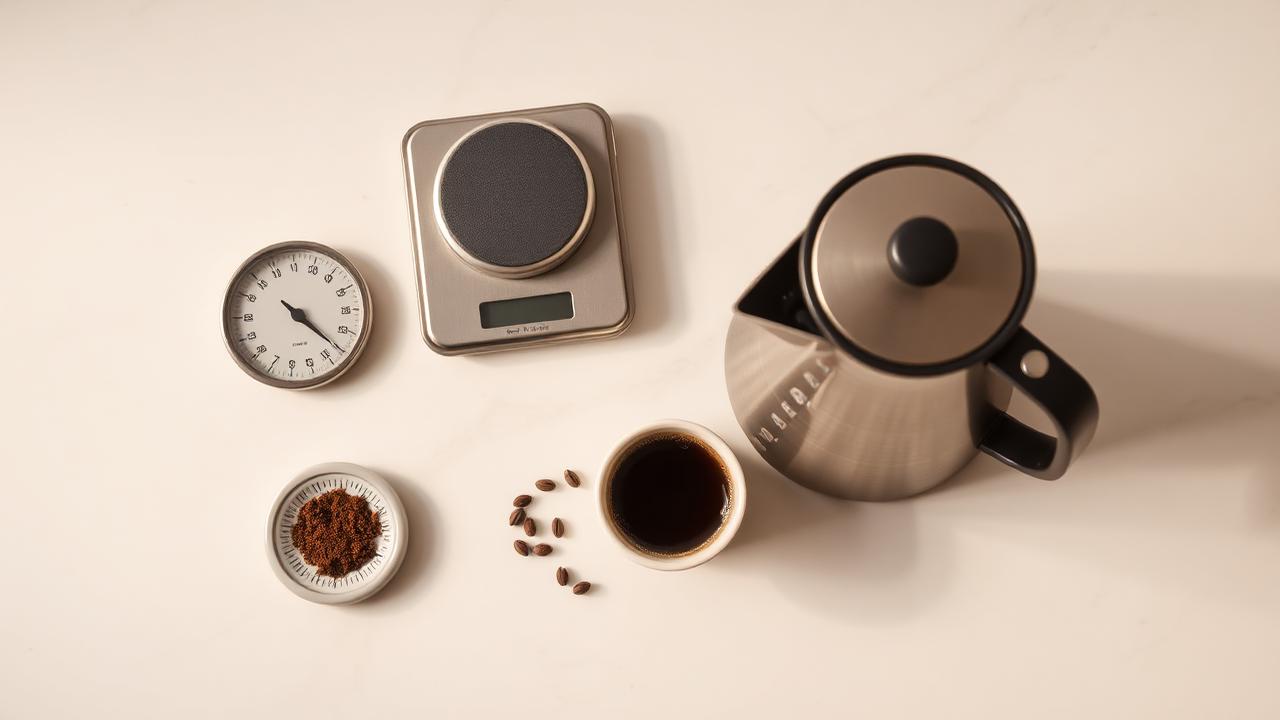
Short answer
A coffee grind size chart matches coffee particle size to brewing method and contact time. Coarse grounds suit long-steep brewers such as French press, medium grounds suit filter coffee, and fine grounds suit espresso. The faster water moves through coffee, the finer the grind usually needs to be; adjust finer for sour cups and coarser for bitter, dry cups.
Key takeaways
- Use coarse grounds for immersion brewers and fine grounds for espresso.
- Grind size controls extraction speed, not just how coffee looks.
- Start with a reliable recipe before changing the grinder setting.
- Sour, thin coffee usually needs a finer grind; bitter, drying coffee usually needs a coarser grind.
- Consistent particles matter as much as the chosen grind setting.
What does a coffee grind size chart explain?
A coffee grind size chart explained simply is a guide to matching ground coffee particles with the way water will brew them. Grind size affects how much coffee surface is exposed to water. Smaller particles expose more surface and extract quickly; larger particles expose less surface and extract more slowly. A suitable setting lets water dissolve sweetness, acidity and aroma without pulling too much bitterness or leaving the cup underdeveloped.
The chart is a starting point, not a universal rule. Grinder numbers vary widely: a setting marked 12 on one grinder may be similar to 20 or 6 on another. Coffee freshness, roast level, dose, water temperature, brew ratio and pouring technique also change the result. Learn the visual texture and the flavour outcome rather than relying only on a number printed on the grinder.
The most useful way to read a chart is by brew method and flow. Full-immersion methods, where coffee sits in water, generally need a coarser grind because contact lasts several minutes. Percolation methods, where water passes through a bed of coffee, commonly use medium to fine grounds. Espresso forces water through coffee under pressure in roughly half a minute, so it needs a much finer and more precise grind.
- 01Extra coarse: large, distinct particles, similar to coarse peppercorn fragments
- 02Coarse: rough sea-salt texture
- 03Medium-coarse: clearly granular, between sand and sea salt
- 04Medium: regular sand texture
- 05Medium-fine: finer sand with a slight powdery feel
- 06Fine to extra-fine: table salt to flour-like powder
Which grind size suits each brewing method?
Use extra-coarse to coarse grounds for cold brew, French press and coffee cupping. These methods keep coffee in contact with water for a relatively long time, so a large particle slows extraction and reduces sediment. A coarse setting also makes pressing and filtering easier. If a French press tastes weak and sharply sour after a proper steep, move one small step finer rather than steeping indefinitely.
Medium-coarse and medium grounds suit most manual filter brewers, including Chemex, Kalita Wave, Melitta-style drippers and many automatic batch brewers. The exact choice depends on the filter, bed depth and brewer design. Thicker paper filters and slower drawdowns often favour a slightly coarser setting, while a fast-flowing brewer may need a somewhat finer grind to achieve enough extraction.
Medium-fine grounds are often appropriate for moka pots and some compact cone brewers. Fine grounds are for espresso machines, while extra-fine powder is used for Turkish coffee. These categories overlap because grinders produce distributions rather than perfectly identical particles. Begin in the stated range, then adjust according to the time and taste of your own brewer.
- 01Cold brew: extra coarse, 12 to 18 hours steeping
- 02French press: coarse, 4 to 8 minutes steeping
- 03Clever Dripper or immersion filter: medium-coarse, 2 to 4 minutes
- 04Pour-over filter: medium to medium-fine, about 2:30 to 4:00 minutes
- 05Moka pot: medium-fine, brewed until the flow turns pale and sputters
- 06Espresso: fine, usually 25 to 35 seconds from pump start
- 07Turkish coffee: extra-fine, powder-like
Why does grind size change coffee flavour?
Extraction happens in stages. Water first dissolves bright acids and light aromatic compounds, then sweetness and rounded flavours, and eventually heavier bitter and drying compounds. Grind size changes the speed of this process. A fine grind gives water access to more surface area, which can produce fuller flavour in a short brew. A coarse grind slows extraction and protects a long brew from becoming harsh.
Under-extracted coffee often tastes sour, salty, sharp, hollow or unexpectedly weak. The finish may disappear quickly, even when the coffee smells appealing. If your recipe, temperature and brew time are sensible, grinding finer is a practical first adjustment. Make a small change, then taste again; large jumps can take a cup from under-extracted to bitter without passing through balance.
Over-extracted coffee often tastes bitter, woody, dry or astringent, with a rough sensation on the tongue and gums. It can also taste flat rather than merely strong. Grinding coarser is usually the first fix. In a filter brewer, a very fine grind can also slow the drawdown so much that water extracts too much from the coffee bed, especially if fine particles clog the paper filter.
How should you dial in grind size step by step?
Dialling in means adjusting a brew until it tastes balanced and reaches a reasonable brewing time. Change only one important variable at a time. Start with the coffee dose, water weight and temperature held steady, then use grind size as your main control. This makes your results easier to understand and prevents a series of random adjustments from hiding the true cause of a disappointing cup.
For filter coffee, first check whether the drawdown is dramatically fast or slow. A fast brew with sour flavour usually needs a finer grind. A slow brew with bitter, drying flavour usually needs a coarser grind. For espresso, use shot time and beverage weight alongside taste. A shot can run for the expected time and still be unbalanced, but time gives a useful indication of whether the grind is in the right neighbourhood.
Record your successful settings. Note the coffee name, roast date, dose, beverage weight, water temperature, grind setting, total time and flavour notes. Fresh coffee often needs a slightly coarser setting as it ages, particularly for espresso. Humidity and grinder retention can also alter results from day to day, so a short record is more valuable than trying to memorise every adjustment.
- 01Weigh 18 g of coffee for a 300 ml filter brew.
- 02Use 300 g of water at 92 to 96 °C.
- 03Begin with a 1:16.7 coffee-to-water ratio.
- 04Aim for a total pour-over time of about 2:30 to 3:30 minutes.
- 05If the cup is sour and the brew finishes too quickly, grind finer by one small step.
- 06If the cup is bitter and the brew stalls beyond 4:00 minutes, grind coarser by one small step.
What is the best grind size for pour-over coffee?
For most pour-over coffee, start at a medium grind, resembling ordinary sand. This is not a single fixed setting because V60, Chemex, Kalita Wave and flat-bottom drippers drain differently. A V60 with a light roast may need medium-fine grounds to build enough extraction, while a Chemex may benefit from medium-coarse grounds because its thick filter can slow the brew.
A dependable starting recipe is 18 g coffee to 300 g water, using water at 94 °C. Bloom with 45 to 60 g water for 30 to 45 seconds, then pour steadily until reaching 300 g. Many brewers will finish between 2:30 and 3:30 minutes. If the slurry drains in under about 2:00 minutes, your grind is likely too coarse or your pouring is too aggressive.
Do not judge the grind only by total brew time. A high, uneven coffee bed, blocked filter or heavy agitation can lengthen drawdown even with an appropriate setting. Look for an even bed after brewing, a controlled flow and a cup with clear sweetness. At Capra Café, we teach brewers to use time as a diagnostic, then let taste make the final decision.
What is the best grind size for espresso?
Espresso needs a fine grind because water is pushed through a compact coffee puck under pressure. The correct setting creates enough resistance for water to extract flavour during a short shot. Grounds should feel finer than table salt, though they should not necessarily look like flour. Espresso is sensitive: a tiny adjustment on a capable grinder can noticeably alter flow rate and taste.
A useful starting point is 18 g of ground coffee in, 36 g of espresso out, in 25 to 35 seconds from pump start. This is a 1:2 brew ratio. If 36 g reaches the cup in 18 seconds and tastes sharp or watery, grind finer. If it takes 45 seconds and tastes bitter, dry or heavy, grind coarser. Keep dose and yield fixed while finding the right grind.
Distribution and tamping also matter. Break up clumps, distribute grounds evenly, tamp level and use a consistent force. An uneven puck creates channels, where water rushes through weak points while other areas remain under-extracted. No grind setting can fully correct poor preparation. Clean burrs and a clean portafilter basket are equally important, as old coffee oils can add bitterness and disrupt flow.
Does grinder type affect the coffee grind size chart?
Yes. A chart describes particle size, but the grinder determines how consistently it can create that size. Blade grinders chop coffee irregularly, producing a mixture of large boulders and fine dust. The boulders under-extract while the dust can over-extract, so the same brew may taste both sour and bitter. They can work for casual brewing, but they make repeatable filter coffee and espresso difficult.
Burr grinders crush coffee between two shaped surfaces and produce a narrower range of particle sizes. Conical and flat burrs can both make excellent coffee, although their flavour profiles and adjustment systems differ. For manual filter brewing, a good burr grinder with distinct, repeatable steps is often the most meaningful equipment upgrade. For espresso, choose a grinder designed for fine, precise adjustment rather than one intended only for French press or drip coffee.
Grind immediately before brewing whenever possible. Whole beans retain aroma and carbon dioxide better than pre-ground coffee, while ground coffee has far more exposed surface and stales quickly. If you must buy coffee ground in advance, ask for the exact brewer it will be used with and store it airtight, away from heat and sunlight. Expect to need a little experimentation as the coffee ages.
How do roast level and freshness affect grind adjustments?
Light, medium and dark roasts do not all behave identically. Light-roasted coffee is denser and can be harder to extract, so it may benefit from a slightly finer grind, hotter water or a longer contact time. Darker coffee is more soluble and can become bitter more quickly, so it often responds well to a slightly coarser grind or a lower water temperature. These are starting tendencies, not fixed laws.
Freshness changes brewing behaviour, especially in espresso. Very recently roasted coffee releases more carbon dioxide, which can interfere with even water flow and produce a fast, inconsistent shot. As coffee rests and then gradually ages, you may need to grind finer to maintain a similar shot time. Filter coffee is generally more forgiving, but it also loses aromatic intensity and may need recipe adjustments over time.
Use sensory evidence rather than assumptions about the roast. A light roast can still become bitter if ground too fine, and a dark roast can still taste sour if the extraction is too low. Taste the cup after it cools slightly, when sweetness and bitterness become easier to identify. The best grind is the one that gives a balanced, enjoyable cup with your coffee, water and equipment.
Frequently asked questions
What grind size is best for a French press?
Use a coarse grind for French press coffee, with particles resembling coarse sea salt. Start with 60 g coffee per litre of water, or 30 g for 500 ml, and steep for 4 minutes. If the cup tastes sour or thin, try a slightly finer grind. If it tastes bitter, muddy or overly drying, move coarser and avoid excessive stirring.
What grind size should I use for a V60?
Start with a medium to medium-fine grind for a V60, close to fine sand. For 18 g coffee and 300 g water at 94 °C, aim for a total brew time of roughly 2:30 to 3:30 minutes. If the brew runs through too quickly and tastes sour, grind finer. If it drains slowly and tastes bitter, grind coarser.
Can I use the same coffee grind for filter coffee and espresso?
No, not if you want balanced results. Filter coffee normally needs a medium or medium-fine grind because water flows through the bed over several minutes. Espresso needs a much finer grind because it brews under pressure in about 25 to 35 seconds. Using filter grounds for espresso will usually produce a fast, weak shot; espresso grounds can clog and over-extract a filter brewer.
Should I grind coffee finer if it tastes sour?
Usually, yes. Sour, sharp or hollow coffee often indicates under-extraction, and a finer grind increases surface area so water can extract more flavour. First make sure your water is hot enough and your ratio is sensible. Change the grinder by one small step, keep the dose and water amount the same, and compare the next brew rather than making several changes at once.
Why is my coffee bitter even when I use the right grind size?
Bitterness can come from over-extraction, but grind size is not the only cause. Water that is too hot, a very long brew, too much agitation, a dirty grinder or darkly roasted coffee can all contribute. Check your brewing time, reduce temperature by 2 to 4 °C for dark roasts, clean your equipment and try one coarser grind step before changing several variables together.
Keep reading
- Best Coffee to Water Ratio for Beginners
- Does Water Quality Affect Coffee Taste?
- How to Brew a Good Cup of Coffee at Home