Brewing basics · 8 min read
How to Brew a Good Cup of Coffee at Home
Short answer
To brew a good cup of coffee at home, use freshly roasted whole beans, clean filtered water and a consistent recipe: start with 15 g coffee per 250 ml water. Grind just before brewing, use water at 92–96 °C, control the brew time for your method, then adjust grind size before changing everything else.
Key takeaways
- Start with a 1:16 coffee-to-water ratio for balanced flavour.
- Grind beans immediately before brewing whenever possible.
- Use water at 92–96 °C and keep equipment clean.
- Change one variable at a time, usually grind size first.
- Measure coffee and water with a digital scale for repeatable results.
What makes a good cup of coffee at home?
A good cup of coffee at home is not about owning expensive equipment. It comes from controlling four basics: the coffee itself, the water, the grind and the recipe. When those are right, even a modest cafetière, dripper or moka pot can produce a sweet, clear and satisfying cup. When they are ignored, an expensive machine cannot rescue stale beans, poor water or random measurements.
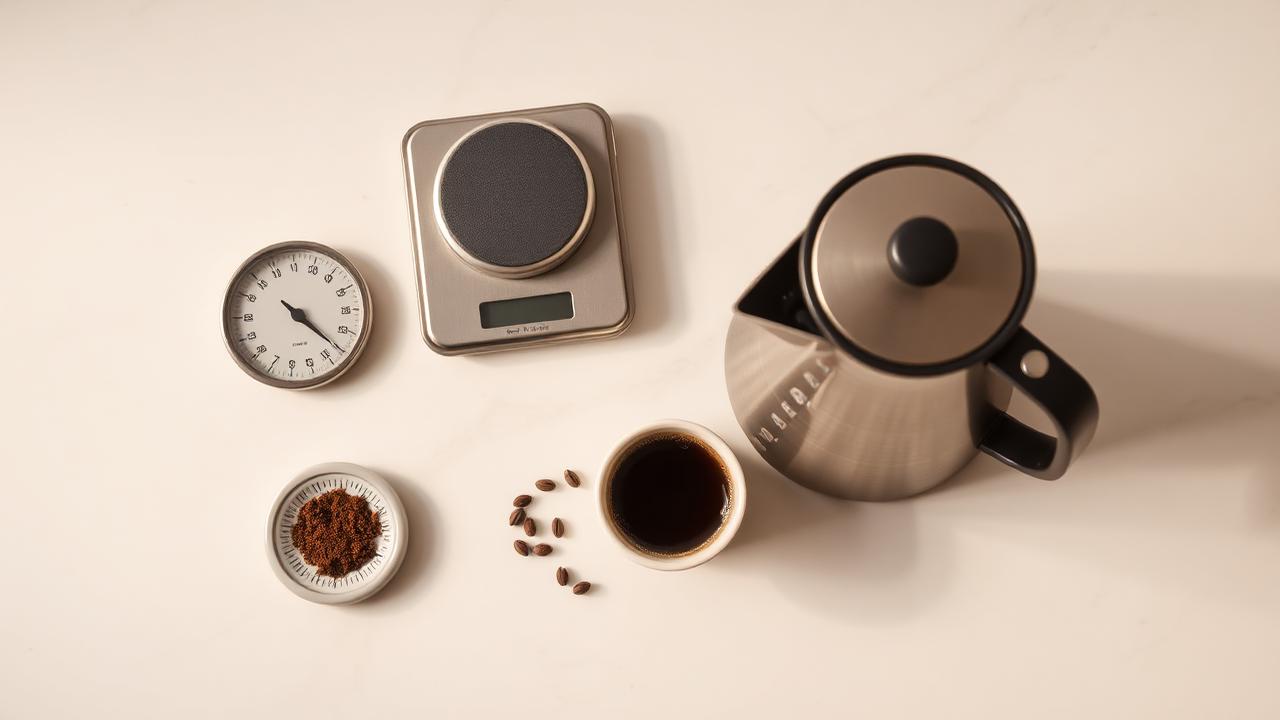
The most dependable starting point is to weigh both coffee and water. Volume measures such as spoons and cups vary too much because different beans have different sizes and densities. A small digital scale removes that uncertainty. Use 15 g of coffee with 250 ml of water for a balanced everyday brew, then taste it before deciding whether to make changes.
Good coffee should taste intentionally balanced rather than merely strong. Depending on the origin and roast, you may notice chocolate, nuts, caramel, citrus, berries or tea-like florals. It should not be aggressively sour, harshly bitter or hollow. Those unpleasant qualities are often brewing issues, not proof that you need darker beans or more sugar.
- 01Baseline recipe: 15 g coffee to 250 ml water
- 02Balanced brew ratio: 1 g coffee to 16 g water
- 03Water temperature: 92–96 °C
- 04Use a scale accurate to at least 1 g
Which coffee beans should you buy for home brewing?
Buy whole beans in quantities you can finish within three to four weeks after opening. Look for a roast date rather than relying only on a best-before date. Coffee is at its most expressive after it has rested for several days following roasting, and it gradually loses aroma once exposed to oxygen. A 250 g bag is practical for many households because it makes roughly 16 cups using a 15 g dose.
Choose beans according to how you like to drink coffee. Medium roasts are usually the easiest place to begin because they can offer sweetness, body and origin character without excessive roast bitterness. A darker roast often suits milk drinks and moka pot brewing, while a lighter roast can be lively and delicate in filter coffee. Neither is inherently better; the right choice is the one you enjoy.
Store coffee in its original resealable bag or an airtight opaque container, away from heat, light and strong smells. A cupboard is better than the worktop beside a cooker. Avoid storing daily-use coffee in the fridge, where it may absorb odours and face condensation. Freezing unopened or carefully sealed surplus bags can be useful, but only if you can avoid repeatedly opening and refreezing them.
- 01Buy whole beans, not pre-ground coffee, when possible
- 02Choose 250 g bags for fresher turnover
- 03Keep beans cool, dark, dry and airtight
- 04Use medium roasts as a versatile starting point
Why does grind size matter so much?
Grind size determines how quickly water dissolves flavour from coffee. Finer particles expose more surface area and extract faster; coarser particles extract more slowly. This is why espresso needs a fine grind and a cafetière needs a coarse one. If the grind does not suit the brewer, the cup can taste weak and sour or rough and bitter even when the coffee, water and ratio are otherwise sensible.
For most home brewers, grind adjustment is the most useful troubleshooting tool. If coffee tastes sharp, underdeveloped, thin or salty, grind a little finer or extend the contact time. If it tastes dry, bitter, astringent or unpleasantly heavy, grind a little coarser or shorten the contact time. Make one small adjustment at a time so you can understand what changed.
A burr grinder is one of the most worthwhile upgrades for better home coffee. Blade grinders chop unevenly, producing a mixture of dust-like fines and large fragments. That inconsistency causes some particles to over-extract while others under-extract. A burr grinder creates a more even particle size, making brewing more repeatable and flavours easier to dial in.
- 01Espresso: fine, similar to fine sand
- 02Moka pot: medium-fine, similar to table salt
- 03Pour-over: medium, similar to sand
- 04Cafetière: coarse, similar to coarse sea salt
- 05If the cup is sour, try finer; if bitter and drying, try coarser
How important is water for brewing coffee?
Coffee is mostly water, so water quality has a direct effect on flavour. Use fresh cold water from a clean source, ideally filtered if your tap water has a strong chlorine smell or obvious mineral taste. Water that tastes unpleasant on its own is unlikely to make enjoyable coffee. Distilled water is not a good everyday choice because it lacks the minerals that help extract flavour properly.
For most filter methods, use water between 92 and 96 °C. If you do not have a temperature-controlled kettle, boil the kettle, open the lid and wait about 30 to 60 seconds before pouring. This is only an approximation because kettle design and room temperature vary, but it is close enough to begin. Very light roasts may benefit from the higher end of the range, while darker roasts often taste smoother at the lower end.
Keep your brewing equipment clean because old coffee oils quickly affect taste. Rinse a dripper, cafetière or server after every use, and wash it thoroughly with suitable detergent regularly. Clean grinder burrs and brush out retained grounds. A stale, rancid taste that remains across different coffees may be coming from neglected equipment rather than the brewing recipe.
- 01Use fresh, cold, clean water
- 02Aim for 92–96 °C for filter brewing
- 03Avoid water with strong chlorine or stale flavours
- 04Wash brewers regularly to remove coffee oils
What is the simplest recipe for a good pour-over coffee?
A pour-over dripper is an excellent way to learn brewing because it makes each variable visible. You control the dose, water weight, temperature, pouring speed and total time. Start with a simple recipe and avoid constant changes. A cone-shaped dripper with a paper filter, a gooseneck kettle and a scale make the process easier, but a standard kettle can still produce very good coffee with a careful, steady pour.
Rinse the paper filter with hot water before brewing. This removes papery flavour and warms the dripper and server. Discard the rinse water, add ground coffee and gently level the bed. The first short pour is called the bloom. It releases trapped gas from freshly roasted coffee and helps water contact the grounds more evenly during the main brew.
Once you have brewed the recipe a few times, use taste and drawdown time to guide adjustments. If the brew finishes much faster than expected and tastes thin or sour, grind finer. If it drains very slowly and tastes bitter or dry, grind coarser. Keep notes on the coffee, dose, grind setting, water weight and tasting result; this turns trial and error into a useful routine.
- 011. Add 15 g medium-ground coffee to a rinsed paper filter.
- 022. Pour 45 ml water at 94 °C and wait 30 seconds.
- 033. Pour slowly to 150 ml by 1 minute.
- 044. Continue pouring to 250 ml by 1 minute 45 seconds.
- 055. Let the coffee drain fully; target a total time of 2 minutes 30 seconds to 3 minutes 15 seconds.
- 066. Swirl the server gently and serve promptly.
How do you brew good coffee in a cafetière?
A cafetière, also called a French press, is forgiving, affordable and well suited to people who prefer a fuller-bodied cup. Because there is no paper filter, more coffee oils and fine particles remain in the drink. This creates a richer texture but can also make the final sips feel silty if the coffee is ground too fine or poured too aggressively.
Use a coarse grind and a slightly longer steep than you would for a pour-over. Add coffee first, then pour all the water in evenly. Stir gently to ensure there are no dry pockets, but do not churn the coffee. After the steep, lower the plunger slowly. The filter is not meant to squeeze the coffee; pressing hard can force fine particles through the mesh and make the cup murky.
For a cleaner cafetière cup, let the coffee settle for a minute after plunging, then pour it into cups or a separate serving jug. Do not leave brewed coffee sitting in the cafetière for long periods, because the grounds continue to contribute flavour. If you want a stronger cup, increase the coffee dose rather than extending the steep indefinitely.
- 01Use 18 g coarse-ground coffee to 300 ml water
- 02Use water at 93–95 °C
- 03Steep for 4 minutes
- 04Stir gently once after adding water
- 05Plunge slowly, then pour immediately
Can you make excellent coffee without a machine?
Yes. A good cup does not require an espresso machine or capsule system. A cafetière, pour-over dripper, AeroPress or moka pot can all make excellent coffee when used with fresh beans and a measured recipe. The best choice depends on the cup style you enjoy and how much attention you want to give the process each morning.
An AeroPress is useful for travel, small kitchens and people who like a smooth, concentrated coffee with low sediment. It is flexible, so use a reliable starting recipe rather than chasing every variation online. Try 15 g medium-fine coffee with 220 ml water at 85–90 °C, stir for 10 seconds, steep for 90 seconds and press gently for 25–30 seconds. Dilute with hot water if you prefer a longer drink.
A moka pot makes a strong, intense coffee that works well with milk, but it is not espresso. Fill the basket level with medium-fine coffee without tamping it. Add hot water to the lower chamber up to, not above, the safety valve. Brew on low to medium heat and remove it from the heat as soon as the stream becomes pale and sputters. This prevents burnt, bitter flavours.
- 01AeroPress: smooth, compact and flexible
- 02Cafetière: rich body with minimal equipment
- 03Pour-over: clear flavour and precise control
- 04Moka pot: strong coffee for short drinks and milk drinks
How should you troubleshoot sour, bitter or weak coffee?
Taste gives you better information than labels such as strong or weak. Sour coffee is often under-extracted: water has not dissolved enough sweetness and balance from the grounds. The cause may be a grind that is too coarse, water that is too cool, a brew time that is too short or too little water contact. Begin by grinding slightly finer, then retest with the same dose and water weight.
Bitter coffee can come from over-extraction, especially if it feels drying or harsh at the sides of the tongue. Grind slightly coarser, shorten the brew time or lower the water temperature by a few degrees. Dark roasts can also taste bitter when brewed too hot. If the bitterness resembles smoke or ash, it may be a roast preference issue rather than a technical fault, and a lighter roast may suit you better.
Weak coffee is not always under-extracted. It may simply be too dilute. If a cup tastes balanced but lacks intensity, use more coffee while keeping the same brewing method. For example, change from 15 g coffee and 250 ml water to 18 g and 250 ml water. If it is both weak and sour, improve extraction first by grinding finer before increasing the dose.
- 01Sour and thin: grind finer or brew longer
- 02Bitter and drying: grind coarser or brew shorter
- 03Balanced but weak: increase the coffee dose
- 04Muddy: use a coarser grind or pour more gently
- 05Flat: check bean freshness, water quality and equipment cleanliness
How can you build a consistent daily coffee routine?
Consistency is what turns occasional good coffee into a dependable home habit. Choose one brewer and one recipe for a week rather than switching methods every day. Weigh your coffee and water, use the same cup size and record a few simple notes. You do not need a detailed tasting vocabulary; words such as sweet, sharp, bitter, heavy, thin or pleasant are enough to guide your next adjustment.
Set up your station so the process is easy on busy mornings. Keep the scale, brewer, filters and grinder together. Fill the kettle with fresh water each time. Empty old grounds from the grinder before dosing, especially if you change coffees. Small habits make a larger difference than elaborate equipment, because they remove the random variables that make one day’s cup very different from the next.
As your confidence grows, experiment deliberately. Try the same coffee at 1:15 and 1:17 ratios, or compare 92 °C with 96 °C water. Change only one factor per brew. This is how baristas learn to understand extraction, and it is equally effective at home. At Capra Café, this same measured approach is the foundation of brewing training: taste carefully, adjust simply and repeat what works.
- 01Use one recipe repeatedly before experimenting
- 02Record dose, water, grind setting, time and taste
- 03Change only one variable per brew
- 04Replace old coffee and clean equipment regularly
Frequently asked questions
What is the best coffee-to-water ratio for home brewing?
A reliable starting ratio is 1:16, meaning 1 g of coffee for every 16 g of water. For one mug, use 15 g coffee and 250 ml water. For a stronger, more concentrated cup, try 1:15. For a lighter cup, try 1:17. Keep the ratio fixed while adjusting grind size so you can identify what improves the flavour.
Should I use boiling water for coffee?
For most filter coffee, water just below boiling is best: roughly 92–96 °C. Water straight off the boil can over-emphasise bitterness in darker roasts, while water that is too cool may leave lighter coffees sour and under-extracted. If you do not have a thermometer, boil the kettle and let it stand for about 30–60 seconds before brewing.
How long should coffee brew in a cafetière?
Brew coffee in a cafetière for about 4 minutes as a dependable starting point. Use a coarse grind, 18 g coffee and 300 ml water at around 93–95 °C. After 4 minutes, press the plunger gently and pour the coffee promptly. If it tastes weak or sour, try a slightly finer grind; if bitter or gritty, grind coarser.
Why does my home coffee taste sour?
Home coffee usually tastes sour because it is under-extracted, meaning the water has not drawn enough sweetness and balance from the grounds. Common causes are a grind that is too coarse, a brew time that is too short, water below about 90 °C or uneven pouring. First, grind slightly finer and keep the dose, water weight and method unchanged for the next brew.
Is it worth buying a grinder for home coffee?
Yes, a burr grinder is often the most meaningful equipment upgrade for home brewing. Grinding immediately before brewing preserves aroma, while burrs create more even particles than blade grinders. Even particle size makes extraction more consistent and makes it easier to correct sourness or bitterness through small grind adjustments. A basic brewer with freshly ground coffee can outperform costly equipment using stale pre-ground coffee.
Keep reading
- Best Coffee to Water Ratio for Beginners
- Coffee Grind Size Chart Explained
- Does Water Quality Affect Coffee Taste?