Brewing basics · 7 min read
Best Coffee to Water Ratio for Beginners
Short answer
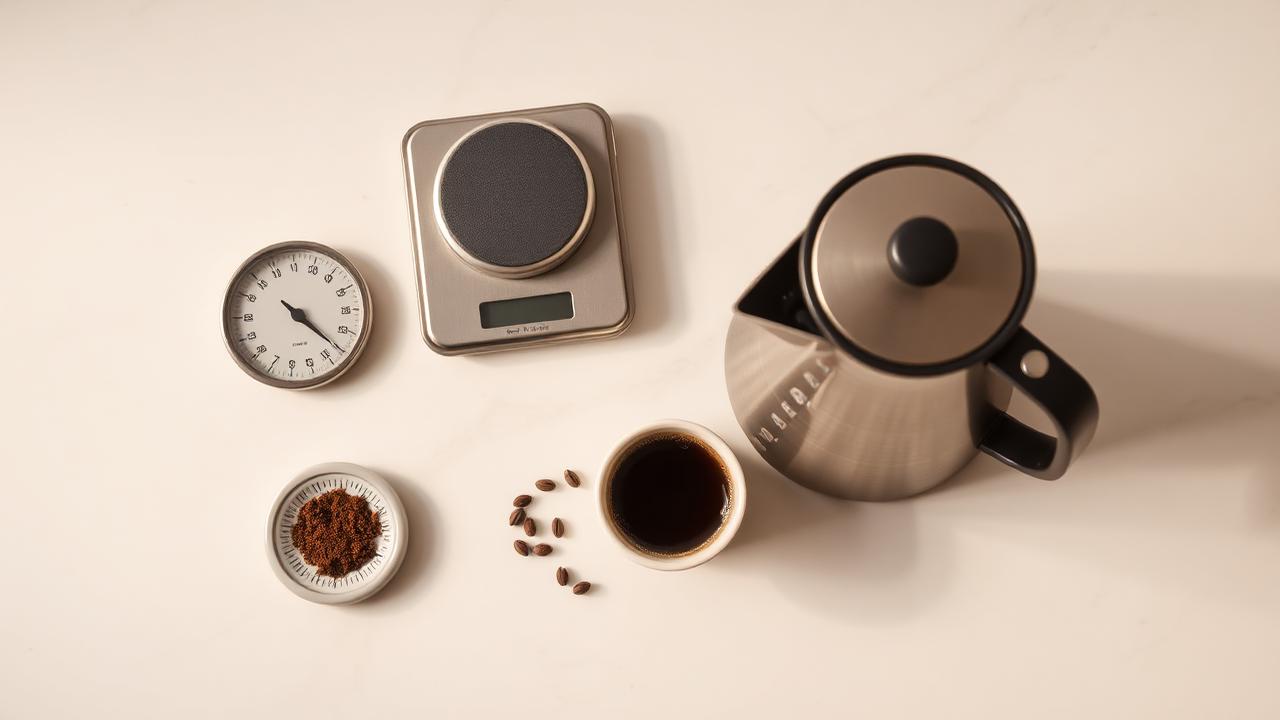
The best coffee to water ratio for beginners is 1:16: use 1 g of coffee for every 16 ml of water. For one mug, brew 15 g of ground coffee with 240 ml of water. This ratio makes a balanced cup that is neither overly strong nor weak, and it works well for pour-over, French press and drip coffee.
Key takeaways
- Start at 1:16: 15 g coffee to 240 ml water is an easy single-cup recipe.
- Use a scale; measuring coffee by spoon produces inconsistent results.
- Change the ratio before changing everything else: more water for lighter coffee, less water for stronger coffee.
- Grind size and brew time affect flavour separately from strength.
- Write down your recipe so good cups can be repeated.
What is the best coffee to water ratio for beginners?
For most new home brewers, 1:16 is the best coffee to water ratio to learn first. It means one part coffee to 16 parts water by weight. Because 1 ml of brewing water weighs approximately 1 g, the calculation is straightforward: 15 g coffee needs 240 ml water, 18 g needs 288 ml water, and 20 g needs 320 ml water. Round water quantities sensibly rather than chasing a single millilitre.
A 1:16 ratio is a practical middle ground. It gives enough dissolved coffee flavour to feel satisfying without becoming heavy, harsh or difficult to brew. It also leaves room to move in either direction. If the cup tastes thin, you can use slightly less water. If it tastes dense or too intense, use slightly more water. Make one controlled change at a time.
It is important to separate strength from extraction. The coffee-to-water ratio mainly controls strength, or how concentrated the drink feels. Grind size, contact time, water temperature and pouring technique influence extraction, which affects whether the cup tastes sour, sweet, bitter or dry. A strong cup can still be under-extracted, and a weak cup can still be bitter.
- 011:15 for a fuller, stronger cup: 16 g coffee to 240 ml water
- 021:16 for a balanced starting point: 15 g coffee to 240 ml water
- 031:17 for a lighter cup: 14 g coffee to 240 ml water
- 04Use filtered or good-tasting drinking water whenever possible
Why should beginners measure coffee in grams?
Coffee beans vary in size, density and roast level, so a tablespoon is not a dependable unit. A spoonful of dark-roasted coffee can weigh noticeably less than the same spoonful of dense, light-roasted coffee. Pre-ground coffee can also settle differently in a scoop. This means a spoon recipe may change strength from one bag to the next, even when you think you are repeating it.
A digital scale removes that uncertainty. It does not need to be expensive or specialised, but it should read in 1 g increments and fit under your brewer. Weigh dry coffee first, tare the scale, then weigh the water as you add it. This makes the ratio repeatable and gives you useful information when a cup needs adjustment.
Measuring in grams also helps you buy and grind coffee more efficiently. If you normally brew 15 g each morning, a 250 g bag gives roughly 16 servings, allowing for small losses during grinding. You can prepare only the amount you need and keep the remaining beans sealed away from heat, moisture and direct sunlight.
- 0115 g coffee is roughly one modest single serving
- 0218 g coffee suits many one-cup drippers and small French presses
- 0330 g coffee with 480 ml water makes two moderate cups at 1:16
- 04Avoid measuring brewed coffee by eye; weigh the water going into the brewer
How do you calculate a coffee to water ratio?
Write the ratio as coffee first, water second. At 1:16, multiply the coffee dose by 16 to find the water amount. For example, 18 g multiplied by 16 equals 288 g of water. Since water is close to 1 g per ml in everyday kitchen use, you can treat that as 288 ml. This is accurate enough for home brewing and keeps the method easy to remember.
To calculate coffee from a chosen water volume, divide the water by the second number in the ratio. If your favourite mug holds 300 ml and you want a 1:16 brew, divide 300 by 16. The answer is 18.75 g, so use 19 g coffee. Rounding to the nearest gram is usually more useful than trying to measure tiny fractions on a basic scale.
Do not confuse the amount of water poured with the liquid that reaches your cup. Coffee grounds retain water, usually around twice their dry weight. A brew made with 240 ml water and 15 g coffee will not yield 240 ml of drink. Use the input water weight to set your recipe; adjust the starting water quantity later if you need a particular final beverage volume.
- 01For water: coffee dose × ratio number
- 02For coffee: water amount ÷ ratio number
- 0315 g × 16 = 240 ml water
- 04300 ml ÷ 16 = 18.75 g coffee, rounded to 19 g
What ratio should you use for each brewing method?
The 1:16 starting ratio works across several manual methods, but each brewer has its own character. Pour-over brewers tend to produce a clean, aromatic cup, so 1:16 is often a comfortable place to start. French press coffee has more oils and body because its metal filter allows fine particles through; many people prefer a little more water, such as 1:16 or 1:17, to keep it clear and drinkable.
AeroPress recipes vary widely because the brewer can make a short, concentrated brew or a longer filter-style cup. For a beginner-friendly full cup, use a normal ratio rather than an ultra-concentrated competition recipe. Moka pot coffee is naturally concentrated and should not be treated like filter coffee. Fill its basket loosely with coffee, fill water to just below the safety valve, then dilute the finished coffee with hot water or milk if desired.
Espresso uses a much tighter ratio, commonly around 1:2. That means 18 g dry coffee producing about 36 g liquid espresso. It requires an espresso machine, a capable grinder and more precise control than basic filter brewing. Beginners making coffee with a dripper, cafetière or immersion brewer should focus on filter-style ratios first, rather than trying to apply espresso numbers to every method.
- 01Pour-over: begin at 1:16
- 02French press: begin at 1:16 to 1:17
- 03AeroPress, filter-style: begin at 1:15 to 1:16
- 04Batch drip machine: begin at 1:16
- 05Espresso: commonly around 1:2, measured as beverage output
How do you brew a reliable first cup at 1:16?
A consistent first recipe gives you a reference point for every later adjustment. Use freshly roasted coffee that you enjoy, preferably whole bean, and grind immediately before brewing. For pour-over, start with a medium-fine grind resembling table salt. For French press, use a medium-coarse grind, closer to coarse sand. Water should be hot but not aggressively boiling: 92 to 96 °C is a useful range for most coffees.
The aim is not to perform a perfect ritual. It is to keep the major variables steady: dose, water, temperature, grind and time. If you change all of them after one disappointing cup, you will not know what solved the problem. Taste the coffee after it cools slightly as well as when it is hot. Sweetness and fruit notes often become easier to identify below about 60 °C.
For a pour-over, the total drawdown time is a helpful diagnostic, not a universal rule. A single-cup brew using 15 g coffee and 240 ml water often finishes around 2 minutes 30 seconds to 3 minutes 30 seconds. Faster flow can indicate a grind that is too coarse; very slow flow can indicate a grind that is too fine, though filter paper, pouring and coffee freshness also matter.
- 011. Weigh 15 g coffee and grind it medium-fine for pour-over.
- 022. Heat 240 ml water to 92 to 96 °C.
- 033. Rinse the paper filter and discard the rinse water.
- 044. Add grounds, start the timer and pour 30 to 40 ml water to bloom for 30 to 45 seconds.
- 055. Pour the remaining water slowly until the scale reads 240 g.
- 066. Let the brew drain; aim for a total time of about 2 minutes 30 seconds to 3 minutes 30 seconds.
How should you adjust the ratio when coffee tastes too strong or too weak?
If the coffee tastes too strong but otherwise pleasant, increase the water while keeping the coffee dose the same. Moving from 1:16 to 1:17 is a modest adjustment: 15 g coffee would use 255 ml water instead of 240 ml. This reduces concentration without forcing you to use less coffee or alter the grinder. It is especially useful when a cup is rich and flavourful but feels too heavy for your preference.
If the coffee tastes weak, watery or lacking presence, reduce the water. With 15 g coffee, move from 240 ml at 1:16 to 225 ml at 1:15. This raises strength. Do not assume weak flavour always means you need a stronger ratio, however. If the coffee tastes both weak and sour, the brewing may be under-extracted. In that case, a finer grind, hotter water or longer contact time may help more than reducing water.
Bitter, dry or hollow coffee is not automatically too strong. A bitter cup can result from overly fine grinding, long brewing time, excessive agitation or water that is too hot for a dark roast. Keep your ratio steady while changing one extraction variable. This disciplined approach makes your notes useful and prevents a cycle of random adjustments.
- 01Too strong but balanced: add water or move from 1:16 to 1:17
- 02Too weak but pleasant: use less water or move from 1:16 to 1:15
- 03Sour and thin: grind finer, brew longer or use hotter water
- 04Bitter and dry: grind coarser, shorten contact time or reduce agitation
What mistakes make beginner coffee recipes inconsistent?
The most common mistake is using volume measures for coffee while changing bags, roasts or grinders. The next is treating a ratio as a complete recipe. Two brews can both use 1:16 yet taste very different if one has a very coarse grind and a 90-second contact time while the other has a fine grind and a four-minute brew. Record the ratio alongside the brew method, grind setting, water temperature and total time.
Stale coffee is another obstacle. Whole beans generally keep their best aroma longer than pre-ground coffee because less surface area is exposed to oxygen. Buy amounts you can finish while the coffee still smells lively, store it in an airtight container, and avoid freezing and thawing the same bag repeatedly. A good ratio cannot fully compensate for coffee that has lost its flavour.
Water quality matters more than many people expect. If your drinking water has a strong chlorine smell, excessive mineral taste or unpleasant aftertaste, those traits can carry into the cup. Use filtered water if it improves the taste in your area. Avoid distilled water for routine brewing because coffee needs some minerals in the water to extract and taste balanced.
- 01Do not rely on tablespoons for repeatable recipes
- 02Do not change ratio, grind and time all at once
- 03Do not use water that tastes unpleasant on its own
- 04Do not pack coffee tightly into a scoop or filter basket
- 05Do keep a short brew log with dose, water, time and tasting notes
When should you move away from the 1:16 ratio?
Move away from 1:16 when you can describe what you want to change. If you enjoy a fuller cup with milk, 1:15 may give the coffee enough presence to remain noticeable. If you prefer delicate, tea-like washed coffees black, 1:17 may reveal more clarity. These are preference choices, not grades of quality. The right ratio is the one that produces a cup you want to drink again.
Different coffees can also respond well to different recipes. A dense, light-roasted coffee may need a fine enough grind and sufficient temperature to extract sweetness, while a dark roast can become bitter if pushed too hard. Keep the ratio near your preferred range first, then use grind and temperature to refine the flavour. This gives you a stable base rather than chasing dramatic recipe changes.
At Capra Café, we teach beginners to earn their preferences through repetition. Brew the same coffee at 1:16 twice before changing anything. Then compare 1:15 and 1:17 on different days, using the same dose, grinder and water temperature. Your notes will reveal whether you consistently prefer more body, more clarity or a balance between the two.
- 01Choose 1:15 for more concentration and body
- 02Choose 1:16 for an all-round starting point
- 03Choose 1:17 for a lighter, more delicate cup
- 04Test ratios in 15 ml water increments when using a 15 g dose
Frequently asked questions
How much coffee do I use for 250 ml of water?
For a balanced beginner brew at 1:16, use about 16 g of coffee for 250 ml of water. The exact calculation is 15.6 g, but rounding to 16 g is practical. If you prefer a stronger cup, use 17 g at roughly 1:15. For a lighter cup, use 15 g at about 1:17.
Is 1:15 or 1:16 better for coffee?
Neither ratio is universally better. A 1:15 ratio makes a slightly stronger, fuller coffee, while 1:16 is a balanced starting point that suits many brewing methods. Beginners should begin with 1:16 because it is forgiving, then try 1:15 if the coffee tastes too light or gets diluted by milk. Keep grind size and water temperature unchanged during the comparison.
How many tablespoons of coffee are in 15 g?
Fifteen grams of coffee is often around 2 to 3 tablespoons, but it varies too much for reliable brewing. Bean size, roast level, grind size and how tightly the spoon is filled all affect the amount. Use tablespoons only as a temporary estimate. A scale that measures to 1 g will make your coffee more consistent and make ratio adjustments much easier.
What is the best coffee to water ratio for French press?
Start French press coffee at 1:16 or 1:17. A simple recipe is 30 g coarse-ground coffee with 480 ml water, steeped for 4 minutes with water around 92 to 96 °C. If the cup feels heavy or muddy, try 1:17 or use a slightly coarser grind. If it tastes weak, try 1:15 or grind a little finer.
Does a stronger coffee ratio make coffee more bitter?
A stronger ratio makes coffee more concentrated, but it does not automatically make it more bitter. Bitterness is often linked to over-extraction from a grind that is too fine, an overly long brew, high temperature or excessive agitation. If your coffee is strong but balanced, add water or move from 1:16 to 1:17. If it is bitter, adjust grind or brew time first.
Keep reading
- Coffee Grind Size Chart Explained
- Does Water Quality Affect Coffee Taste?
- How to Brew a Good Cup of Coffee at Home