Brewing basics · 6 min read
How to Brew Filter Coffee at Home
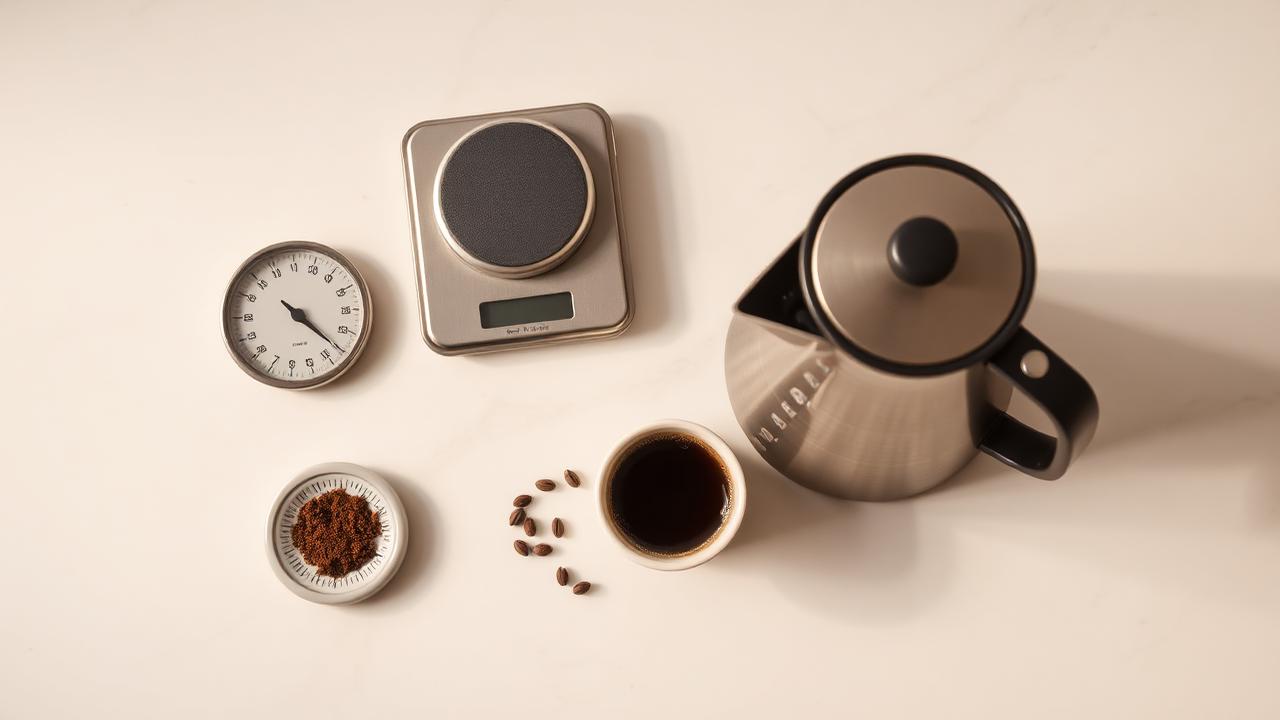
Short answer
To brew filter coffee at home, use 15 g of medium-ground coffee for every 250 ml of filtered water at 92–96°C. Bloom the grounds with twice their weight in water for 30–45 seconds, then pour steadily until you reach your target volume. A full brew should usually finish in 2½–3½ minutes.
Key takeaways
- Start with a 1:16 coffee-to-water ratio for a balanced cup.
- Use a medium grind for most drippers and adjust based on brew time.
- Keep water between 92°C and 96°C for reliable extraction.
- Bloom fresh coffee for 30–45 seconds before the main pour.
- Change one variable at a time when a brew tastes sour, bitter or weak.
What is the easiest way to brew filter coffee at home?
The easiest route is a pour-over dripper such as a V60-style cone, Kalita Wave or similar filter brewer. These brewers make a clean, bright cup and need only a dripper, paper filter, kettle, scales, grinder and server or mug. A French press is also a form of filter coffee, but paper-filtered coffee is usually what people mean when they ask how to brew filter coffee at home.
Good filter coffee is less about elaborate technique than control. Measure your coffee and water, use freshly ground beans, wet all the grounds evenly and let the water pass through at a steady pace. Once those foundations are in place, small changes to grind size, ratio and pouring speed become useful rather than confusing.
For a dependable first brew, make one cup with 15 g coffee and 250 ml water. This is enough coffee to taste clearly without wasting beans while you practise. Use a light or medium roast intended for filter brewing where possible, as very dark coffee can become harsh when brewed with a paper filter.
- 01Brewer: one-cup paper-filter dripper
- 02Coffee: 15 g, freshly ground
- 03Water: 250 ml, filtered if possible
- 04Grind: medium, similar to fine sand
- 05Target brew time: 2½–3½ minutes
What equipment do you need for filter coffee?
You do not need a highly technical set-up, but a few basic tools make a noticeable difference. Digital scales are the most useful purchase because they remove guesswork from both coffee dose and water volume. A burr grinder is the next priority. Blade grinders chop beans unevenly, creating powder and large pieces together, which makes extraction inconsistent.
A gooseneck kettle gives the most controlled pour, especially with cone-shaped drippers, but it is not essential at the beginning. A standard kettle can work if you pour carefully and slowly. If your kettle does not display temperature, bring it to the boil and leave the lid open for roughly 30–60 seconds before brewing, depending on room temperature and kettle volume.
Paper filters should fit the brewer properly and be rinsed before use. Rinsing removes papery flavour, warms the brewer and helps the filter sit flat against the walls. Use clean, low-odour water too. If the water tastes strongly chlorinated, metallic or overly hard from the tap, it will affect the finished cup.
- 01Paper-filter brewer and matching filters
- 02Digital scales reading to 0.1 g
- 03Burr grinder
- 04Kettle and fresh water
- 05Timer or phone stopwatch
- 06Mug, carafe or server
What coffee-to-water ratio should you use?
A 1:16 coffee-to-water ratio is an excellent starting point for filter coffee. It means one part coffee to 16 parts water by weight. For example, 15 g coffee needs 240 ml water, while 20 g coffee needs 320 ml water. Because 1 ml of water weighs approximately 1 g, you can use millilitres and grams interchangeably for everyday brewing.
Ratios determine strength, not necessarily extraction. A stronger brew uses more coffee or less water; a lighter brew uses less coffee or more water. If a cup tastes balanced but too intense, dilute it slightly with hot water or use a gentler ratio next time. If it tastes thin but pleasant, use a little more coffee before changing the grind.
Avoid judging coffee only by how dark it looks in the cup. A pale-looking coffee can be sweet and concentrated, while a darker coffee may still taste weak. Taste for sweetness, acidity, body and finish. The goal is not maximum strength, but a cup with enough flavour to feel complete without bitterness or dryness.
- 01Light and tea-like: 1:17, such as 15 g coffee to 255 ml water
- 02Balanced everyday brew: 1:16, such as 15 g coffee to 240 ml water
- 03Fuller and stronger: 1:15, such as 15 g coffee to 225 ml water
- 04Two cups: 30 g coffee to 480 ml water at a 1:16 ratio
How do you brew filter coffee step by step?
Start by weighing the beans before grinding. Grind immediately before brewing, as ground coffee loses aromatic compounds far more quickly than whole beans. Place the paper filter in the brewer, rinse it thoroughly with hot water and discard the rinse water. Set the brewer and server on the scales, add the ground coffee and gently shake the brewer to level the bed.
The first pour is called the bloom. Fresh coffee releases trapped carbon dioxide when hot water first reaches it. Giving it a short bloom helps later water contact the coffee more evenly. Pour enough water to wet every part of the bed, then wait before continuing. If the coffee swells dramatically and bubbles actively, it is likely quite fresh.
After the bloom, pour in small, controlled additions. Keep the water level moderate rather than filling the brewer to the top. A calm circular pour is useful, but avoid repeatedly pouring onto the paper filter, where water can bypass the coffee. When the final water has drained through, remove the brewer, swirl the server gently and serve the coffee while it is warm.
- 011. Heat 250 ml water to 92–96°C.
- 022. Weigh 15 g coffee and grind it medium.
- 033. Rinse the paper filter with hot water and discard the rinse water.
- 044. Add the coffee, level the bed and start the timer.
- 055. Pour 30–40 ml water to bloom all grounds for 30–45 seconds.
- 066. Pour slowly up to 250 ml total water, finishing the pour by about 1 minute 45 seconds.
- 077. Let the coffee draw down fully; aim for a total time of 2½–3½ minutes.
How fine should you grind coffee for filter brewing?
For most manual filter brewers, begin with a medium grind. It should look finer than coarse sea salt but not as powdery as espresso. The exact setting depends on the grinder, brewer shape, paper filter and dose, so descriptions can only take you so far. Your brew time and taste are more reliable guides than a named grinder number.
If water runs through in less than about 2½ minutes for a one-cup pour-over, the grind is probably too coarse or the pouring was too fast. The cup may taste sharp, sour, salty or watery because the water did not dissolve enough from the coffee. Grind slightly finer for the next brew, keeping the same coffee dose, water amount and pouring pattern.
If the brew takes longer than about 3½–4 minutes, the grind may be too fine. The coffee can taste bitter, woody, astringent or drying on the tongue. Grind coarser in a small step. Very slow drawdown can also happen when a grinder produces excessive fine particles, when coffee is darkly roasted or when agitation has compacted the bed.
- 01Fast brew and sour taste: grind finer
- 02Slow brew and bitter, dry taste: grind coarser
- 03Balanced flavour but weak strength: use more coffee or less water
- 04Balanced flavour but excessive strength: use less coffee or more water
Why do water temperature and pouring matter?
Water temperature affects how readily flavour compounds dissolve. For most filter coffee, 92–96°C works well. Use the higher end of that range for lighter roasts, which are denser and often need more energy to extract. Use around 90–93°C for darker roasts if they taste aggressively bitter or smoky at hotter temperatures.
Pouring controls contact time and agitation. A slow, even pour helps maintain a consistent water level and encourages even extraction. Pouring too forcefully can stir fine particles downwards and clog the filter, extending the brew. Pouring only in the centre can leave dry coffee around the edges, while pouring directly onto the filter lets water escape without passing fully through the bed.
Do not chase a perfect pouring pattern at the expense of consistency. Choose a simple method you can repeat: bloom, then two or three steady pours. Record the dose, water amount, temperature, brew time and a brief tasting note. This makes it easier to understand whether the next adjustment should be grind size, ratio or temperature.
- 01Light roast: 94–96°C
- 02Medium roast: 92–95°C
- 03Darker roast: 90–93°C
- 04Keep the coffee bed wet, not flooded
- 05Use gentle circles and finish with a small centre pour
How do you fix sour, bitter or weak filter coffee?
Sour coffee is often under-extracted, meaning the water has not removed enough of the coffee's sweeter and deeper flavours. This can happen with a coarse grind, cool water, short brew time or uneven wetting. First, grind a little finer. If the brew time is already in range, raise the water temperature by 1–2°C or improve the bloom and pouring coverage.
Bitter, harsh or drying coffee is often over-extracted. Try a slightly coarser grind, especially if the drawdown is slow. Check that you are not using water that is too hot for a dark roast and avoid excessive stirring or aggressive pouring. Bitterness can also come from beans that are roasted very dark, so technique cannot always turn them into a bright, delicate filter coffee.
Weak coffee and poorly extracted coffee are different problems. A weak cup may taste balanced but lack intensity; increase the dose or reduce the water. An under-extracted cup may taste both weak and sour; change the grind first. Make one adjustment at a time, then taste again. This is the fastest way to build reliable brewing instincts at home.
- 01Sour and thin: grind finer
- 02Sour with a fast drawdown: grind finer and pour more evenly
- 03Bitter and dry: grind coarser
- 04Weak but pleasant: increase coffee dose by 1–2 g
- 05Too strong but balanced: add 10–20 ml more water
How can you make your home filter coffee more consistent?
Consistency begins with repeatable inputs. Use the same brewer, coffee dose, ratio and filter type for several brews before making major changes. Switching beans, filters, grind settings and pouring style at once makes it impossible to know why the result changed. Even experienced baristas keep variables controlled when dialling in a new coffee.
Store whole beans in an airtight container away from heat, sunlight and strong smells. Do not keep them in the refrigerator, where condensation and food odours can affect them. Buy quantities you can use within a few weeks of opening. Fresh coffee is easier to brew, but extremely freshly roasted coffee can release so much gas that it benefits from a little rest before filter brewing.
At Capra Café, we teach home brewers to keep a simple brew note rather than relying on memory. Write down the coffee name, roast date, dose, water amount, grind setting, temperature, total time and tasting result. After three or four brews, patterns become clear. A small adjustment then feels deliberate, not like trial and error.
- 01Weigh coffee and water every time
- 02Grind immediately before brewing
- 03Use the same recipe for at least two attempts
- 04Change only one variable per brew
- 05Keep brief tasting notes
Frequently asked questions
How much coffee do I need for 250 ml of filter coffee?
Use 15–16 g of coffee for 250 ml water as a balanced starting point. This is close to a 1:16 ratio and suits most paper-filter brewers. Use 17 g if you prefer a fuller, stronger cup, or 14 g for a lighter cup. Keep the grind and water temperature the same while testing strength.
Can you make filter coffee without a gooseneck kettle?
Yes. A gooseneck kettle improves control, but it is not required for good filter coffee. Use a standard kettle and pour slowly from a low height, keeping the coffee bed evenly wet. Avoid a heavy stream that splashes onto the paper filter. Measuring your coffee and water accurately matters more than owning a specialist kettle.
Why is my filter coffee sour?
Filter coffee usually tastes sour when it is under-extracted. The grind may be too coarse, the water may be too cool, the brew may finish too quickly or some grounds may remain dry during pouring. Start by grinding slightly finer. For a one-cup brew, aim for a total drawdown of roughly 2½–3½ minutes and use water at 92–96°C.
How long should filter coffee take to brew?
A 250 ml pour-over made with 15 g coffee should usually take 2½–3½ minutes from the first bloom pour to the final drip. Faster brewing can produce a thin, sour cup, while a much slower brew may taste bitter or dry. Treat time as a guide, then use taste to decide whether the grind needs adjustment.
Should you use boiling water for filter coffee?
Boiling water can work for very light roasts, but 92–96°C is a more dependable range for most filter coffee. Water straight off the boil can make medium and dark roasts taste harsh or bitter. If you do not have a temperature-controlled kettle, boil the water, then let it stand with the lid open for around 30–60 seconds before pouring.
Keep reading
- Best Coffee to Water Ratio for Beginners
- Coffee Grind Size Chart Explained
- Does Water Quality Affect Coffee Taste?