Brewing basics · 7 min read
How to Brew Coffee Like a Pro at Home
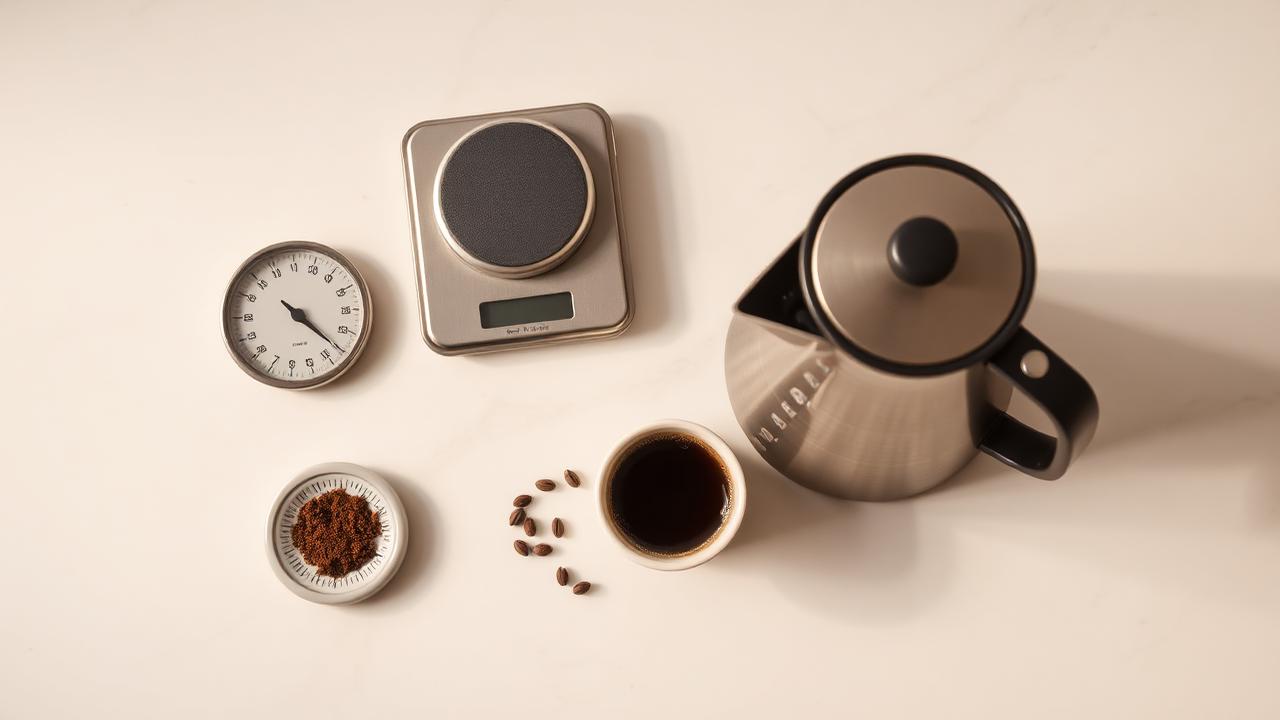
Short answer
To brew coffee like a pro at home, use freshly roasted whole beans, weigh coffee and water, match the grind to your brewer, and keep water between 92 and 96°C. Start with a 1:16 coffee-to-water ratio, then adjust grind, dose or time one variable at a time until the cup tastes balanced.
Key takeaways
- Use a scale: 15 g coffee to 240 ml water is a reliable starting point.
- Grind immediately before brewing and match the grind size to the method.
- Use clean, filtered water at 92–96°C for most black coffee brews.
- Change only one variable at a time when correcting sour, bitter or weak coffee.
- Keep your brewer clean; old coffee oils quickly spoil flavour.
What does it take to brew coffee like a pro at home?
Professional-quality coffee at home does not require an expensive espresso machine or complicated recipes. It requires repeatable control. The most important controls are coffee freshness, dose, water quantity, grind size, water temperature, contact time and agitation. When these are consistent, you can identify why a cup tastes bright, harsh, thin, heavy or bitter and make a useful adjustment rather than guessing.
A good home setup begins with a burr grinder, a digital scale accurate to 0.1 g, a timer and a brewer you enjoy using. A gooseneck kettle gives more control for pour-over coffee, but a normal kettle can still make excellent coffee. Spend first on a grinder and fresh coffee, because even a premium brewer cannot rescue stale beans or uneven grounds.
Think of brewing as extraction: water dissolves flavour compounds from ground coffee. Under-extracted coffee often tastes sharp, sour, salty or empty. Over-extracted coffee can taste dry, woody, harsh or bitter. The target is a sweet, clear, balanced cup with enough body for the brewing method. Your recipe is simply the set of variables that helps you reach that target reliably.
Which coffee beans and roast date should you choose?
Buy whole beans in quantities you can finish within two to four weeks after opening. Look for a roast date rather than relying only on a best-before date. Most coffees brew well after a short resting period, commonly about 7 to 14 days after roasting, although the ideal rest varies by coffee and roast profile. Keep beans in their original resealable bag or an airtight container, away from heat, sunlight and moisture.
Choose a roast level that suits both your brewer and taste. Light roasts often show floral, citrus and fruit notes, but need careful grinding and enough heat to extract properly. Medium roasts are usually forgiving and balanced for filter brewing. Darker roasts can deliver chocolatey, nutty and smoky flavours, but they can turn bitter if brewed too finely, too hot or for too long.
Do not judge quality only by roast colour or tasting-note language. A coffee described as peach, caramel or cocoa will not taste like flavoured coffee; these are reference points for aroma and acidity. Start with coffees whose broad profile you already enjoy. If you prefer tea-like clarity, try a washed light or medium roast. If you prefer body and chocolate notes, try a medium or medium-dark coffee.
Why do a burr grinder and digital scale matter?
A burr grinder is the single most useful upgrade for brewing coffee at home. Blade grinders chop beans into a wide range of particle sizes. Fine dust extracts too quickly while large pieces extract too slowly, creating bitterness and sourness in the same cup. Burr grinders produce more even particles, making flavour clearer and recipes easier to repeat.
A scale replaces unreliable spoon measurements with a defined ratio. Coffee bean size, roast level and grind texture all change how much coffee fits in a scoop. Weighing removes that uncertainty. For most filter methods, begin with 60 g of coffee per litre of water, which is a 1:16.7 ratio. A stronger starting point is 1:15; a lighter one is 1:17.
Use the scale throughout the brew, not just for the dry dose. Weighing water allows you to repeat a recipe and judge whether a change helped. Timing the brew gives the same advantage. If an 18 g pour-over tastes sharp at 2 minutes 10 seconds, you have useful information. If you only know that you poured “about two cups”, you do not have a recipe to improve.
- 01Reliable starting recipes:
- 02V60 or cone dripper: 15 g coffee, 250 ml water, 2 minutes 45 seconds to 3 minutes 30 seconds.
- 03French press: 18 g coffee, 300 ml water, 4 minutes steeping, then 5 to 8 minutes settling.
- 04AeroPress: 15 g coffee, 220 ml water, 2 minutes total brew time.
- 05Moka pot: fill the basket level without tamping; use water just below the safety valve.
- 06Espresso: 18 g ground coffee in, 36 g liquid espresso out, about 25 to 32 seconds.
What water temperature and coffee-to-water ratio should you use?
For most filter coffee, use water between 92 and 96°C. Water below this range can struggle to extract dense light-roasted coffee and may produce a sour or weak cup. Water that is too hot can make delicate coffees taste harsh, especially when the grind is very fine or the brew runs long. If you do not have a temperature-controlled kettle, let freshly boiled water sit for roughly 30 to 60 seconds before pouring.
Start with a ratio rather than a fixed number of scoops. A 1:16 ratio means 1 g of coffee for every 16 g or ml of water. For one generous mug, use 18 g coffee and 288 ml water. For two smaller cups, use 30 g coffee and 480 ml water. Because brewed coffee is mostly water, water quality matters as much as people expect.
Use clean, pleasant-tasting water. If your tap water has a strong chlorine smell, high mineral taste or noticeable off-flavour, filter it before brewing. Distilled water is not ideal on its own because coffee needs some minerals for balanced extraction. Avoid repeatedly boiling the same kettleful, and keep the kettle clean of limescale, which can affect both temperature performance and taste.
How do you make a precise pour-over coffee?
Pour-over brewing rewards even wetting and a steady pace. A cone dripper such as a V60 produces a clear, aromatic cup, but it is sensitive to grind size and pouring technique. Use a medium-fine grind that feels finer than sand but not powdery. Set the paper filter in the dripper and rinse it thoroughly with hot water to remove paper flavour and warm the brewer; discard the rinse water before adding coffee.
After adding the ground coffee, gently shake the dripper so the bed is level. Start the timer and pour enough water to saturate all grounds. This first bloom releases trapped gas, particularly from fresh coffee. A slow, controlled pour in small circles keeps the coffee bed evenly saturated. Avoid pouring hard onto the paper filter, where water can bypass the coffee.
When the drawdown finishes, the coffee bed should look relatively level, not deeply cratered or stuck with thick sludge around the sides. Taste before changing anything. If it is sour and thin, grind a little finer or extend the brew slightly. If it is bitter, dry or hollow, grind coarser or shorten the contact time. Change one variable, then brew again with the same ratio and water temperature.
- 01Pour-over method for 15 g coffee and 250 ml water:
- 020 seconds: add 15 g medium-fine coffee to a rinsed filter.
- 030 to 30 seconds: pour 45 ml water and ensure all grounds are wet.
- 0430 to 75 seconds: pour steadily to 150 ml.
- 0575 to 120 seconds: pour steadily to 250 ml.
- 06Aim for the final drip to finish between 2 minutes 45 seconds and 3 minutes 30 seconds.
- 07Serve promptly after a gentle swirl of the brewed coffee.
How can you brew excellent French press and AeroPress coffee?
A French press is straightforward, full-bodied and well suited to larger servings. Its metal filter lets more oils and fine particles reach the cup than paper filtration, creating a richer texture. Use a coarse, even grind and avoid plunging aggressively, which stirs up sediment. The traditional four-minute recipe works well, but letting the coffee settle after breaking the crust can produce a cleaner cup with less grit.
For a French press, use 18 g coffee and 300 ml water at about 94°C. Pour all the water over the grounds, stir gently once or twice to remove dry pockets, then place the lid on without plunging. At four minutes, break the surface crust with a spoon and skim away floating foam if desired. Replace the lid, wait another five to eight minutes, then lower the plunger slowly and pour immediately.
The AeroPress is more flexible and forgiving. It can make a concentrated, espresso-like cup or a clean, longer coffee. A simple standard recipe uses 15 g medium-fine coffee, 220 ml water at 90 to 94°C and a two-minute total brew. Stir briefly, press with gentle pressure, and stop when you hear a hiss. Excessive force can push fine sediment through the filter and make the cup taste rough.
How do you diagnose sour, bitter, weak or muddy coffee?
Taste problems are easier to solve when you separate strength from extraction. Strength describes how concentrated the drink feels; extraction describes which compounds were dissolved from the grounds. A coffee can be strong but under-extracted, or weak but over-extracted. Before changing anything, taste the coffee once it has cooled slightly. Very hot coffee hides sweetness and makes bitterness more prominent.
Sourness that feels sharp, lemony in an unpleasant way or salty often signals under-extraction. Try a finer grind, slightly hotter water, more agitation or a longer brew. Bitterness, a drying finish or a burnt woody character often signals over-extraction. Try a coarser grind, a shorter brew, less agitation or slightly cooler water. If the coffee simply tastes too intense, use more water; if it tastes watery, use less water or more coffee.
Muddy coffee often comes from too many fines, an unsuitable grind, dirty equipment or forceful plunging. Clean grinders, brewers and servers regularly with coffee-specific detergent or mild washing-up liquid, then rinse thoroughly. Old oil deposits can make fresh coffee taste rancid. At Capra Café, we treat cleaning as part of the recipe, not an afterthought, and the same standard makes a visible difference at home.
- 01Quick correction guide:
- 02Sour and thin: grind finer, or raise water temperature by 1 to 2°C.
- 03Bitter and dry: grind coarser, or lower water temperature by 1 to 2°C.
- 04Too strong: keep the dose fixed and add 20 to 40 ml more water.
- 05Too weak: use 1 to 2 g more coffee, or reduce water by 20 to 40 ml.
- 06Uneven or muddy: improve grind consistency, rinse filters and clean equipment.
What daily habits make home coffee consistently better?
Build a short routine that removes avoidable variation. Weigh your beans, grind immediately before brewing, use the same recipe for several attempts and record what you taste. A note can be as simple as: 18 g, 288 ml, medium-fine, 94°C, 3 minutes 05 seconds, sweeter than yesterday. This makes progress far quicker than chasing a new method every morning.
Preheat any brewer or cup that will contact hot coffee, particularly ceramic drippers, French presses and thick mugs. Cold equipment steals heat early in the brew, which can reduce extraction. Rinse paper filters generously and empty the rinse water. Keep beans sealed, keep grinders free of retained grounds and do not leave brewed coffee sitting on a hot plate, where it continues to degrade.
Finally, allow yourself to brew for preference, not only for technical perfection. Some people enjoy a heavier 1:15 French press; others prefer a bright 1:17 pour-over. The professional approach is not copying one universal recipe. It is using clear measurements, tasting attentively and making deliberate changes until the coffee tastes right to you.
Frequently asked questions
What is the best coffee-to-water ratio for home brewing?
A dependable starting ratio for filter coffee is 1:16, meaning 1 g of coffee for every 16 ml of water. Use 15 g coffee with 240 ml water or 18 g with 288 ml water. For a stronger cup, move towards 1:15. For a lighter cup, move towards 1:17. Keep the ratio fixed while adjusting grind size for extraction.
Should coffee be ground fine or coarse for home brewing?
Grind size depends on the brewer. Use coarse grounds for French press, medium-fine grounds for pour-over, medium-fine to fine grounds for AeroPress and fine grounds for espresso. If coffee tastes sour or weak, grind finer. If it tastes bitter, dry or slow to drain, grind coarser. Make small adjustments, because a few clicks can noticeably change the brew.
How hot should water be for brewing coffee?
Use water between 92 and 96°C for most filter coffee. Light roasts often benefit from the upper end of that range, while darker roasts can taste smoother around 92 to 94°C. For AeroPress, 90 to 94°C is a practical range. Water that is too cool may under-extract coffee, while overly hot water can emphasise bitterness in some recipes.
How long should coffee bloom before pouring?
Bloom coffee for 30 to 45 seconds for most pour-over recipes. Use about two to three times the coffee dose in water, so 15 g coffee needs roughly 35 to 45 ml water. The bloom wets the grounds and releases carbon dioxide, helping later pours extract more evenly. Very fresh coffee may benefit from a slightly longer bloom of up to 60 seconds.
Why does my home-brewed coffee taste bitter?
Bitter coffee is commonly caused by over-extraction, stale coffee, excessively dark roasting or dirty equipment. Start by grinding slightly coarser and shortening the brew time. If needed, lower water temperature by 1 to 2°C. Clean the brewer and grinder thoroughly, and check the roast date. Do not confuse bitterness with strength; adding water may dilute a bitter cup without fixing the extraction.
Keep reading
- Best Coffee to Water Ratio for Beginners
- Coffee Grind Size Chart Explained
- Does Water Quality Affect Coffee Taste?