Brewing basics · 8 min read
How to Brew Coffee at Home Without a Machine
Short answer
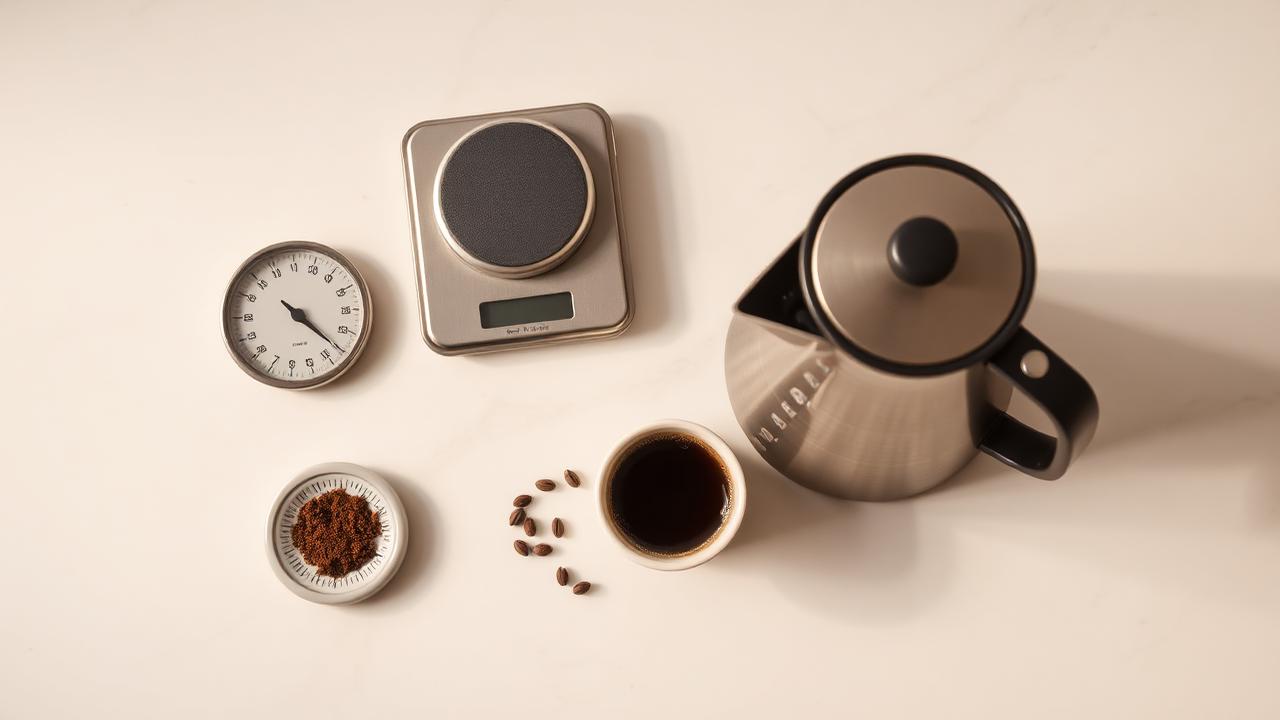
To brew coffee at home without a machine, combine 15 g medium-ground coffee with 250 ml water at 92–96°C, steep for 4 minutes, then separate the grounds with a fine sieve, paper filter or careful decant. Use a 1:16 coffee-to-water ratio, adjust grind and steep time to taste, and serve immediately.
Key takeaways
- Start with a 1:16 coffee-to-water ratio for a balanced cup.
- Use water just off the boil, ideally 92–96°C.
- Steep medium-ground coffee for about 4 minutes.
- Separate grounds carefully to avoid bitterness and grit.
- Fresh coffee and clean water matter more than expensive equipment.
What is the easiest way to brew coffee without a machine?
The easiest way to brew coffee without a machine is immersion brewing: put ground coffee in a heatproof jar, mug or jug, add hot water, wait, and filter or decant it. This method works because water stays in contact with the coffee for a controlled period, extracting flavour without needing pressure, pumps or electricity. It is forgiving, inexpensive and suitable for a first cup as well as daily brewing.
For one serving, use 15 g coffee and 250 ml water. That is a 1:16 ratio, which produces a balanced strength for most medium-roast coffees. If you do not own scales, use roughly 2 level tablespoons of ground coffee, although weighing is more consistent. A measuring jug, kettle, spoon and fine sieve are enough to begin, while a paper filter improves clarity.
The key variables are coffee dose, water volume, water temperature, grind size and contact time. Change one variable at a time. If the cup tastes thin or sour, use a finer grind, slightly more coffee or a longer steep. If it tastes harsh, dry or overly bitter, use a coarser grind, slightly less coffee or a shorter steep.
- 01Balanced starting ratio: 15 g coffee to 250 ml water
- 02Water temperature: 92–96°C
- 03Recommended grind: medium, similar to granulated sugar
- 04Steep time: 4 minutes
- 05Serving yield: about 220–230 ml after grounds absorb water
What coffee and water should you use?
Use whole beans when possible and grind them shortly before brewing. Coffee loses aromatic compounds quickly after grinding, so freshly ground coffee usually tastes sweeter and more expressive. A basic blade grinder can work, but a burr grinder gives a more even particle size and makes brewing easier to repeat. If buying pre-ground coffee, choose a small bag and ask for a medium grind suitable for filter coffee.
Medium roasts are the simplest place to start because they tend to offer both sweetness and clear origin character. Light roasts can taste lively and floral but often benefit from hotter water and careful extraction. Dark roasts dissolve quickly and may become bitter if steeped too long. There is no single correct roast level; the useful question is whether the recipe brings out sweetness, balance and a pleasant finish.
Water is an ingredient, not merely a carrier. Use fresh cold water that tastes clean on its own. If your tap water has a strong chlorine smell or leaves heavy scale in a kettle, filtered water may produce a cleaner cup. Do not use distilled water, as it can make coffee taste flat. In Lahore, where water quality can vary by area, filtered drinking water is often the safer starting point.
- 01Buy coffee in small quantities for better freshness
- 02Use a medium grind for most no-machine methods
- 03Avoid water with obvious chlorine or stale flavours
- 04Use fresh water each time rather than reboiled kettle water
How do you make coffee in a jar or mug?
A jar or mug brew is a practical version of cupping, the tasting method used by coffee professionals. It needs no specialist brewer and produces a full-bodied cup because the coffee oils remain in the drink. Choose a heatproof vessel with enough room to stir without spilling. A 350 ml mug or 400 ml heatproof jar is ideal for a 250 ml recipe.
Begin by warming the vessel with hot water, then discard the water. Add 15 g medium-ground coffee. Pour 250 ml water at 92–96°C over the grounds, ensuring all the coffee is wet. Stir gently after 30 seconds to break the dry crust on top. Leave the coffee undisturbed until the 4-minute mark, then remove floating grounds with a spoon if you want a cleaner finish.
At 5 minutes, pour slowly into another cup, leaving the sediment at the bottom behind. You can drink directly from the brewing mug, but the final sips may be gritty. A fine mesh sieve will remove larger particles. For more clarity, line the sieve with a rinsed paper towel or use a paper coffee filter, though a paper towel may slow the drawdown and can add a faint paper flavour if not rinsed first.
- 011. Warm a 350–400 ml heatproof mug or jar.
- 022. Add 15 g medium-ground coffee.
- 033. Pour in 250 ml water at 92–96°C.
- 044. Stir at 30 seconds and steep until 4 minutes.
- 055. Decant slowly at 5 minutes, leaving sediment behind.
How can you brew coffee with a saucepan?
A saucepan is useful when making coffee for two or more people, especially when you do not have a large brewer. The method is still immersion brewing, but it allows you to heat water and serve from one vessel. Do not boil coffee grounds in the pan. Boiling coffee after the grounds are added can produce a rough, bitter flavour and makes the extraction difficult to control.
For two servings, add 30 g medium-ground coffee to a clean saucepan or heatproof jug. Bring 500 ml water to the boil separately, then let it stand for about 30 seconds. Pour the water over the grounds, stir once and cover the pan with a lid or small plate. Steep for 4 minutes. Covering helps retain heat, which matters more when brewing a larger volume.
After steeping, let the pan stand for another minute so the grounds settle. Pour gently through a fine sieve into cups, or use a ladle to transfer the coffee through a paper filter placed in a funnel. If using a sieve alone, pour slowly and stop before the thick layer of grounds reaches the lip. The last 30–50 ml is usually the muddiest part, so it is fine to leave it behind.
Can you make pour-over coffee without a dripper?
Yes. You can make a simple pour-over using a clean funnel and a paper filter. A kitchen funnel is ideal, but a small sieve can also hold a filter if it sits securely over a mug or jug. The goal is to let water pass through a bed of coffee at a steady pace. This produces a cleaner, lighter-bodied cup than immersion brewing because the paper traps fine particles and oils.
Use 15 g coffee to 250 ml water and grind slightly finer than for a jar brew, closer to table salt. Place the paper filter in the funnel, set it over a server or mug, and rinse it thoroughly with hot water. Rinsing removes papery taste and warms the vessel. Discard the rinse water before adding coffee, then gently shake the funnel to level the grounds.
Pour 40 ml water over the coffee and wait 30 seconds. This first pour is called the bloom; it releases trapped gas and helps water contact the grounds evenly. Continue pouring slowly in small circles until you reach 250 ml total water. Aim for the brew to finish dripping in 2 minutes 30 seconds to 3 minutes 30 seconds. If it finishes much faster, grind finer; if it stalls, grind coarser.
- 01Coffee: 15 g, medium-fine grind
- 02Water: 250 ml at 92–96°C
- 03Bloom: 40 ml for 30 seconds
- 04Remaining water: pour gradually to 250 ml total
- 05Target drawdown: 2 minutes 30 seconds to 3 minutes 30 seconds
How do you make coffee with a French press-style method without a press?
A French press works by steeping coffee and then pushing down a metal mesh. Without the press, you can copy the brewing part almost exactly and use a sieve, cloth or careful decanting to separate the grounds. The result will be similar in body: rounded, textured and slightly heavier than paper-filtered coffee. It is especially good for coffees with chocolate, nut, nutty or dried-fruit notes.
Use a coarser grind than for the jar method, similar to coarse sand. For one generous cup, combine 18 g coffee with 300 ml water at 94–96°C. Stir after pouring, cover, and steep for 4 minutes. Break the crust with a spoon, then let the coffee settle for 1 additional minute. This short rest gives larger particles time to sink and makes serving cleaner.
Pour through a fine sieve into a warmed cup, or decant into another jug before serving. A clean muslin cloth can work as an emergency filter, but it must be free from detergent scent, fabric softener and food odours. Rinse it with hot water first. Cloth filtering removes more fines than a sieve while retaining more body than paper, making it a useful middle ground when brewing at home.
How do you make Turkish-style coffee on the stove?
Turkish-style coffee is one of the few methods where very fine grounds are intentionally served in the cup. Traditionally it is made in a cezve, but a small saucepan can work. The drink is short, rich and unfiltered, with a layer of sediment at the bottom. It is not the same as espresso: it has no pump pressure, and its texture comes from the very fine grind and suspended coffee particles.
For one small serving, use 7 g very finely ground coffee and 70 ml cool water. Add sugar before heating if you use it, because stirring after the coffee begins to rise can disturb the foam. Heat gently over low heat. As the coffee warms, a dark foam will form around the edges. Remove the pan from the heat just before it boils over; do not allow it to roll vigorously.
Pour the coffee slowly into a small cup, including the foam. Let it stand for 1 to 2 minutes before drinking so the grounds settle. Do not drink the final mouthful, where sediment collects. This method benefits from coffee ground specifically for Turkish coffee, which is much finer than standard filter coffee. If the grind is too coarse, the cup will taste weak and the sediment will feel sandy.
How can you improve flavour without buying more equipment?
The most effective improvement is measuring coffee and water by weight. A simple digital kitchen scale removes guesswork and lets you repeat a good recipe. If your 15 g to 250 ml brew tastes too strong, do not immediately add more water to the finished cup. First try reducing the dose to 14 g, then compare. Small changes are easier to understand than large, random adjustments.
Control water temperature without a thermometer by letting freshly boiled water rest. In a covered kettle, 30 seconds off the boil is usually suitable for medium and darker roasts. For lighter roasts, use water closer to boiling. Preheating your mug, jar, funnel or serving jug helps keep the brew within a useful temperature range, particularly in cool rooms or when using a thick ceramic cup.
Taste before adding milk, sugar or syrups. You do not need to drink coffee black, but tasting first helps identify whether the brew itself is balanced. If it is sharp and sour, increase extraction with finer grinding, hotter water or more time. If it is bitter and drying, reduce extraction with a coarser grind, cooler water or less time. Good home brewing is a process of small, deliberate adjustments.
- 01Sour and thin: grind finer, steep longer or use hotter water
- 02Bitter and dry: grind coarser, steep less or use cooler water
- 03Weak: increase coffee dose from 15 g to 16–17 g per 250 ml
- 04Too strong: reduce dose to 13–14 g per 250 ml
- 05Muddy: use a paper filter or leave more sediment in the vessel
What mistakes should you avoid when brewing coffee without a machine?
Avoid using water that is either lukewarm or aggressively boiling on the grounds. Lukewarm water often underextracts coffee, leaving it sour and hollow. Water straight from a rolling boil can be useful for light roasts, but it may make darker roasts taste harsh. A short rest after boiling is a simple and reliable habit. Aim for 92–96°C rather than treating every coffee the same.
Do not leave brewed coffee sitting on its grounds for too long. Once the desired steep time has passed, decant or filter it. A mug brew that sits for 10 minutes will continue extracting and can become woody or bitter, especially with darker coffee. Likewise, avoid stirring repeatedly during brewing. One gentle stir is enough to wet the grounds; excessive agitation can create more fine particles and a muddier cup.
Finally, keep your equipment clean. Coffee oils build up on sieves, spoons, jars and cloth filters, becoming stale over time. Wash brewing tools with hot water and mild unscented detergent, then rinse well. At Capra Café, we treat consistency as the foundation of good coffee, and the same principle applies at home: use a repeatable recipe, clean tools and one adjustment at a time.
Frequently asked questions
Can I make coffee without a coffee maker or filter?
Yes. Add medium-ground coffee to a mug or heatproof jar, pour in hot water, steep for 4 minutes, then let the grounds settle and pour carefully into another cup. A fine sieve helps, but it is not essential. Use 15 g coffee and 250 ml water as a dependable starting recipe, and leave the final sediment in the vessel.
How much coffee should I use for one cup without a machine?
Use 15 g ground coffee for 250 ml water for a balanced cup. This is approximately a 1:16 coffee-to-water ratio. For a stronger drink, use 16–17 g coffee; for a lighter cup, use 13–14 g. Measuring by weight is more accurate than tablespoons because coffee density changes with roast level and grind size.
How long should coffee steep in hot water?
For most no-machine immersion methods, steep coffee for 4 minutes. Then decant or filter it promptly so it does not continue extracting from the grounds. Use a coarse grind for sieve-filtered or French press-style brewing and a medium grind for a mug or jar. If the coffee tastes sour, try 30 seconds longer; if bitter, shorten the steep.
Can I use boiling water to make coffee?
You can, but water just off the boil is usually easier to control. For medium and dark roasts, let boiled water rest for about 30 seconds before brewing, aiming for 92–96°C. Light roasts often tolerate hotter water well. Water that is too cool can make coffee taste sour, while very hot water can emphasise bitterness in darker coffees.
What is the best grind size for coffee without a machine?
Use a medium grind for brewing in a mug, jar or saucepan, roughly similar to granulated sugar. Use a medium-fine grind for a paper-filtered funnel method, and a coarse grind for a sieve-filtered French press-style brew. Turkish-style coffee needs an exceptionally fine powder. Match the grind to the method, then adjust based on taste and brewing speed.
Keep reading
- Best Coffee to Water Ratio for Beginners
- Coffee Grind Size Chart Explained
- Does Water Quality Affect Coffee Taste?