Brewing basics · 8 min read
How to Brew Coffee at Home Without a Filter
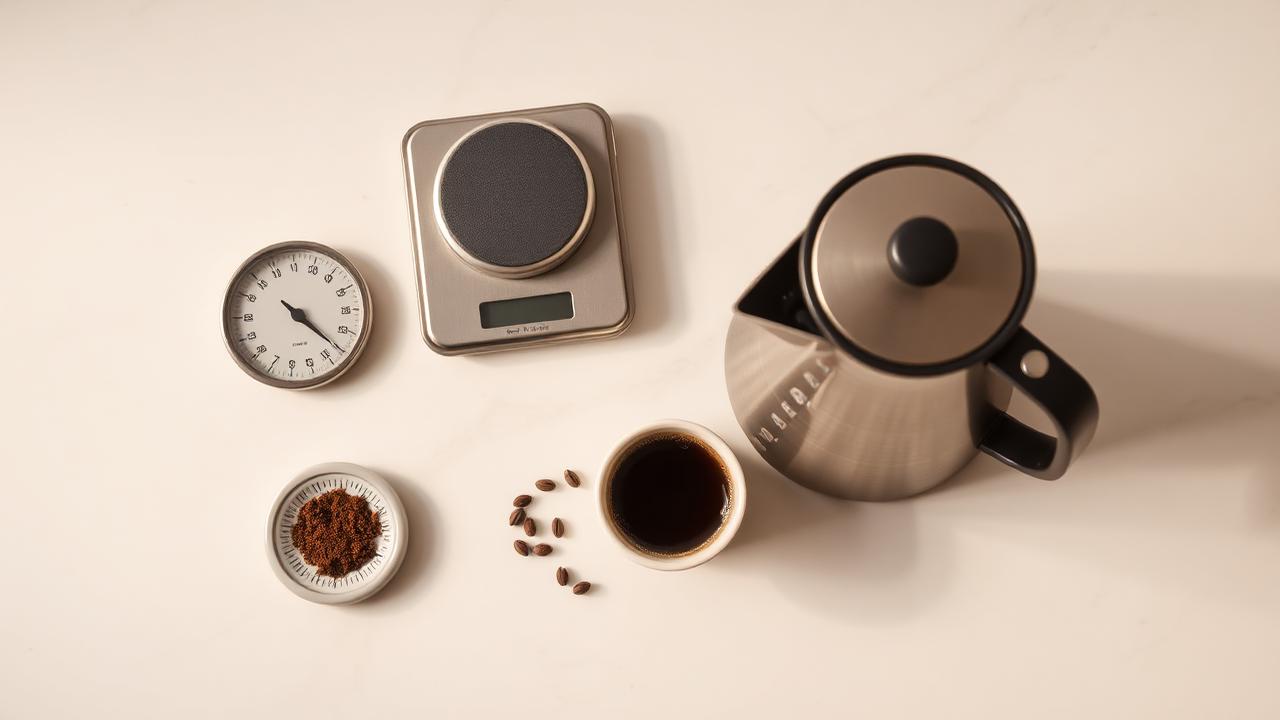
Short answer
To brew coffee at home without a filter, steep coarsely ground coffee in hot water, let the grounds settle, then pour the coffee slowly into a cup. Use 15 g coffee per 250 ml water at 92–96°C, steep for 4 minutes, and leave it for 1 extra minute before serving to reduce sediment.
Key takeaways
- Use a coarse grind so grounds settle more easily.
- Start with 15 g coffee for every 250 ml water.
- Keep brewing water between 92°C and 96°C.
- Steep for 4 minutes, then pour slowly to leave sediment behind.
- A clean cloth, fine sieve or French press can improve clarity without paper filters.
How can you brew coffee at home without a filter?
You can brew coffee without a filter by combining ground coffee and hot water directly, allowing the grounds to settle, and pouring the liquid off carefully. This is one of the oldest brewing approaches, and it works with ordinary kitchen equipment such as a mug, saucepan, jug or heatproof bowl. The important controls are coffee dose, water temperature, grind size and steeping time. Get those right and the result can be full-bodied, sweet and pleasantly rustic rather than muddy.
For most no-filter methods, use coffee ground noticeably coarser than espresso and slightly coarser than a typical drip grind. Larger particles sink faster and are less likely to slip into the final cup. A good starting recipe is 15 g coffee to 250 ml water, which is a 1:16.7 ratio. If you prefer a stronger cup, use 16 g to 250 ml. Avoid adding extra grounds without adjusting the method, as this can make the cup harsh and silty.
The simplest method is immersion: pour hot water over the grounds, stir briefly, wait, then decant. It is close in principle to a French press, except the grounds are separated by gravity rather than a metal mesh. Expect more body and a little more sediment than paper-filter coffee. That is normal. The aim is not perfectly clear coffee; it is a balanced cup with as little grit as practical.
What equipment do you need for filterless coffee?
You need very little equipment to make coffee without a filter. At minimum, use a heatproof vessel, a kettle or saucepan for heating water, a spoon and a cup. A digital scale is helpful because it removes guesswork, but measuring spoons can work when a scale is unavailable. Use fresh coffee where possible, ideally ground just before brewing. Coffee loses aroma quickly after grinding, and a no-filter method leaves little room to hide stale flavours.
A narrow-lipped jug, small saucepan or cafetière-style vessel makes decanting easier. If you have a fine metal sieve, clean muslin, cheesecloth or a reusable tea strainer, it can catch some of the larger grounds after brewing. These are optional rather than essential. Do not use a towel, paper tissue or an unknown fabric: fibres, detergent residue and poor flow can affect both safety and flavour.
Water matters as much as the equipment. Use clean drinking water that tastes pleasant on its own. Very hard water can make coffee taste chalky or muted, while heavily chlorinated water can taste medicinal. In Lahore, filtered drinking water is often a sensible starting point if tap water has a pronounced smell or mineral taste. Heat the water just off the boil rather than pouring aggressively boiling water onto the coffee.
- 01Heatproof mug, jug, bowl or small saucepan
- 02Kettle or saucepan for heating water
- 03Coarsely ground coffee
- 04Digital scale and timer, if available
- 05Optional fine sieve, clean muslin or metal tea strainer
What is the best no-filter coffee recipe?
The best all-round no-filter recipe is a settled immersion brew. It produces a reliable cup without specialist equipment and gives you control over strength. Use medium-dark or medium roast coffee at first, as these roasts tend to be forgiving and offer chocolate, nut and caramel notes that remain enjoyable with a little natural sediment. Light roasts can also work, but they usually need careful water temperature and may taste sharp if under-extracted.
Preheat your brewing vessel with hot water, then discard that water. Add the coffee, pour in all the brewing water and make sure every ground is wet. A short stir prevents dry pockets, but avoid repeated stirring later in the brew. Movement keeps fine particles suspended and makes the final cup cloudier. Once steeped, give the coffee time to settle before you pour.
This recipe makes one generous cup. Double it for two servings, but keep the same ratio and use a larger vessel. If your coffee tastes thin or sour, increase the steep time by 30 seconds or use slightly hotter water. If it tastes bitter, woody or drying, grind coarser, shorten the steep or use water closer to 92°C.
- 011. Add 15 g coarse coffee to a preheated mug or jug.
- 022. Heat 250 ml water to 92–96°C.
- 033. Pour all the water over the coffee within 10–15 seconds.
- 044. Stir gently for 5 seconds to wet the grounds.
- 055. Steep undisturbed for 4 minutes.
- 066. Break any surface crust with a spoon, then wait 1 more minute.
- 077. Pour slowly into a clean cup, stopping before the settled grounds reach the lip.
How do you make cowboy coffee in a saucepan?
Cowboy coffee is a practical saucepan method in which grounds brew directly in water and settle before serving. It is useful when you have no filter, no press and no pour-over equipment. Done carelessly, it can taste overcooked because the coffee remains in contact with hot water for too long. Done properly, it can be rich and satisfying, especially with a coarse grind and a controlled pause before pouring.
Start by heating the water separately in a small saucepan until it reaches a boil, then take it off the heat for about 30 seconds. Add the coffee after removing the pan from the heat. For 500 ml water, use 30 g coffee. Stir once, cover loosely if possible, and steep for 4 minutes. At this point, the grounds will still float and the coffee will look unsettled, so patience matters.
To encourage settling, add a small splash of cool water, roughly 15–20 ml, after the four-minute steep. This helps knock floating grounds down without diluting the coffee enough to matter. Wait another minute, then pour gently into cups. Keep the pan level and do not tip it sharply at the end. Leave the final 30–50 ml behind with the grounds rather than chasing every last sip.
Can you strain coffee with a cloth or sieve?
Yes, you can strain brewed coffee through a clean cloth or fine metal sieve, but neither will behave exactly like a paper coffee filter. A metal sieve catches larger particles while allowing oils and very fine grounds through. This gives a fuller texture and more aroma, but also a little haze. It is a good option when you want to serve several people and would rather not rely only on slow, careful decanting.
A clean, unperfumed cotton cloth or muslin can make a clearer cup, provided it has been thoroughly rinsed and has no detergent, food or fabric-softener smell. Place it over a clean jug, secure it carefully, and pour the brewed coffee through slowly. Wet the cloth with hot water first so it does not absorb as much coffee and so any dust is rinsed away. Wash it immediately after use and allow it to dry completely.
Do not squeeze the cloth or press the grounds to speed things up. Pressure forces fine particles through and can extract bitter compounds from the spent coffee. If the flow stalls, lift the cloth slightly or pour in smaller amounts. A clogged cloth usually indicates a grind that is too fine. Next time, move coarser rather than trying to compensate with more force.
Why is your filterless coffee gritty or bitter?
A gritty cup usually comes from grounds that are too fine, excessive agitation or pouring the final liquid too aggressively. Fine particles remain suspended longer than coarse grounds, so they travel into the cup even after a settling period. Grind coarser first. Then reduce stirring to one brief mix at the beginning and allow at least one minute of resting after the main steep. Pouring from a jug with a steady hand also makes a meaningful difference.
Bitterness is more often a sign of over-extraction than of sediment alone. Water that is too hot, a very fine grind, long contact time or darkly roasted coffee can all bring out harsh, smoky or drying notes. Try reducing the steep from 4 minutes to 3 minutes 30 seconds, lowering water temperature to 92°C, or using a coarser grind. Change one variable at a time so you can identify what improved the cup.
Sourness or a weak, salty impression points in the other direction: under-extraction. Use water nearer 96°C, steep for 4 minutes 30 seconds, or grind a little finer while still keeping the particles visibly coarse. Coffee should taste balanced, not necessarily intensely strong. A good no-filter brew often has rounded sweetness, gentle acidity and a heavier mouthfeel than a paper-filtered cup.
- 01Gritty coffee: use a coarser grind and pour more slowly.
- 02Bitter coffee: shorten contact time or lower water temperature.
- 03Sour coffee: steep longer or use slightly hotter water.
- 04Weak coffee: increase dose from 15 g to 16–17 g per 250 ml.
- 05Muddy coffee: allow an extra 1–2 minutes for grounds to settle.
How should you choose coffee and grind size?
Choose coffee according to the style of cup you enjoy, but use a coarse grind regardless of roast level. Think of particles similar to coarse sea salt or rough sand, not powder. Pre-ground supermarket coffee is often designed for drip machines and may be too fine for a sediment method. It can still be used, but extend the settling time to 2–3 minutes and consider straining through a fine sieve to reduce grit.
Medium and medium-dark roasts are the easiest place to start because they tend to remain sweet and rounded in full-immersion brewing. Coffees with chocolate, toasted nut, brown sugar, dried fruit or mild spice notes are especially pleasant. Very dark roasts can turn bitter quickly, so use cooler water around 92°C and keep the brew closer to 3 minutes 30 seconds. For light roasts, use 94–96°C water and a 4–5 minute steep.
Freshness matters, but coffee does not need to be roasted yesterday. For most beans, a window from about 7 days to 6 weeks after roasting is a practical place to begin. Store beans in an airtight container away from heat and sunlight, not in the refrigerator. Grind only what you need for each brew. At Capra Café, we teach home brewers to prioritise repeatable measurements over expensive equipment.
How can you improve a no-filter brew over time?
Make your first few brews deliberately simple, then adjust one variable per cup. Keep the ratio at 15 g to 250 ml and record the grind, water temperature and steep time. If the coffee is pleasant but too light, increase the dose before making the grind finer. If it is strong but rough, keep the dose and move the grind coarser. This approach helps you learn the cause of flavour changes instead of making several changes at once.
Preheating the cup and brewing vessel improves consistency, especially in cooler kitchens or when using thick ceramic mugs. Pour in hot water for 20 seconds, then discard it before brewing. Serve soon after decanting. Leaving brewed coffee on the grounds continues extraction, and reheating it can flatten aroma and emphasise bitterness. If you need to hold coffee briefly, transfer it away from the grounds into a warmed flask.
Filterless coffee will not taste identical to a clean paper-filter pour-over, and it should not be judged by that standard. It offers more oils, texture and weight, with a small amount of sediment often remaining at the bottom. Leave the final mouthful in the cup if it contains visible grit. With a coarse grind, accurate ratio and patient settling, brewing without a filter becomes a dependable everyday method rather than an emergency substitute.
Frequently asked questions
Can I make coffee with just ground coffee and hot water?
Yes. Add coarse ground coffee to a mug or jug, pour in water at 92–96°C, stir briefly and steep for 4 minutes. Break the crust, wait another minute for the grounds to settle, then pour slowly into another cup. Use 15 g coffee per 250 ml water. Leave the last sip behind if it contains sediment.
How long should coffee grounds sit in hot water without a filter?
Start with a 4-minute steep, followed by 1 minute of settling before pouring. This gives enough time to extract sweetness and body without excessive bitterness for most medium-roast coffees. If using a light roast, try 4 minutes 30 seconds. If using a dark roast, begin at 3 minutes 30 seconds with water around 92°C.
Can I use a tea strainer instead of a coffee filter?
A metal tea strainer can be used, especially after brewing coffee by immersion in a mug, jug or saucepan. It will catch larger grounds but not all fines, so the cup will be fuller-bodied and less clear than paper-filter coffee. Use a coarse grind and pour slowly. Rinse the strainer with hot water before use to remove any lingering tea flavour.
Is it safe to drink coffee grounds in coffee?
A small amount of coffee sediment is generally normal in unfiltered brewing methods such as Turkish coffee, French press and settled immersion coffee. It may feel gritty, but it is not a sign that the brew has failed. Avoid drinking the thick layer at the bottom of the cup if you dislike the texture. Use a coarser grind and longer settling time to reduce it.
Can you make filterless coffee with instant coffee?
Instant coffee does not need a filter because it dissolves in hot water rather than brewing like ground coffee. Mix the amount stated on the jar with hot water, usually below boiling, and stir until dissolved. For better flavour, use freshly boiled water rested for 30 seconds. This is convenient, but it will not produce the same aroma, body or freshness as brewed coffee.
Keep reading
- Best Coffee to Water Ratio for Beginners
- Coffee Grind Size Chart Explained
- Does Water Quality Affect Coffee Taste?