Brewing basics · 9 min read
How to Brew Black Coffee at Home
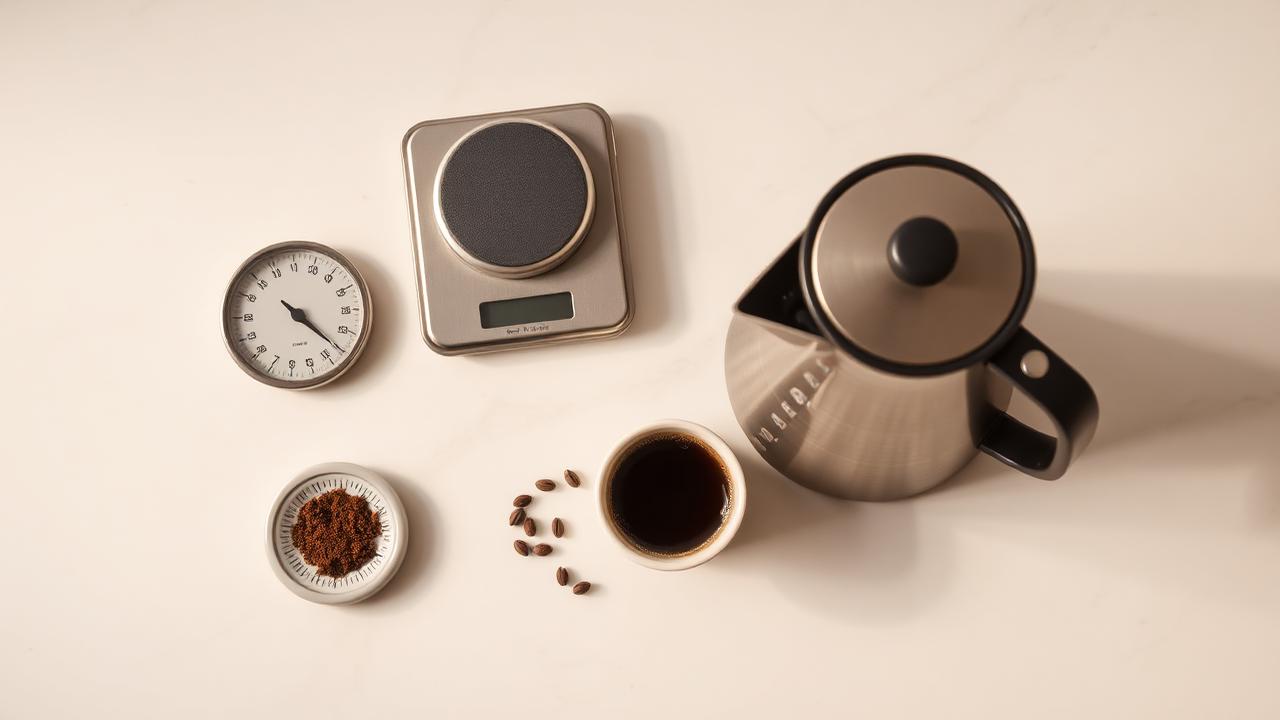
Short answer
To brew black coffee at home, use freshly roasted coffee, clean filtered water and a starting ratio of 60 g coffee per litre of water. Grind just before brewing, use water at 92–96°C, and adjust grind size and brew time to control strength and bitterness. Serve without milk or sugar so the coffee’s natural flavour is clear.
Key takeaways
- Start with 60 g of coffee per litre of water, or 15 g per 250 ml cup.
- Use water at 92–96°C and grind coffee immediately before brewing.
- A medium grind suits drip and pour-over; French press needs a coarser grind.
- Brew time and grind size matter more than simply adding extra coffee.
- Taste first, then adjust one variable at a time.
What is the best way to brew black coffee at home?
The best way to brew black coffee at home is the method you can repeat accurately with fresh coffee, clean water and a reliable ratio. Black coffee simply means coffee served without milk, cream or other additions. It can be made as filter coffee, French press coffee, AeroPress coffee, espresso topped with hot water, or from an automatic brewer. The right method is the one that produces a cup you enjoy and can make consistently on an ordinary morning.
For most beginners, a manual pour-over or French press is the easiest place to start. Pour-over makes a clean, bright cup with clear flavour separation, while French press produces more body and a fuller mouthfeel. An AeroPress is compact, forgiving and quick. A basic electric filter machine can also make excellent black coffee if it heats water properly and uses the right coffee-to-water ratio.
Do not judge black coffee only by how strong it tastes. Strength describes how concentrated the drink is, while extraction describes how much flavour has dissolved from the grounds. A strong coffee can still be balanced; a weak coffee can be bitter. Your aim is a sweet, clear cup with pleasant acidity, enough body and a clean finish rather than an aggressively dark or burnt taste.
- 01Pour-over: clean, aromatic and light to medium-bodied
- 02French press: fuller-bodied, rounder and more textured
- 03AeroPress: quick, flexible and low in bitterness when brewed well
- 04Filter machine: convenient for making several cups
- 05Espresso with hot water: concentrated, bold and suitable for an Americano
What coffee and water should you use?
Good black coffee begins with coffee that is fresh enough to retain its aroma. Buy whole beans where possible and aim to use them within a few weeks of opening the bag. Store them in an airtight container away from heat, direct light and strong odours. Avoid keeping coffee in the fridge, where condensation and food smells can affect it. Freezing well-sealed portions can work for longer storage, but daily coffee is best kept in a cool cupboard.
Choose a roast level that suits the brewing method and flavours you enjoy. Light and medium roasts often show fruit, florals, citrus or caramel notes in filter brewing. Medium-dark roasts tend to offer chocolate, nuts and deeper sweetness. Very dark roasts can work for people who prefer a heavier, more traditional profile, but they can taste smoky or bitter when brewed too hot or too long. Freshness and roast quality matter more than choosing the darkest bean.
Water is the largest ingredient in the cup, so poor water will limit even excellent coffee. Use fresh drinking water with no obvious chlorine smell or heavy mineral taste. If your tap water tastes unpleasant on its own, use filtered or bottled water that tastes clean. Distilled water is not ideal by itself because coffee needs some dissolved minerals for balanced extraction. Fill your kettle with fresh water each time rather than repeatedly boiling water that has been sitting in it.
- 01Buy whole beans when practical
- 02Grind immediately before brewing
- 03Use clean, odour-free water
- 04Avoid water that tastes strongly chlorinated or metallic
- 05Keep coffee sealed, cool and away from sunlight
What coffee-to-water ratio should you use for black coffee?
A dependable starting point for black coffee is a ratio of 1:16.7, which is roughly 60 g of coffee per litre of water. For one regular mug, use 15 g of coffee and 250 ml of water. For two cups, use 30 g of coffee and 500 ml of water. This is a balanced filter-style ratio: it provides enough strength for flavour without making the cup heavy or harsh.
A scale is one of the most useful brewing tools you can own. Measuring with spoons is possible, but coffee bean size and grind density change how much fits in a spoon. A digital scale lets you repeat a recipe and make deliberate changes. If a coffee tastes thin, you can increase the dose slightly or use less water. If it tastes overpowering yet balanced, add a little hot water after brewing rather than changing every part of the recipe.
Different methods use slightly different ratios. French press often works well from 1:15 to 1:17. Pour-over commonly sits around 1:15 to 1:17. AeroPress recipes vary widely, but 12–15 g coffee to 200–250 ml water is a sensible full-cup starting point. Espresso uses a much tighter ratio, then becomes black coffee only when diluted with water for an Americano.
- 01Single cup: 15 g coffee to 250 ml water
- 02Two cups: 30 g coffee to 500 ml water
- 03One litre batch: 60 g coffee to 1,000 ml water
- 04Stronger starting ratio: 1:15
- 05Lighter starting ratio: 1:17
How do you brew black coffee with a pour-over?
Pour-over brewing gives you direct control over water flow, timing and agitation. You need a dripper, paper filter, mug or server, kettle, scale and grinder. A gooseneck kettle makes pouring easier, but a regular kettle can still work if you pour slowly. Use a medium grind, similar to coarse sand. If water rushes through in under two minutes, grind finer; if it stalls and tastes bitter, grind coarser.
Rinsing the paper filter with hot water is important. It removes paper taste and warms the dripper and cup. Discard the rinse water before adding coffee. The first small pour, called the bloom, releases trapped gas from freshly ground coffee. This helps the rest of the water contact the grounds evenly. Fresh coffee often blooms visibly, but a modest bloom does not automatically mean the coffee is poor.
For a 250 ml brew, aim for a total time of about 2 minutes 30 seconds to 3 minutes 30 seconds, depending on the dripper and coffee. Do not chase an exact time at the expense of taste. If the coffee is sour, sharp or watery, it may need a finer grind, slightly hotter water or more contact time. If it is dry, bitter or hollow, try a coarser grind, gentler pouring or cooler water.
- 011. Rinse the paper filter with hot water and discard the rinse water.
- 022. Add 15 g medium-ground coffee and level the bed.
- 033. Pour 45 ml water at 92–96°C and wait 30–45 seconds.
- 044. Pour slowly in stages until the scale reads 250 ml.
- 055. Let the coffee draw down; target 2 minutes 30 seconds to 3 minutes 30 seconds total.
- 066. Swirl the brewed coffee gently and serve immediately.
How do you brew black coffee in a French press?
French press coffee is simple, durable and especially useful when making two or more cups. It uses immersion brewing, meaning the grounds remain in contact with the water for the full brew time. This produces a fuller cup than paper-filter methods because fine oils and some sediment pass through the metal mesh. If you prefer a rich texture and rounded flavour, French press is an excellent way to make black coffee at home.
Use a coarse, even grind, closer to coarse sea salt than sand. Fine grounds can slip through the filter, create sludge in the cup and make the coffee taste more bitter. Start with 30 g coffee and 500 ml water for two cups. Preheat the press with hot water if possible, empty it, then add the grounds. Use water just off the boil, around 94–96°C for most coffees.
After adding water, make sure all grounds are wet. Place the lid on without pressing the plunger down and steep for four minutes. Then break the crust gently with a spoon, skim off any floating foam if desired, and press slowly. Decant the coffee into cups or a separate server straight away. Leaving it in the press allows continued extraction and can turn a good cup bitter after several minutes.
- 01Coffee: 30 g
- 02Water: 500 ml
- 03Grind: coarse
- 04Water temperature: 94–96°C
- 05Steep time: 4 minutes
- 06Serve: decant immediately after plunging
How do grind size, temperature and time change the taste?
Grind size controls the surface area exposed to water. Finer grounds extract more quickly because water reaches more of the coffee. Coarser grounds extract more slowly. This is why a French press needs a coarse grind for a four-minute steep, while pour-over needs a medium grind to allow enough extraction as water passes through. Grind size is usually the first variable to change when a cup tastes noticeably wrong.
Water temperature affects how readily flavour compounds dissolve. A useful range for most black coffee is 92–96°C. Use the higher end for lighter roasts and the lower end for darker roasts, which extract more easily. If you do not have a temperature-controlled kettle, bring water to the boil and let it stand for about 30–60 seconds before brewing. In a cool room or with a large kettle, water will lose heat more quickly.
Brew time works alongside grind size. More contact time can increase extraction, but too much can bring dry, woody or bitter flavours. Less contact time can leave coffee sour, salty or underdeveloped. Change only one variable at a time. For example, keep the dose, water amount and temperature fixed, then move one grind setting finer or coarser. This makes it possible to learn from each cup rather than guessing.
- 01Sour, sharp or watery: grind finer, extend time or use slightly hotter water
- 02Bitter, dry or astringent: grind coarser, shorten time or use slightly cooler water
- 03Too strong but pleasant: dilute with hot water
- 04Too weak but balanced: use more coffee or less water
- 05Muddy French press cup: grind coarser and press more slowly
How can you make black coffee taste less bitter?
Bitterness is not always a fault. Some coffees, especially darker roasts, naturally have cocoa, roast and bitter-sweet notes. The problem is harsh bitterness that dries the mouth, overwhelms sweetness or leaves a burnt aftertaste. This often comes from over-extraction, stale coffee, excessively dark roasting, dirty equipment or water that is too hot for the coffee being used.
Start by checking cleanliness. Coffee oils build up inside French presses, grinders, filter baskets and travel mugs, then turn rancid over time. Wash brewing equipment thoroughly after use and clean grinders according to the manufacturer’s guidance. Next, use a slightly coarser grind. This is the most effective adjustment when a brew tastes dry, harsh or unpleasantly bitter. Lowering water temperature by 2–3°C can also help with a dark roast.
Avoid trying to fix poor extraction by adding sugar immediately. Taste the coffee while it cools for a minute or two, because very hot coffee masks sweetness and makes bitterness seem stronger. If the cup is concentrated but otherwise balanced, dilute it with a little hot water. If it is both bitter and weak, the issue is likely uneven extraction, often caused by inconsistent grinding, channelled pour-over flow or a poor-quality blade grinder.
- 01Clean equipment after every use
- 02Use freshly ground coffee
- 03Grind coarser if the finish is dry or harsh
- 04Use 92–94°C water for darker roasts
- 05Dilute a balanced but intense cup with hot water
What equipment do you need to brew better black coffee?
You do not need a complicated home coffee bar to make excellent black coffee. The biggest improvement usually comes from a burr grinder and a small digital scale. Burr grinders create more even particles than blade grinders, helping water extract the coffee more evenly. A scale helps with dose and water volume, which removes much of the inconsistency that comes from estimating with scoops and mugs.
Choose one brewing device and learn it well before buying several. A French press is affordable and works without paper filters. A simple cone dripper is inexpensive, compact and gives good clarity. An AeroPress is useful for small kitchens, travel and quick single servings. A kettle, timer and clean cup are enough to begin. A thermometer or temperature-controlled kettle is helpful, but not essential if you understand the short resting time after boiling.
At Capra Café, we encourage home brewers to prioritise repeatability over novelty. Keep a brief note of your coffee, recipe, grind setting, brew time and taste. After a few brews, patterns become clear. You may find that one coffee tastes best at 1:16 with 94°C water, while another needs 1:15 and a slightly coarser grind. That is the practical route to a consistently satisfying black coffee.
- 01Essential: brewing device, fresh coffee, kettle and clean water
- 02Most valuable upgrade: burr grinder
- 03Most useful accuracy tool: digital scale
- 04Helpful: timer and temperature-controlled kettle
- 05Optional: notebook or phone notes for recipes
How should you serve and store black coffee?
Serve black coffee soon after brewing, ideally within 15–20 minutes. It does not become unsafe after that, but its aroma and balance fade as it cools and oxidises. Filter coffee can remain pleasant in a preheated thermal flask for an hour or two, but avoid holding it on a hot plate. Continuous heat can flatten sweetness and create a stewed, bitter taste.
Use a clean, warmed ceramic cup where possible. Thin paper cups and strongly scented travel mugs can interfere with aroma, which is a major part of flavour perception. Give the coffee a gentle swirl before tasting, especially after pour-over brewing, as stronger liquid can settle lower in the server. Take a small sip when it is hot, then return to it as it cools. Many coffees reveal more sweetness and detail at a warm rather than piping-hot temperature.
If you brew more than you need, cool the extra coffee quickly and refrigerate it in a sealed container for iced coffee later that day. Do not expect reheated coffee to taste like a fresh brew. For better results, make a smaller batch or store hot coffee in a thermal flask. The simplest habit is also the best one: grind, brew and drink the amount you want rather than keeping a large pot going for hours.
- 01Drink fresh coffee within 15–20 minutes for best aroma
- 02Use a thermal flask rather than a hot plate
- 03Preheat ceramic cups with hot water
- 04Taste again as the coffee cools
- 05Brew smaller batches when possible
Frequently asked questions
How much coffee do I use for one cup of black coffee?
Use 15 g of ground coffee for 250 ml of water as a reliable starting point. This is close to a 1:16.7 ratio and produces a balanced cup for most filter methods. For a stronger drink, try 16–17 g; for a lighter cup, use 14 g. Weighing coffee is more accurate than using tablespoons because grind density varies.
Can I make black coffee with instant coffee?
Yes. Instant coffee dissolved in hot water is black coffee when served without milk or cream, although its flavour and texture differ from freshly brewed coffee. Start with 1.5–2 g instant coffee per 200 ml water, then adjust to taste. Use water below boiling, around 85–90°C, to avoid making the drink taste overly harsh or scorched.
What is the ideal water temperature for black coffee?
For most brewing methods, use water at 92–96°C. Lighter roasts often benefit from 94–96°C because they are harder to extract, while darker roasts usually taste smoother at 92–94°C. Without a thermometer, boil fresh water and leave it for around 30–60 seconds before pouring. Avoid using water that has been repeatedly boiled.
Why does my homemade black coffee taste sour?
Sour coffee is usually under-extracted, meaning the water did not dissolve enough of the coffee’s sweeter and deeper flavours. Try grinding finer, extending the brew time or using water 1–2°C hotter. Check that all grounds are saturated during brewing. If the coffee is a very light roast, it may naturally have some bright acidity, but it should still taste sweet and balanced.
Is black coffee the same as an Americano?
An Americano is one type of black coffee made by adding hot water to espresso. Black coffee is the broader term for any coffee served without milk, including pour-over, French press, drip coffee and Americano. An Americano has an espresso-based flavour profile and often more intensity, while filter coffee is generally cleaner, lighter-bodied and brewed directly with water passing through grounds.
Keep reading
- Best Coffee to Water Ratio for Beginners
- Coffee Grind Size Chart Explained
- Does Water Quality Affect Coffee Taste?