Brewing basics · 7 min read
How to Brew Better Coffee at Home
Short answer
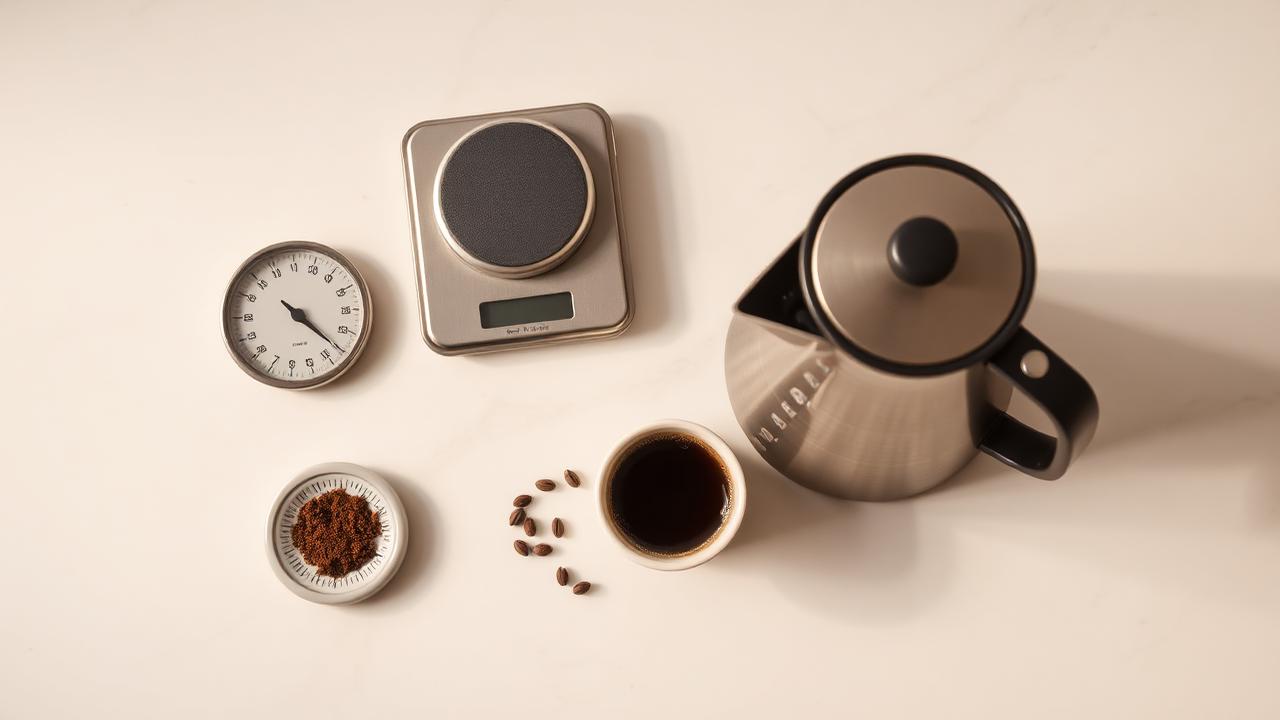
To brew better coffee at home, use freshly roasted whole beans, weigh coffee and water, match your grind to the brewer, and use clean filtered water at 92–96°C. Start with a 1:16 coffee-to-water ratio, keep equipment clean, and adjust only one variable at a time until the cup tastes balanced, sweet and clear.
Key takeaways
- Use a scale and begin with a 1:16 coffee-to-water ratio.
- Grind immediately before brewing and match the grind to your method.
- Brew with clean water at 92–96°C for most filter coffee.
- Change one variable at a time when a cup tastes sour, bitter or weak.
- Keep brewers, grinders and kettles clean to protect flavour.
What makes coffee taste better at home?
Better coffee at home is usually not about buying the most expensive machine. It comes from controlling a small set of repeatable variables: bean freshness, dose, grind size, water quality, temperature, contact time and cleanliness. When these are consistent, you can taste what the coffee itself is doing and make useful adjustments rather than guessing.
A good cup should taste balanced for its style. Lighter roasts may be floral, citrusy or tea-like; medium roasts may show caramel, chocolate or ripe fruit; darker roasts may be fuller and more roast-led. None of these flavours is automatically better than another. The aim is clarity, sweetness and a pleasant finish without sharp sourness, harsh bitterness or papery stale notes.
The most effective upgrade is a simple digital scale. Spoon measures vary with bean size and grind, but a scale lets you repeat a recipe exactly. Pair it with a timer, a dependable grinder and a basic pour-over, cafetière or AeroPress, and you have the foundations for meaningful improvement.
- 01Measure both coffee and water in grams.
- 02Use a timer for every brew.
- 03Write down your dose, water amount, grind setting and brew time.
- 04Taste before changing the recipe.
How fresh should coffee beans be?
Buy whole beans in quantities you can finish within three to six weeks of opening the bag. A roast date is more useful than a vague best-before date because it tells you when the coffee began to release carbon dioxide and lose aromatic compounds. Most coffee is easier to brew after a short resting period, often around 5 to 14 days after roasting, although the ideal rest varies by roast level and processing.
Store beans in their sealed bag or an airtight container, away from sunlight, heat and strong kitchen smells. A cool cupboard is usually better than a fridge, where condensation and odours can cause problems. Freezing can work for longer storage if beans are portioned in airtight containers, but it is unnecessary for coffee you will use within a few weeks.
Pre-ground coffee loses aroma much faster because far more surface area is exposed to air. If you can make only one equipment change, choose a burr grinder. It will give you more fragrance in the dry grounds, a more even extraction and a wider range of useful adjustments than blade chopping.
- 01Buy whole beans when possible.
- 02Choose bags with a visible roast date.
- 03Keep beans sealed, dry and out of direct light.
- 04Grind only the amount needed for each brew.
Why does grind size matter so much?
Grind size determines how quickly water can dissolve flavour from coffee. Finer particles expose more surface area, so they extract faster. Coarser particles extract more slowly. A grinder also needs to produce particles that are reasonably similar in size; too much variation creates a cup containing both under-extracted and over-extracted flavours at once.
Match the grind to the brewing method and the time water spends in contact with coffee. Espresso needs a very fine grind because water passes through quickly under pressure. A V60 or similar dripper generally needs a medium-fine grind. A cafetière needs a coarse grind because the coffee steeps for several minutes and is separated by a metal filter. These are starting points, not fixed rules.
If a brew tastes sour, thin, salty or noticeably hollow, it is often under-extracted. Try a slightly finer grind, a longer brew time or hotter water. If it tastes dry, harsh, woody or unpleasantly bitter, it may be over-extracted. Try a slightly coarser grind, a shorter brew time or cooler water. Make one adjustment at a time so the result teaches you something.
- 01Espresso: very fine grind.
- 02Pour-over: medium-fine grind.
- 03AeroPress: medium-fine to medium grind.
- 04Cafetière: coarse grind.
- 05Moka pot: medium-fine grind, coarser than espresso.
What coffee-to-water ratio should you use?
For most filter brewing, start with a 1:16 ratio: 1 g of coffee for every 16 g of water. This makes 15 g coffee with 240 g water, 18 g coffee with 288 g water, or 20 g coffee with 320 g water. It is a useful baseline because it is strong enough to taste clearly while leaving room to adjust strength according to preference.
Strength and extraction are related but not identical. Adding more coffee while keeping water fixed makes a stronger drink, but it can also reduce extraction because there is less water available per gram of coffee. If your brew tastes weak but pleasant, increase the dose slightly or use less water. If it tastes intense and unpleasant, use more water or reduce the dose before changing the grind.
For immersion brewers such as a cafetière, 1:15 to 1:17 works well for many coffees. For a concentrated AeroPress recipe, use a stronger ratio and dilute afterwards. For espresso, the ratio is usually expressed as dry coffee dose to liquid yield, such as 18 g in and 36 g out. Measure the finished liquid, not just the time, because yield has a major effect on taste.
- 01Light filter starting point: 15 g coffee to 240 g water.
- 02Two-cup filter starting point: 20 g coffee to 320 g water.
- 03Cafetière starting point: 30 g coffee to 500 g water.
- 04Espresso starting point: 18 g coffee to 36 g beverage.
What water temperature and water quality are best?
Water is the main ingredient in brewed coffee, so poor-tasting tap water will limit the result. Use water that tastes clean and has no strong chlorine, metallic or sulphurous character. A basic carbon filter can improve water in many homes, while very hard water may cause dull flavour and scale inside kettles and coffee machines. Avoid distilled water on its own because coffee needs some dissolved minerals for balanced extraction.
For most filter coffee, use water between 92°C and 96°C. A lighter roast often benefits from the upper end of that range, while a darker roast may taste smoother at 90°C to 94°C. If you do not have a temperature-controlled kettle, let freshly boiled water stand for roughly 30 to 60 seconds before pouring, though room temperature and kettle design will affect the actual temperature.
Temperature is one of several linked variables. Hotter water extracts more readily, but it cannot rescue a poor grind or stale coffee. If a light roast remains sharp despite a suitable grind and ratio, raise the temperature by 1°C to 2°C. If a darker roast tastes aggressively bitter, lower it slightly and assess the change.
- 01Use clean, pleasant-tasting filtered water.
- 02Filter coffee: 92–96°C.
- 03Darker roasts: try 90–94°C.
- 04Clean scale from kettles and machines regularly.
How do you make a reliable pour-over coffee?
Pour-over is a useful method for learning because every stage is visible. It can produce a clean, detailed cup, but it rewards a steady pour and a consistent grind. Start with a flat-bottom dripper or cone dripper, paper filters, a gooseneck kettle if available, a scale and a timer. Rinse paper filters thoroughly with hot water to remove paper flavour and warm the brewer and serving vessel.
The first small pour is called the bloom. It wets the grounds and lets trapped gas escape, helping later water contact the coffee more evenly. Fresh coffee usually puffs up during this stage, but a quiet bloom does not automatically mean bad coffee. Focus on the final cup rather than treating bloom size as a freshness test.
Use the same pouring pattern for several brews before judging it. A slow, gentle pour near the centre reduces agitation; a wider spiral can help wet dry edges, but pouring directly onto the paper can send water around rather than through the coffee. The coffee bed should finish reasonably level, without a deep crater or a large dry ring around the edge.
- 011. Rinse the paper filter and discard the rinse water.
- 022. Add 18 g medium-fine coffee and level the bed.
- 033. Pour 40 g water at 94°C and bloom for 30–45 seconds.
- 044. Pour steadily to 180 g by 1 minute 15 seconds.
- 055. Pour to 288 g by 1 minute 50 seconds.
- 066. Aim for a total drawdown of about 2 minutes 30 seconds to 3 minutes 30 seconds.
How can you improve cafetière and AeroPress coffee?
A cafetière is forgiving, inexpensive and well suited to fuller-bodied coffee. Use coarse grounds, plenty of water and a longer steep. Its metal mesh allows oils and fine particles into the cup, creating more body than paper-filter brewing. If you dislike sediment, pour slowly and leave the final few millilitres in the brewer rather than trying to empty it completely.
For a dependable cafetière recipe, use 30 g coffee to 500 g water at 94°C. Add water, stir gently after the first minute to break the crust, then steep for a total of 4 minutes. Press the plunger slowly and serve immediately. If the cup is too gritty or bitter, grind coarser and avoid forceful stirring. If it is weak, use a little more coffee before making the grind finer.
The AeroPress offers flexibility because it can produce a short, concentrated cup or a longer filter-style drink. Start with 15 g medium-fine coffee and 220 g water at 90°C to 94°C. Stir for 10 seconds, steep for 90 seconds, then press gently for 25 to 35 seconds. Add water after pressing if you want a lighter, more open cup. At Capra Café, we recommend keeping one simple recipe for a week before experimenting with inverted methods or very short competition-style recipes.
- 01Cafetière: 30 g coffee, 500 g water, 94°C, 4 minutes.
- 02AeroPress: 15 g coffee, 220 g water, 90–94°C, 90-second steep.
- 03Press gently; excessive force can push fines into the cup.
- 04Serve immersion brews soon after brewing.
How do you diagnose sour, bitter or weak coffee?
Taste problems become easier to solve when you separate strength from extraction. Strength is how concentrated the drink feels. Extraction is which compounds have dissolved from the grounds. A cup can be strong but under-extracted, or weak but over-extracted. Use your notes and make small changes rather than trying to fix everything at once.
Sourness can be desirable in coffee when it resembles ripe fruit, citrus or berries and is supported by sweetness. Unpleasant sourness is sharper and often arrives with a watery body or short finish. Bitterness can also be part of a darker roast, but excessive bitterness feels harsh, drying or burnt. Learn the difference by tasting coffees at different roast levels and comparing your own brews side by side.
If you change grind size, keep dose, water and brew time stable. If you change ratio, keep the grind stable. This simple discipline prevents contradictory adjustments. It also helps you find the setting that works with your grinder, water and preferred brewer, which matters more than copying another person’s exact number.
- 01Sour and thin: grind finer, use hotter water or extend contact time.
- 02Bitter and drying: grind coarser, use cooler water or shorten contact time.
- 03Weak but balanced: use more coffee or less water.
- 04Too strong but balanced: use less coffee or more water.
- 05Muddy or astringent: improve grind consistency, reduce agitation or clean equipment.
How should you clean and maintain coffee equipment?
Coffee oils cling to grinders, brewers, filters, carafes and machine parts. Over time they oxidise and taste stale, even when the beans are fresh. Rinse brewers after every use, wash removable parts with warm water and a mild unscented detergent, and allow everything to dry fully. Do not leave wet grounds in a cafetière, dripper or portafilter basket for hours.
Brush loose grounds from the grinder chute and burr area regularly, following the manufacturer’s instructions. A grinder does not need water inside it, and oily residues can build up if dark-roast coffee is used frequently. Cleaning tablets or grinder-specific cleaning products can be helpful, but remove all residue before brewing again.
Kettles and coffee machines need descaling when mineral deposits appear or water flow slows. The right interval depends on local water hardness and use. Follow the machine maker’s descaling guidance, then rinse thoroughly. Clean equipment will not transform poor coffee, but neglected equipment can quickly spoil otherwise careful brewing.
- 01Rinse brewers after every brew.
- 02Wash carafes, plungers and drippers weekly.
- 03Brush grinder grounds out every one to two weeks.
- 04Descale kettles and machines as needed for your water hardness.
Frequently asked questions
What is the easiest way to make better coffee at home?
The easiest improvement is to use whole beans, grind just before brewing and measure with a scale. Start with 15 g coffee and 240 g water, using water at 92–96°C. Keep the recipe unchanged for several brews, then adjust the grind slightly finer if the coffee is sour and thin, or coarser if it is bitter and drying.
How much coffee should I use for one cup?
For a standard 240 ml cup of filter coffee, begin with 15 g coffee and 240 g water, which is a 1:16 ratio. If you prefer a stronger cup, try 16 g coffee with the same water amount. If you prefer a lighter cup, use 14 g. Weighing is more accurate than tablespoons because grounds vary in density.
Why does my homemade coffee taste sour?
Homemade coffee often tastes sour because it is under-extracted: water has not dissolved enough of the coffee’s sweeter, deeper flavours. Try grinding slightly finer, increasing water temperature to 94–96°C, or extending brew time. Check that your coffee dose and water amount are measured accurately. Pleasant fruit acidity is normal; sharp, watery sourness is the problem to correct.
Is a burr grinder worth it for home coffee?
Yes, a burr grinder is one of the most worthwhile upgrades for better home coffee. It produces more even particles than a blade grinder, which improves extraction and makes flavour easier to control. It also lets you adjust grind size for cafetière, pour-over, AeroPress or espresso. Choose a grinder with repeatable settings and suitable range for your preferred brewing method.
Can I make good coffee without an expensive machine?
Yes. A cafetière, AeroPress or simple dripper can make excellent coffee without an expensive machine. Spend first on fresh whole beans, a burr grinder and a digital scale. Use clean water, a measured ratio and an appropriate grind. Expensive equipment can add convenience or precision, but careful technique matters more than owning a costly machine.
Keep reading
- Best Coffee to Water Ratio for Beginners
- Coffee Grind Size Chart Explained
- Does Water Quality Affect Coffee Taste?