Espresso · 8 min read
What Is Espresso and How Is It Made?
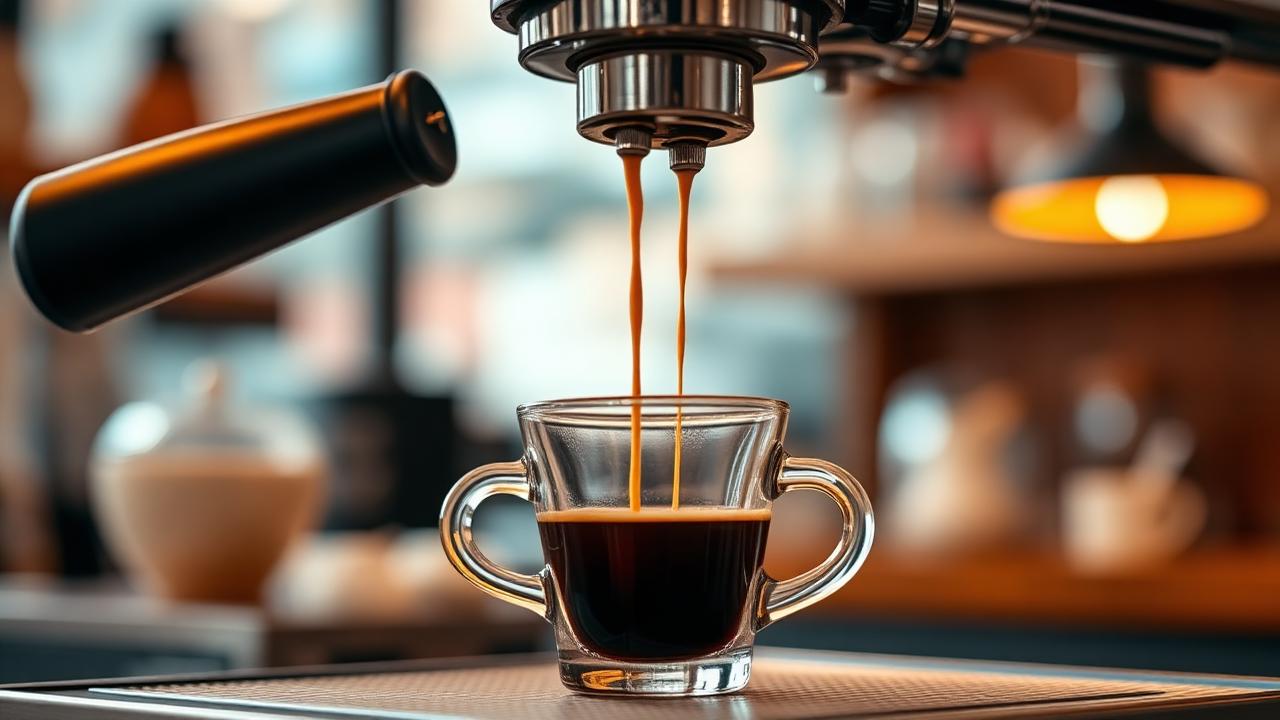
Short answer
Espresso is a small, concentrated coffee made by forcing hot water, usually 90–96°C, through a compact bed of finely ground coffee at about 9 bar of pressure. A typical double espresso uses 18 g of coffee to produce 36 g of liquid in 25–30 seconds, creating a rich body, aroma and crema.
Key takeaways
- Espresso is brewed under pressure, not simply made with dark-roast coffee.
- A double shot commonly follows an 18 g in, 36 g out recipe.
- Grind size, dose, yield, time and water temperature all shape flavour.
- Crema is useful visual evidence, but it is not the sole measure of quality.
- Fresh coffee and a clean, well-set-up machine matter as much as technique.
What is espresso?
Espresso is a concentrated coffee beverage brewed when pressurised hot water passes through a tightly packed bed of finely ground coffee. It is served in a small volume, but it contains a dense combination of dissolved coffee solids, aromatic compounds, oils and suspended particles. This structure gives espresso its distinctive weight, intensity and lingering finish. It is the foundation for drinks such as cappuccino, flat white, latte, americano and macchiato.
Espresso is often confused with a type of bean or a particularly dark roast. It is neither. Any suitable coffee can be prepared as espresso, including coffees roasted lightly enough to show floral, citrus or stone-fruit notes. The word describes the brewing method and the style of beverage produced. Roasters may create an espresso blend for balance and consistency, but a single-origin coffee can also make an excellent espresso.
Because espresso is so concentrated, small changes are immediately noticeable. A slightly finer grind can make a shot taste dry or bitter; a coarser grind can make it thin and sour. The aim is not maximum strength alone. A good espresso should have enough concentration to feel substantial while retaining sweetness, clarity and a pleasant finish.
How is espresso made?
An espresso machine heats water and delivers it through a group head into a portafilter, which holds a basket of ground coffee. The barista doses coffee into the basket, distributes it evenly and tamps it into a level, compact puck. When brewing begins, water saturates the puck and then moves through it under pressure. The brewed espresso flows from the bottom of the portafilter into a cup or serving vessel.
Pressure creates a brewing environment unlike filter coffee or a cafetiere. It helps water move through a fine grind quickly while extracting flavour and emulsifying some coffee oils into the drink. The resulting texture is thicker and more syrupy than most other brewing methods. A properly prepared shot may have crema, the tan foam on top formed from carbon dioxide and coffee compounds, although crema alone cannot confirm quality.
Most modern machines use a pump to generate pressure, while some lever machines use a spring or manual force. The equipment differs, but the principle remains the same: carefully controlled water, heat, pressure and contact time are used to extract a concentrated coffee. At Capra Café, this process is treated as a repeatable recipe rather than guesswork.
- 01Dose: 18 g of ground coffee for a common double espresso
- 02Yield: 36 g of liquid espresso, measured by weight
- 03Brew ratio: 1:2, meaning one part dry coffee to two parts brewed espresso
- 04Brew time: roughly 25–30 seconds, counted from pump activation
- 05Water temperature: typically 90–96°C at the coffee bed
- 06Pressure: commonly around 9 bar during extraction
Why does espresso need pressure?
Pressure allows espresso to use a very fine grind without requiring several minutes of brewing. In a filter brewer, water moves through coffee mainly by gravity, so the grounds are coarser and the contact time is longer. In espresso, pressure pushes water through a compact puck in less than half a minute. This extracts a concentrated drink from a relatively small amount of water.
Pressure also contributes to espresso’s mouthfeel. It encourages oils and microscopic particles to remain suspended in the liquid, producing the characteristic body that makes espresso feel rounded, silky or syrupy. It can also create crema, especially when coffee is fresh enough to retain carbon dioxide from roasting. However, excessive pressure or an uneven puck will not improve a poor recipe; they can make channelling and uneven extraction worse.
The often-quoted 9 bar target is a useful working benchmark, not a guarantee of excellent coffee. Some machines use pre-infusion at lower pressure before rising to full pressure, and some baristas use declining pressure profiles. What matters most is whether the recipe produces a balanced cup: sweet enough, sufficiently developed and free from harsh bitterness or sharp under-extraction.
What coffee grind is used for espresso?
Espresso needs a fine grind, generally finer than sand but not as powdery as flour. The exact setting depends on the coffee, roast level, basket size, humidity, grinder design and target recipe. There is no universal espresso number on a grinder dial because every grinder is calibrated differently. A setting that works on one machine may be entirely wrong on another.
The correct grind creates enough resistance for the water to pass through the coffee at the intended rate. If the grind is too coarse, water flows too quickly and the espresso often tastes sharp, weak, salty or sour. If it is too fine, water struggles to pass through, leading to a slow shot that can taste dry, burnt, woody or bitter. The grinder is therefore the primary adjustment tool during service.
Freshly ground coffee is especially important for espresso. Ground coffee loses aromatic compounds quickly and absorbs moisture from the air, making extraction less predictable. Grind immediately before brewing whenever possible. For a home set-up, investing in a capable burr grinder will usually improve espresso more than upgrading cups, accessories or decorative machine features.
What is the ideal espresso recipe?
A practical starting recipe for a modern double espresso is 18 g of dry coffee in the basket and 36 g of espresso in the cup, brewed in 25–30 seconds. This is called a 1:2 brew ratio. It is not a law, but it gives a clear baseline from which to taste and adjust. Scales are more reliable than measuring by millilitres because crema can make volume readings misleading.
Different coffees often need different recipes. A darker roast may taste best with a slightly shorter ratio, such as 18 g in and 32 g out, to preserve body and reduce bitter flavours. A lighter, more soluble coffee may benefit from a longer ratio, such as 18 g in and 40–45 g out, to bring out sweetness and reduce a tight, sour finish. The best recipe is the one that makes the coffee taste balanced.
When dialling in, change one variable at a time. Keep the dose and yield fixed, then adjust grind size to reach the desired brew time. Taste the result before making another change. If the shot is fast and underdeveloped, grind finer. If it is slow and harsh, grind coarser. Once the shot is close, alter yield in small increments of 2–3 g if needed.
- 01Starting point: 18 g coffee in, 36 g espresso out
- 02Target time: 25–30 seconds
- 03For a faster, sour shot: make the grind slightly finer
- 04For a slow, bitter shot: make the grind slightly coarser
- 05For more body: stop the shot at a lower yield
- 06For more openness and clarity: extend the yield slightly
What does a good espresso taste like?
A good espresso should taste concentrated but balanced. Depending on the coffee, it may show chocolate, caramel, nuts, berries, citrus, stone fruit or floral notes. The key is integration. Sweetness should support acidity, bitterness should provide structure rather than harshness, and the aftertaste should remain pleasant after swallowing. Even a bright espresso should not taste aggressively sour or thin.
Texture matters as much as flavour. Well-extracted espresso often feels smooth, creamy or syrupy, with enough weight to coat the palate without becoming muddy. The finish may be short and clean or long and chocolatey, depending on the coffee and roast profile. A heavily roasted coffee may have more roast-derived bitterness, while a lighter coffee can be more aromatic and fruit-forward.
It is useful to taste espresso after it has cooled slightly. Very hot coffee can hide sweetness and make bitterness seem more dominant. Take a small sip first, then another after 30–60 seconds. Stirring the espresso gently can also help combine the layers of the shot, as the earliest and latest parts of extraction may taste different in the cup.
What causes sour, bitter or watery espresso?
Sour espresso is commonly caused by under-extraction, meaning the water did not dissolve enough flavour from the coffee. This can happen when the grind is too coarse, the yield is too low, the shot runs too quickly, the water is too cool or the coffee puck channels. Under-extracted espresso often tastes tart, salty, hollow or peanut-like rather than pleasantly bright.
Bitter, dry or astringent espresso is often over-extracted. Common causes include a grind that is too fine, a shot that runs too long, an excessively high yield or a coffee that is roasted very dark. Over-extraction can also occur when water finds some parts of the puck more easily than others, pulling too much from those areas while leaving others under-extracted. This is why puck preparation matters.
Watery espresso may result from too much output for the dose, an insufficient dose, a coarse grind or a basket that is not properly filled. Check the basics before making complicated changes: use fresh coffee, weigh the dose, level the grounds, tamp consistently, weigh the yield and keep the machine clean. Old coffee oils on baskets, shower screens and portafilters can also add stale flavours.
How does espresso differ from coffee?
Espresso is coffee, but not all coffee is espresso. Coffee is the broad term for beverages made from roasted coffee beans. Espresso is one brewing method within that category. Filter coffee, pour-over, cafetiere, moka pot and cold brew all use coffee but employ different combinations of grind size, water temperature, pressure, immersion and brew time.
Compared with filter coffee, espresso is served in a smaller quantity and has a much higher concentration of dissolved coffee material. A typical double espresso may weigh about 36 g, while a filter coffee might use 250–300 ml of water. Filter coffee is generally lighter in body and easier to drink in a larger cup, whereas espresso is designed to be taken in a few sips or used as the base for milk drinks.
Espresso is not automatically stronger in every sense. It is stronger by concentration, but a large mug of filter coffee can contain more total caffeine because it uses more water and is consumed in a larger volume. Caffeine depends on the coffee dose, bean type, recipe and serving size, so volume alone does not tell the full story.
Can you make espresso at home?
True espresso requires a machine capable of delivering stable hot water and meaningful pressure through a finely ground coffee puck. A home espresso machine paired with a quality burr grinder is the most direct route. Consistency comes from weighing coffee and espresso, keeping the equipment clean and making small adjustments rather than relying on appearance alone.
A moka pot is often called stovetop espresso, but it does not produce espresso in the technical sense. It uses steam pressure, lower than the pressure of an espresso machine, and produces a strong, concentrated coffee with a different texture. It can be excellent in its own right, especially for milk drinks, but it will not produce the same body or crema as a properly extracted machine espresso.
For home practice, begin with a simple repeatable recipe and keep notes. Record the coffee, roast date, dose, yield, time and taste. If your machine has a pressurised basket, it can help with pre-ground coffee, but a non-pressurised basket and fresh grinding offer more control. Good espresso is built through observation, not by chasing a single perfect number.
- 01Use coffee roasted recently, ideally within a few weeks of its roast date
- 02Warm the machine, portafilter and cup before brewing
- 03Dose and yield should be measured in grams with a scale
- 04Purge the group head briefly before locking in the portafilter
- 05Clean the steam wand, basket and shower screen after every use
Frequently asked questions
Is espresso stronger than regular coffee?
Espresso is stronger by concentration because it contains more dissolved coffee flavour in a smaller volume. A double espresso of about 36 g tastes far more intense than a mug of filter coffee. However, a larger filter coffee can contain more total caffeine because it usually uses more ground coffee and provides a bigger serving. Strength and caffeine are not the same thing.
How much coffee is in a double espresso?
A common modern double espresso uses 18 g of ground coffee and produces about 36 g of liquid espresso. This is a 1:2 brew ratio and is a useful starting point for many coffees. Some baskets are designed for 16 g, 20 g or more, so the correct dose depends on the basket and recipe rather than a single universal number.
Why is my espresso sour?
Sour espresso is usually under-extracted. Water may have passed through too quickly because the grind was too coarse, the coffee dose was too low or the puck had channels. Start by grinding slightly finer while keeping the dose and target yield unchanged. Aim for a balanced shot around 25–30 seconds, then taste before making further adjustments.
What is crema on espresso?
Crema is the reddish-brown foam that forms on top of espresso when pressurised coffee gases and oils reach the cup. Fresh coffee often creates more visible crema because it retains more carbon dioxide after roasting. Crema can add aroma and texture, but it is not a dependable measure of quality on its own. A great espresso can have modest crema, especially with lighter roasts.
Can I make espresso without an espresso machine?
You cannot make technical espresso without equipment that produces stable heat and substantial brewing pressure. A moka pot, AeroPress or strong filter method can make concentrated coffee, but each produces a different style of drink. For espresso-like coffee at home, a moka pot is a practical option. For true espresso, use an espresso machine and freshly ground coffee.
Keep reading
All guides