Cold brew · 7 min read
How to Make Iced Coffee at Home
Short answer
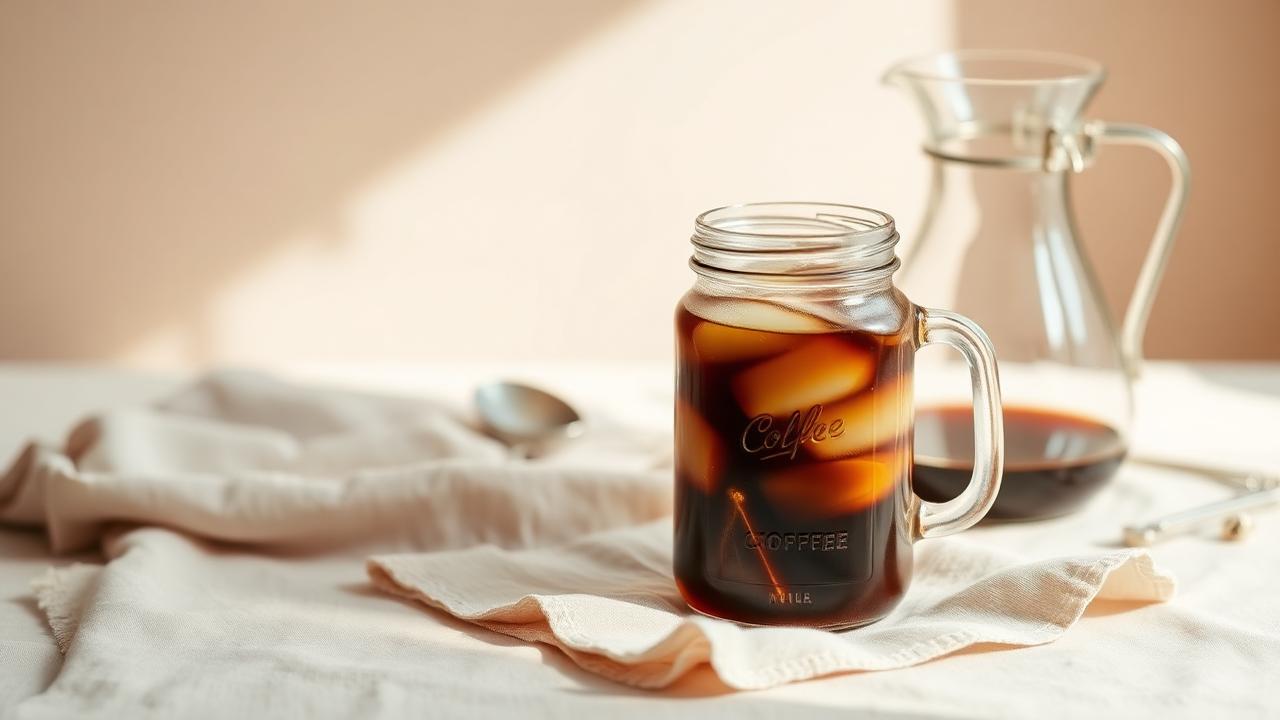
To make iced coffee at home, brew strong coffee or cold-brew concentrate, then cool and dilute it over plenty of ice. For cold brew, steep 100 g coarsely ground coffee in 1 litre cold water for 14 to 18 hours, strain, and serve 1 part concentrate to 1 part water or milk over ice.
Key takeaways
- Use a scale: coffee-to-water ratios matter more than scoop size.
- Cold brew needs coarse grounds and 14 to 18 hours of steeping.
- Brew hot coffee stronger when it will be poured over ice.
- Fill the glass with ice before adding coffee to limit dilution.
- Store strained cold brew in the fridge for up to 7 days.
What is the easiest way to make iced coffee at home?
The easiest way to make iced coffee at home is to brew coffee slightly stronger than usual, pour it over a full glass of ice, and add cold water or milk to taste. This works well when you want a drink immediately. The key is accounting for melting ice: a normal-strength hot coffee becomes thin and watery once it hits the glass.
For a cleaner, smoother result, use filtered water, freshly ground coffee and a digital scale. Coffee that tastes rich when hot may taste muted when cold because low temperatures reduce perceived sweetness and aroma. Brewing a little stronger, then diluting deliberately, gives you more control than trying to rescue a weak drink with extra coffee later.
There are two reliable routes. Flash-chilled iced coffee is brewed hot and cooled directly over ice, preserving lively acidity and aroma. Cold brew is steeped in cold water for many hours, producing a rounder, lower-acidity cup. Choose flash-chilled coffee for brightness and speed; choose cold brew for a mellow drink you can keep in the fridge.
- 01For quick iced coffee, use hot-brewed coffee and ice.
- 02For make-ahead coffee, prepare cold brew concentrate.
- 03Use filtered water where possible; water quality is noticeable in cold drinks.
- 04Avoid pouring warm coffee into a nearly empty glass of ice.
How do you make cold-brew iced coffee step by step?
Cold brew is made by steeping coarse coffee grounds in cold or room-temperature water, then filtering the liquid. It is not simply coffee left to go cold. The long extraction time pulls sweetness, chocolatey notes and body from the coffee while generally avoiding some of the sharpness associated with hot extraction. A coarse grind is essential because fine particles can over-extract, clog filters and leave a muddy texture.
This recipe makes a strong cold-brew concentrate rather than a ready-to-drink batch. Concentrate is practical because it takes less fridge space and can be diluted differently for black iced coffee, iced lattes or sweeter drinks. If you prefer coffee that is ready to pour, use the same method but increase the water to 1.5 litres and serve without much additional dilution.
Use a clean jar, French press or dedicated cold-brew brewer. Keep the vessel covered while steeping so it does not absorb fridge odours. After filtration, taste the concentrate before serving. Good cold brew should taste sweet, rounded and coffee-forward, not sour, gritty or aggressively bitter.
- 011. Weigh 100 g medium-coarse coffee, with particles similar to coarse sea salt.
- 022. Add the coffee to a clean 1.5-litre jar or French press.
- 033. Pour in 1,000 ml filtered cold water and stir for 20 to 30 seconds until all grounds are wet.
- 044. Cover and steep for 14 to 18 hours at 4 to 20 °C.
- 055. Strain through a fine mesh filter, then through paper or clean cloth for a clearer cup.
- 066. Serve 150 ml concentrate with 150 ml cold water or milk over 180 to 220 g ice.
What coffee-to-water ratio should you use for iced coffee?
For cold-brew concentrate, start with a 1:10 coffee-to-water ratio: 100 g coffee to 1,000 ml water. This creates a strong base designed for dilution. For a ready-to-drink cold brew, use roughly 1:15, such as 80 g coffee to 1,200 ml water. These are starting points rather than fixed rules, because coffee variety, roast level, grind and personal preference all affect strength.
For flash-chilled iced coffee, a useful approach is to replace around 35 to 45 percent of your usual brew water with ice in the serving vessel. For example, to make 500 ml of finished coffee, brew 300 ml hot water directly onto 200 g ice. Use about 30 g coffee for this batch when brewing by pour-over, adjusting slightly to suit your dripper and coffee.
Measure by mass rather than spoons. Coffee beans vary in size, density and roast development, so a tablespoon can hold very different amounts. A scale also makes it easier to repeat a recipe that worked. If your drink is too intense after chilling, add water in 20 ml increments; if it is weak, use less dilution next time rather than over-steeping the coffee.
- 01Cold-brew concentrate: 1:10, for example 100 g coffee to 1,000 ml water.
- 02Ready-to-drink cold brew: 1:15, for example 80 g coffee to 1,200 ml water.
- 03Flash-chilled pour-over: 30 g coffee, 300 ml hot water and 200 g ice.
- 04Iced latte starting point: 60 ml concentrate, 180 ml milk and 160 g ice.
Which coffee beans taste best in iced coffee?
The best coffee for iced coffee is one that remains sweet and distinct when cold. Medium and medium-dark roasts are dependable choices because they often bring chocolate, caramel, nut and dried-fruit flavours that pair naturally with ice and milk. They are especially forgiving for cold brew, where delicate floral aromas can be less obvious than in a hot filter coffee.
Lighter roasts can make excellent flash-chilled iced coffee when they have juicy fruit, citrus or tea-like character. Brewing them hot before chilling retains more aroma and gives a brighter, more refreshing cup. With cold brew, very light coffees may taste underdeveloped unless the grind, steep time and filtration are carefully managed. If you are new to the method, begin with a soluble medium roast.
Buy whole beans and grind just before brewing whenever possible. For cold brew, grind coarse; for a flash-chilled pour-over, use the medium grind recommended for your brewer. Coffee stays fresher in whole-bean form, and stale pre-ground coffee can make iced drinks taste flat, papery or bitter. At Capra Café, we would normally choose a chocolate-led coffee for cold brew and a fruit-forward washed coffee for flash-chilled service.
- 01Choose medium roast for easy, chocolatey cold brew.
- 02Choose medium-dark roast for milk drinks and sweeter iced coffee.
- 03Choose light roast for bright flash-chilled filter coffee.
- 04Avoid very dark, oily beans if you dislike smoky or harsh flavours.
How can you make hot-brewed iced coffee without watering it down?
To make hot-brewed iced coffee without excessive dilution, brew directly onto a weighed amount of ice rather than cooling a full mug of coffee afterwards. This technique is often called flash chilling or Japanese-style iced coffee. The ice rapidly cools the coffee, locking in more of the aromatics that make a fresh filter brew appealing. It also means the meltwater is part of the recipe, not an accident.
Start with a sturdy glass server or heat-safe jug containing 200 g ice. Place your dripper on top and brew 30 g medium-ground coffee with 300 ml water at 92 to 96 °C. Bloom with 60 ml water for 30 to 40 seconds, then pour the remaining water in steady stages. Aim to finish the brew in around 2 minutes 45 seconds to 3 minutes 30 seconds, depending on the dripper.
Swirl the finished coffee until the ice has mostly melted, then pour over fresh ice in a chilled glass. Fresh ice matters: the brewing ice has already performed its job, while new ice keeps the serving cold without immediately diluting it further. If you prefer a softer drink, add 30 to 60 ml cold water after tasting rather than changing the brew recipe blindly.
- 01Coffee: 30 g, medium grind.
- 02Brewing water: 300 ml at 92 to 96 °C.
- 03Ice in server: 200 g.
- 04Bloom: 60 ml for 30 to 40 seconds.
- 05Target brew time: 2 minutes 45 seconds to 3 minutes 30 seconds.
- 06Serve over 120 to 160 g fresh ice.
How do you make iced coffee with milk, sugar or flavourings?
For an iced latte-style drink, use a concentrated coffee base so the milk does not overwhelm it. Cold-brew concentrate, espresso or strongly brewed flash-chilled coffee all work. Fill a 350 to 400 ml glass with ice, add 60 to 90 ml cold-brew concentrate, then add 180 to 220 ml cold milk. Stir thoroughly before judging the balance, because the coffee can settle beneath the milk.
Dissolving granulated sugar in a cold drink is difficult. Make a simple syrup instead by combining equal weights of sugar and hot water, such as 100 g sugar with 100 g water, then cooling it. Add 10 to 15 ml at a time. A darker syrup made with brown sugar adds molasses notes, while vanilla, cardamom or cinnamon can be infused into the syrup for a more intentional flavour.
Use milk that suits the coffee and your preference. Full-fat dairy milk brings sweetness and body; oat milk often gives a creamy texture; lighter milks produce a cleaner, less rich drink. Do not add milk to a very hot coffee and then refrigerate it for hours, as the flavour dulls and safe storage becomes more important. Chill the coffee first, then add fresh cold milk when serving.
- 01Black cold brew: 150 ml concentrate, 150 ml water, 200 g ice.
- 02Iced latte: 75 ml concentrate, 200 ml milk, 180 g ice.
- 03Sweetener: begin with 10 ml simple syrup per 350 ml drink.
- 04For a stronger milk drink, use 90 ml concentrate before adding milk.
What mistakes make homemade iced coffee bitter or weak?
A bitter cold brew is commonly caused by grounds that are too fine, steeping for too long, using a very dark roast, or leaving too much sediment in the finished drink. Start by making the grind coarser and reducing steep time to 14 hours. Filter through paper after the first strain if the coffee feels chalky or muddy. Paper removes fine particles and some oils, producing a cleaner flavour.
Weak iced coffee usually comes from using a normal hot-coffee recipe over too much ice, or from diluting cold-brew concentrate too aggressively. Taste the coffee before adding milk, sweetener or extra water. If the concentrate itself tastes strong and pleasant, the problem is in the serving ratio. If it already tastes watery, use more coffee in the next batch rather than steeping it for an extreme length of time.
Sourness can mean under-extraction, especially with very light coffee, too coarse a grind or a short steep. Increase the steep by two hours, not six, and compare the result. Keep notes on coffee dose, water amount, grind and time. Small controlled changes are more useful than changing every variable at once, and they quickly lead to a reliable house recipe.
- 01Bitter and dry: grind coarser, shorten steeping, use a lighter roast.
- 02Muddy: improve filtration with a paper filter.
- 03Weak: reduce dilution or increase coffee dose.
- 04Sour: steep slightly longer or grind marginally finer.
- 05Flat: use fresher beans and filtered water.
How long does homemade cold brew keep in the fridge?
Strained cold-brew concentrate will usually keep well in a sealed, clean bottle in the refrigerator for up to 7 days. Its flavour is best during the first 3 to 5 days, when it is sweetest and most aromatic. Store it at 4 °C or colder, keep milk separate until serving, and label the bottle with the preparation date. Discard it if it develops an unusual smell, visible mould or a distinctly fermented taste.
Do not keep coffee grounds soaking indefinitely in the fridge. Once the desired steep time has passed, filter the brew promptly. Leaving grounds in contact with the liquid can make the coffee woody, bitter and murky. It also makes it harder to identify the recipe that produced your preferred result, since the extraction continues slowly while the grounds remain present.
Prepare only as much as you can reasonably drink in a week. A 1-litre concentrate batch yields about 1.8 to 2 litres of finished iced coffee once diluted, depending on your serving ratio. That is enough for several drinks without requiring a large container. For a café-style routine at home, make one batch on a quiet evening and portion it throughout the week.
- 01Store strained cold brew in a sealed bottle at 4 °C or colder.
- 02Use within 7 days for quality and freshness.
- 03Keep milk, cream and syrups separate until serving.
- 04Filter grounds out as soon as steeping is complete.
Frequently asked questions
Can you make iced coffee with regular hot coffee?
Yes. Brew regular coffee stronger than you would drink hot, then pour it over a full glass of ice. For better flavour, use a flash-chilled recipe: brew 30 g coffee with 300 ml water directly onto 200 g ice. The melting ice becomes part of the final drink, so it cools quickly without tasting excessively watered down.
How long should cold brew steep?
Most cold brew tastes balanced after 14 to 18 hours of steeping. Start at 16 hours with a medium roast and coarse grind, then adjust from there. Shorter steeping can taste thin or sour, while much longer steeping may become woody, bitter or dull. Temperature also matters: a warmer room usually requires less time than a cold refrigerator.
Do you need special coffee for cold brew?
You do not need special coffee, but whole beans ground coarsely produce the best result. Medium or medium-dark roasts are easy starting points because their chocolate, caramel and nutty notes remain clear when chilled. Freshly roasted beans, clean water and accurate weighing have a larger impact than buying a coffee labelled specifically for cold brew.
Is cold brew stronger than iced coffee?
Cold brew concentrate is stronger than most iced coffee because it is designed to be diluted with water, milk and ice. Ready-to-drink cold brew may be similar in strength to standard coffee once diluted. Strength depends on the coffee-to-water ratio and serving recipe, not simply the brewing method. Taste and adjust dilution to suit your preferred intensity.
Can you make cold brew without a coffee maker?
Yes. Use a large clean jar, coarse coffee grounds, cold water and a filter. Steep 100 g coffee in 1,000 ml water for 14 to 18 hours, then strain through a sieve lined with paper filter, clean cloth or a coffee filter. A French press can also work, but a second paper filtration gives a clearer, less gritty drink.
Keep reading
- Best Beans for Cold Brew Coffee: A Clear Guide
- Cold Brew Ratio Calculator Guide
- Cold Brew vs Iced Coffee Difference Explained