Equipment · 8 min read
How to Clean a Coffee Grinder Properly
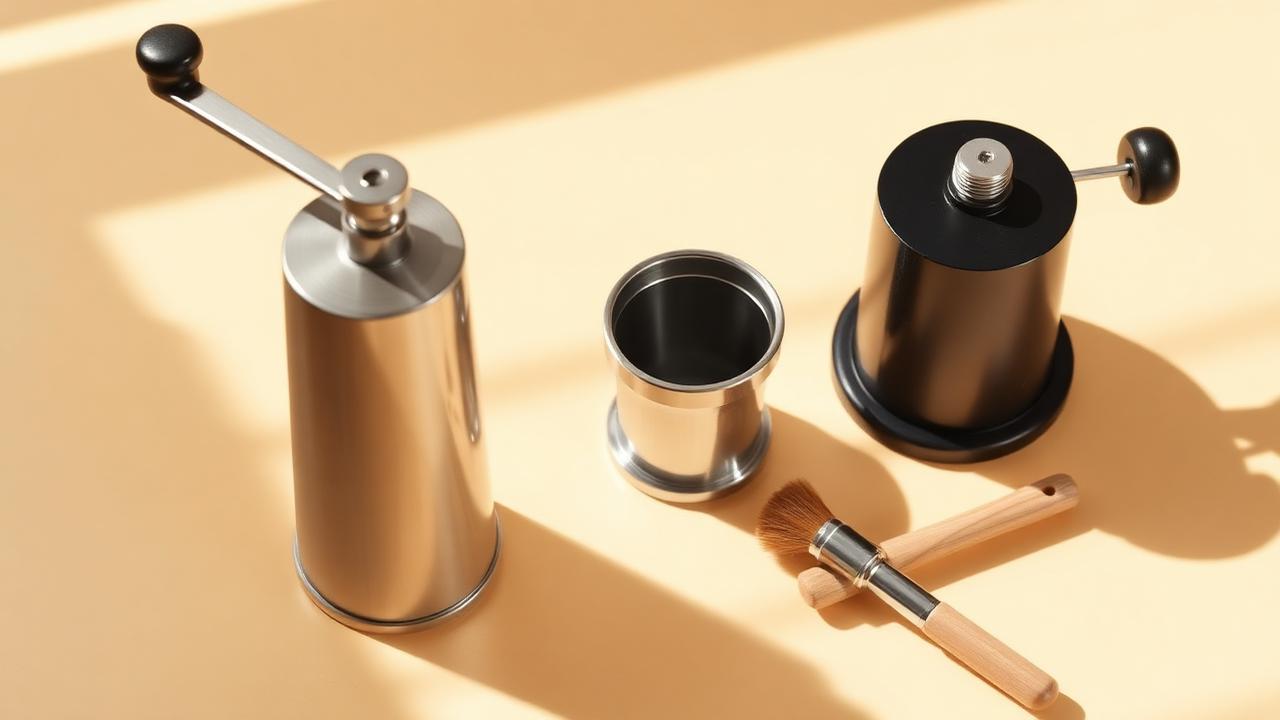
Short answer
To clean a coffee grinder, unplug it, empty the hopper, brush out loose grounds, and wipe removable non-electrical parts with a dry or barely damp cloth. For burr grinders, remove the upper burr according to the manual and brush both burrs and the grind chamber. Never rinse the motor housing or use water on burrs.
Key takeaways
- Brush out retained grounds after every few uses to prevent stale flavours.
- Deep-clean burrs and the grind chamber every 2 to 4 weeks for regular home use.
- Keep water away from burrs, motors and electronic controls.
- Use grinder cleaning pellets sparingly and follow with a small purge of coffee.
- Reassemble carefully and check the grind setting before making coffee.
Why should you clean a coffee grinder?
A coffee grinder should be cleaned because old grounds and coffee oils build up inside the burrs, chute and grind chamber. Those residues go stale quickly, even when the coffee in your bag is fresh. They can make a clean, sweet coffee taste flat, woody, bitter or oddly rancid. Retained grounds also mix yesterday’s coffee with today’s, which matters when changing between roasts, decaf and regular coffee.
Cleaning also supports more consistent grinding. Fine coffee particles can compact around the burrs and in the exit chute, reducing the space through which ground coffee travels. This may lead to clumping, slower dispensing, inconsistent doses and changing espresso shot times. In a filter grinder, retained coffee can make it harder to weigh an accurate dose and repeat a recipe.
The right cleaning frequency depends on use, roast level and grinder design. Darker roasts leave more surface oil than lighter roasts, while espresso grinding creates more fine particles than coarse filter grinding. A home grinder used once or twice a day does not need a full strip-down every morning, but it does benefit from regular brushing and a planned deeper clean.
- 01Brush loose grounds: every 2 to 7 days
- 02Clean the hopper and grounds bin: weekly
- 03Deep-clean burrs and chamber: every 2 to 4 weeks
- 04Deep-clean an espresso grinder used several times daily: weekly or fortnightly
- 05Clean immediately after grinding flavoured coffee or switching from decaf
What tools do you need to clean a coffee grinder?
Most grinders can be cleaned with a small set of simple tools. A stiff grinder brush is the most useful item because it reaches the burr teeth and chamber walls without damaging them. A soft pastry brush or clean paintbrush can work well too, provided it has not been used with food oils, paint or chemicals. A narrow vacuum nozzle is helpful for collecting loosened grounds, but it should not replace brushing.
Keep a dry microfibre cloth for wiping the hopper, lid, grounds bin and outside of the grinder. A wooden cocktail stick, bamboo skewer or soft nylon pick can help loosen compacted coffee around the chute. Avoid metal tools near burr edges, switches and plastic parts. They can scratch surfaces, bend delicate components or leave fragments behind.
Grinder cleaning pellets are optional. These food-safe pellets are designed to absorb some coffee oil and push loose residue through the grinding path. They are useful between deeper cleans, especially in grinders with a difficult-to-access chute. They do not remove the need to brush the burrs, and they should not be used in every grinder without checking the manufacturer’s instructions.
- 01Grinder brush or clean stiff pastry brush
- 02Dry microfibre cloth
- 03Vacuum with a narrow nozzle, optional
- 04Wooden or nylon pick for the chute
- 05Grinder cleaning pellets, optional
- 06The grinder manual for burr removal and recalibration guidance
How do you clean a burr coffee grinder step by step?
Start by switching off and unplugging the grinder. Remove any beans from the hopper and run the grinder briefly, usually 5 to 10 seconds, to clear beans remaining between the burrs. Do this only while the grinder is still assembled. Once the motor has stopped, unplug it again before removing the hopper, burr carrier or any part near the grinding mechanism.
Take off the hopper and empty it fully. If the hopper is removable, wash it only if the manufacturer permits it, using warm water and a small amount of unscented washing-up liquid. Rinse thoroughly and allow it to dry completely. Even a few drops of water can cause coffee grounds to clump and can encourage corrosion on some metal parts. The grinder body should only be wiped with a slightly damp cloth, then dried.
Remove the upper burr or burr carrier following the grinder’s manual. Many domestic grinders use a twist-lock or lift-out upper burr, while others need a specific setting before removal. Brush the upper burr, lower burr and chamber thoroughly. Work around the burr teeth rather than forcing the brush into them. Use a vacuum to lift away loose particles after brushing, paying particular attention to the chute where fines often collect.
Reinstall the burr exactly as designed and return the grind setting to your usual starting point. On some grinders, taking apart the burr carrier can alter the indicated setting or expose a calibration point. Grind and discard 5 to 10 g of coffee after reassembly to clear remaining debris and confirm normal flow. Then make a test brew and adjust the grind only if the result or brew time calls for it.
- 011. Empty beans and run the grinder for 5 to 10 seconds
- 022. Switch off and unplug the grinder
- 033. Remove hopper, upper burr and grounds bin as instructed
- 044. Brush burrs, chamber and chute for 30 to 60 seconds
- 055. Vacuum or tap out loosened grounds
- 066. Reassemble, then purge 5 to 10 g of coffee
How do you clean a blade coffee grinder?
Blade coffee grinders are simpler to clean, but they need the same care around electricity and moisture. Unplug the grinder first, remove the lid and tip out all visible grounds. Hold the grinder upside down over a bin and gently tap the base with your palm to dislodge coffee caught beneath the blade. Do not strike it on a hard counter, as this can damage the motor mount or plastic housing.
Use a dry brush to sweep grounds from around the blade and into the corners of the bowl. Keep fingers away from the blade edge even when the grinder is unplugged. A dry cloth wrapped around a wooden spoon handle can reach awkward areas. If the manufacturer states that the grinding bowl is removable and washable, clean it separately and dry it completely before putting it back.
For fixed-bowl blade grinders, do not pour water into the bowl or immerse the appliance. If coffee oil has built up, wipe the interior carefully with a cloth that is only barely damp, then immediately dry it with a second cloth. Let the grinder stand open until no moisture remains. Rice is sometimes suggested as a cleaning method, but it can be hard on some blades and motors, so it is better to use approved cleaning pellets or a brush.
- 01Unplug before touching the blade chamber
- 02Use a dry brush first, not water
- 03Do not immerse a fixed-bowl grinder
- 04Dry every washable part fully before reassembly
- 05Avoid rice unless the grinder manufacturer specifically approves it
Can you use water, rice or cleaning pellets in a coffee grinder?
Water is safe only for removable parts that the manufacturer says are washable, usually the hopper, lid and grounds bin. Burrs, grinding chambers, motors and electrical housings should remain dry. Water can make coffee residue stick more firmly, cause steel burrs to corrode and create a safety risk if it reaches electrical components. If you wash a hopper, leave it to air-dry fully rather than wiping it quickly and assuming it is ready.
Uncooked rice is not a universal grinder cleaner. It may help dislodge residue in a robust blade grinder, but it is harder than roasted coffee beans and can put unnecessary stress on domestic burr grinders. It can also leave starch dust behind, particularly in the chute. If your grinder manual does not specifically recommend rice, do not use it as a cleaning method.
Cleaning pellets are a better option when used as directed. They are made for grinders and can help absorb oil while moving through the burrs and exit path. Use the stated dose from the product instructions, then grind a small quantity of coffee afterwards and discard it. Pellets are best treated as maintenance between manual cleans, not as a substitute for removing accumulated coffee from the burrs.
How often should you deep-clean your grinder?
For most home coffee drinkers, a proper burr clean every 2 to 4 weeks is a sensible baseline. If you make one filter coffee each morning with a light or medium roast, monthly cleaning may be enough. If you make several espressos a day, use a dark roast or notice clumps and inconsistent doses, clean more often. Commercial grinders require a more disciplined routine because throughput is much higher and flavour defects affect every drink served.
Use what you see and taste as practical signals. An unexplained bitter, oily or stale flavour can point to old residue, particularly if the coffee is otherwise fresh. A grinder that suddenly retains more coffee, throws grounds unevenly, or produces a slower espresso dose may have a blocked chute. Before changing a recipe dramatically, clean the grinder and check whether the issue improves.
When changing coffee, a quick purge is usually sufficient. Grind 2 to 5 g of the new coffee through the grinder to move out most of the old coffee. If you are switching between regular and decaf, or from a very dark roast to a delicate light roast, brush the chamber first where possible. This reduces flavour carryover and makes dialling in the next coffee more predictable.
- 01Light home use: deep-clean every 4 weeks
- 02Daily espresso use: deep-clean every 1 to 2 weeks
- 03After flavoured coffee: clean before the next coffee
- 04After a long period unused: inspect and clean before brewing
- 05When changing coffee: purge 2 to 5 g
How do you clean the grinder chute and remove retained coffee?
The chute is the narrow passage that carries grounds from the burrs to the dosing cup or portafilter. It is often where stale coffee accumulates, especially in espresso grinders. A grinder can appear clean from above while holding several grams of compacted coffee in the chute. That retained coffee is one reason the first dose of the day can taste different from later doses.
After removing the hopper and upper burr, brush towards the chute rather than packing grounds further into it. Use a wooden pick or the handle of a small brush to break up visible clumps gently. If your grinder has a removable chute cover, take it off only according to the manual. A narrow vacuum nozzle can then pull out loosened particles without forcing anything deeper into the machine.
Some grinders benefit from a gentle bellows attachment that pushes air through the outlet after grinding. This can reduce retention, but it should be used carefully and only where compatible with the design. Strong compressed air is not recommended for domestic grinders because it can drive fines into switches, bearings and other areas that are not intended to collect coffee dust.
What should you avoid when cleaning a coffee grinder?
Never clean a plugged-in grinder or reach into a blade chamber while it is connected to power. Do not spray cleaner directly onto the grinder, pour water into the grinding mechanism or immerse the motor housing. Household degreasers, perfumed wipes and strong detergents can leave residues that affect coffee flavour and may damage plastic or rubber parts.
Avoid using sharp metal objects to scrape burrs or compacted grounds. Burr edges are engineered to a precise shape, and unnecessary contact can damage them or alter performance. Do not force a burr carrier back into place if it does not seat easily. Stop, check the alignment marks and consult the manual. A misaligned burr can produce uneven particles and may damage the grinder when it starts.
Do not assume every grinder can be dismantled in the same way. Some models allow simple upper-burr removal, while others require tools, recalibration or professional servicing. If you cannot access the lower burr safely, brush what you can reach, use approved cleaning pellets if appropriate and arrange service when performance declines. At Capra Café, we treat a clean grinder as part of recipe control, not an occasional cosmetic task.
Frequently asked questions
How often should I clean my coffee grinder?
Brush out loose grounds every few days and deep-clean a home burr grinder every 2 to 4 weeks. Clean more often if you make several espressos daily, use oily dark roasts or see clumping in the chute. A blade grinder should be brushed after use and wiped when coffee oils become visible. Regular cleaning improves flavour consistency and reduces stale coffee carryover.
Can I wash coffee grinder burrs with water?
No, do not wash coffee grinder burrs with water unless the manufacturer explicitly states that a particular removable part is washable. Most steel burrs should be cleaned dry with a brush and vacuum. Water can cause corrosion, make fines stick to the burrs and leave moisture inside the grinder. Wash only approved removable plastic parts, then dry them completely before reassembly.
Can I use rice to clean a burr coffee grinder?
Rice is not recommended for most burr coffee grinders unless the manufacturer specifically approves it. Uncooked rice is harder than roasted coffee and may place extra strain on domestic grinder motors and burrs. It can also leave starch dust in the grind path. Use a brush for routine cleaning, or use purpose-made grinder cleaning pellets followed by a 5 to 10 g coffee purge.
Why does my coffee taste stale after I clean the grinder?
Coffee can still taste stale after cleaning if old grounds remain in the chute, the hopper was not fully dried, or the coffee itself is past its best. Brush the chute carefully and purge 5 to 10 g of fresh coffee after reassembly. Also check that no scented cleaner or detergent residue has touched the hopper or grounds bin, as this can noticeably affect flavour.
Do grinder cleaning pellets affect coffee flavour?
Cleaning pellets can leave a temporary residue if you do not purge the grinder afterwards. After using pellets, grind and discard 5 to 10 g of coffee before making a drink. Used correctly, pellets should not permanently affect flavour. They are useful for clearing oils and loose grounds, but manual brushing remains essential because pellets cannot fully clean burr teeth, the chamber and every chute corner.
Keep reading
- Burr vs Blade Grinder Difference Explained
- Do You Need a Scale for Coffee?
- French Press vs AeroPress Comparison Guide