Equipment · 8 min read
How to Choose a Coffee Grinder
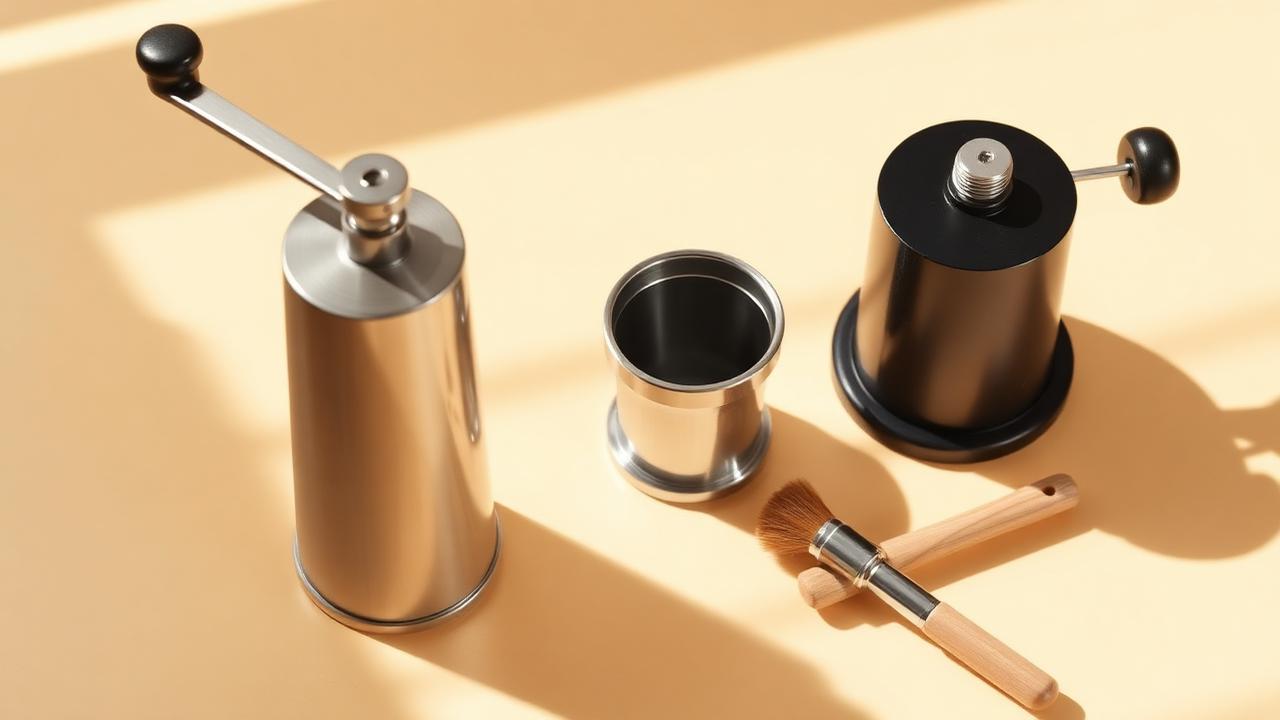
Short answer
To choose a coffee grinder, first match it to your brew method, then prioritise burrs over blades, consistent particle size, a practical grind range and easy adjustment. Espresso needs fine, precise settings; filter coffee needs uniform medium grinds. Buy the best burr grinder your budget allows, ideally one that can be cleaned and maintained easily.
Key takeaways
- Choose burrs, not blade choppers, for repeatable coffee.
- Buy for your main brew method rather than the widest possible range.
- Espresso requires finer, more precise adjustment than filter coffee.
- Low retention and easy cleaning improve freshness and consistency.
- A good grinder usually matters more than an expensive brewer.
Why does the grinder matter so much?
A coffee grinder determines the size and uniformity of the coffee particles you brew. That affects how quickly water extracts flavour from the grounds. When particles are similar in size, brewing is easier to control: the cup is sweeter, clearer and more balanced. When a grinder produces a broad mix of large chunks and fine powder, some coffee under-extracts while the smallest particles over-extract. The result can taste thin, sour, bitter or dry at the same time.
Freshly ground coffee also loses aroma quickly. Roasted beans protect many of their volatile aromatic compounds until they are broken apart. Once ground, the increased surface area exposes those compounds to oxygen. Grinding immediately before brewing is therefore one of the most meaningful improvements a home coffee drinker can make, whether they use a cafetière, V60, moka pot or espresso machine.
At Capra Café, we teach customers to view the grinder as part of the brewer, not an optional accessory. A modest dripper paired with a capable grinder can make excellent coffee. A premium espresso machine or brewer cannot fully compensate for uneven grounds. Start with the coffee you make most often, then choose a grinder that gives you reliable control over that specific recipe.
- 01Uneven grounds create uneven extraction.
- 02Fresh grinding preserves aroma and flavour.
- 03Fine brewing methods expose grinder weaknesses most clearly.
- 04Consistency is more useful than a long list of features.
Should you buy a blade grinder or a burr grinder?
Choose a burr grinder if you want dependable coffee. Blade grinders use a spinning blade to chop beans into irregular pieces. The longer they run, the finer the average grind becomes, but they cannot reliably create one grind size. They also create friction and can warm the coffee during longer grinding. Blade grinders are inexpensive, but their inconsistency makes it difficult to repeat a successful brew.
Burr grinders crush beans between two shaped surfaces, called burrs. The distance between the burrs determines the grind size. This creates a much more controlled distribution of particles and allows you to return to a setting after adjusting it. Burr grinders are available as hand grinders and electric grinders, with models suited to everything from simple filter brewing to demanding espresso.
There are two common burr shapes: conical and flat. Conical burrs are common in home grinders, often quieter and forgiving at lower speeds. Flat burrs are popular in many café and espresso grinders because they can deliver highly uniform results, though the burr shape alone does not guarantee quality. Build quality, alignment, motor design, adjustment system and burr geometry all matter more than marketing claims about a single burr type.
- 01Blade grinder: lowest cost, poor consistency, limited control.
- 02Conical burr grinder: versatile, common and suitable for many home setups.
- 03Flat burr grinder: often chosen for precision and high-volume grinding.
- 04Hand burr grinder: quiet, portable and often excellent value.
What grind range do you need for your brew method?
Choose a grinder for the brewing method you use most, not the method you may try once a month. Filter coffee generally needs medium-fine to coarse grinds, depending on the brewer. Espresso requires very fine grounds and tiny changes in adjustment can alter shot time by several seconds. A grinder that performs well for French press may not have the precision needed for espresso, while an espresso-focused grinder may be unnecessarily slow or awkward for large batches of filter coffee.
For pour-over, batch brew and AeroPress, look for a grinder with a useful filter range and clear, repeatable settings. For a cafetière, consistency still matters even though the grind is coarser; excessive fines can pass through the mesh and leave a muddy, bitter cup. For moka pots, choose a grinder that can reach a fine but not espresso-powder setting. Turkish coffee requires an exceptionally fine grind and should only be attempted with a grinder explicitly designed for it.
If you regularly switch between espresso and filter coffee, assess how easy it is to move between settings and return accurately. Stepped grinders use fixed click positions, which are convenient and repeatable. Stepless grinders allow near-continuous movement and are especially useful for dialling in espresso. Some grinders offer a large number of fine steps, combining the practicality of clicks with enough precision for home espresso.
- 01Espresso: fine grind, narrow adjustment changes, high precision.
- 02Moka pot: fine grind, usually slightly coarser than espresso.
- 03V60 and AeroPress: medium-fine to medium, depending on recipe.
- 04Batch brewer: medium grind with reliable uniformity.
- 05Cafetière: medium-coarse to coarse, with minimal fines.
How do you match grinder settings to a practical recipe?
A grinder should make it straightforward to work from a recipe and adjust one variable at a time. Start with a sensible dose, water quantity, temperature and brew time. If the coffee tastes sharp, salty or weak, grind finer or extend contact time. If it tastes bitter, hollow or drying, grind coarser or shorten contact time. Do not change dose, water temperature and grind size all at once, or you will not know which adjustment improved the cup.
For espresso, use a scale and timer from the beginning. A typical starting point is 18 g of dry coffee yielding 36 g of espresso in about 25 to 30 seconds, measured from the start of the pump. This is only a starting recipe: different coffees may taste better at 17 g, 19 g, a 1:1.5 ratio or a 1:2.5 ratio. The key is having a grinder fine enough, and adjustable enough, to make useful changes.
For filter coffee, a dependable grinder lets you target brew time without producing harsh fines. Begin with a 1:16 ratio, such as 20 g coffee to 320 ml water, and use water at 92 to 96 °C for most light to medium roasts. A V60 brew might finish in 2 minutes 30 seconds to 3 minutes 30 seconds, while a cafetière may steep for 4 minutes. Treat these numbers as a controlled baseline rather than rigid rules.
- 011. Espresso starting point: 18 g in, 36 g out, 25 to 30 seconds.
- 022. Filter starting point: 20 g coffee to 320 ml water.
- 033. Water temperature: 92 to 96 °C for most filter coffee.
- 044. V60 target time: about 2 minutes 30 seconds to 3 minutes 30 seconds.
- 055. Cafetière steep: 4 minutes before pressing slowly.
Should you choose a manual or electric coffee grinder?
A manual grinder is a strong choice for one or two cups of filter coffee, travel, smaller kitchens and buyers seeking good burr quality for the price. Better hand grinders use steel or ceramic burrs, stable shafts and precise click adjustments. They are quiet and do not require electricity. Their main trade-off is effort: grinding 15 to 25 g for a single brew is manageable for most people, but grinding 60 g for a larger cafetière can be tiring.
An electric grinder is more convenient for daily use, shared households and espresso. Espresso frequently requires repeated adjustments and several doses while dialling in a new bag of coffee; an electric grinder reduces the physical effort. Look beyond motor power. A well-designed grinder should feed beans evenly, keep heat under control, avoid excessive static and offer an adjustment system that is easy to use without losing your previous setting.
Consider your routine honestly. If you make one 250 ml pour-over each morning, a quality manual grinder may be the most sensible purchase. If you make milk drinks, prepare multiple coffees or want espresso before work, electric convenience may justify the added cost. The best grinder is not the most complex model; it is the one you will use consistently and maintain properly.
- 01Choose manual for travel, quiet use and one or two daily doses.
- 02Choose electric for speed, multiple drinks and regular espresso.
- 03Check hopper capacity if you brew for several people.
- 04Consider single-dosing if you change coffees frequently.
Which grinder features are worth paying for?
Prioritise features that improve consistency, repeatability and cleaning. A stable burr carrier helps keep burrs aligned, which supports more even grinding. A clearly marked adjustment collar or numbered dial makes it easier to record a successful setting. For espresso, fine adjustment is essential; large jumps between settings can leave you choosing between a shot that runs too fast and one that chokes the machine.
Retention is the amount of ground coffee left inside the grinder after use. High retention means yesterday's coffee can mix with today's dose, which matters most when changing beans or making small espresso adjustments. Single-dose grinders often use a small hopper or bellows to reduce retained grounds, but they are not automatically better for every household. A traditional hopper grinder can be practical when you use the same coffee each day.
Also examine daily usability. Can you remove the burrs for cleaning without losing calibration? Does the grounds cup fit beneath the chute? Does the grinder make a mess from static? Can it grind directly into a portafilter, dosing cup or filter basket? Replacement burr availability and local service support matter because grinders are mechanical tools intended to be used for years, not discarded after a short warranty period.
- 01Useful: precise adjustment, low retention, accessible burrs and stable construction.
- 02Useful for espresso: fine or stepless adjustment and a portafilter-friendly chute.
- 03Useful for filter: repeatable settings and a grounds cup that suits your brewer.
- 04Less important: oversized displays, decorative finishes and vague speed claims.
How much should you spend on a coffee grinder?
Set a budget after deciding whether you need espresso capability. For filter coffee, a well-made manual burr grinder can offer excellent value, while entry-level electric burr grinders provide convenience with some compromise in grind uniformity and adjustment range. Spend enough to avoid a blade grinder if flavour and repeatability matter to you. The difference between chopping beans and grinding them consistently is immediately noticeable in most brewing methods.
Espresso changes the calculation because the grinder must make extremely small, repeatable adjustments. Entry-level espresso-capable grinders can work, but they may be slower, louder or less convenient when switching between coffees. Buying a grinder marketed simply as suitable for espresso is not enough; check whether users can make fine changes around the setting where an 18 g dose reaches the desired yield in roughly 25 to 30 seconds.
Avoid stretching your budget for features you will not use. If you brew only cafetière coffee, you do not need an espresso-focused stepless grinder. If you expect to buy an espresso machine soon, however, it can be wiser to choose a grinder with genuine espresso adjustment now than replace a filter-only model later. Reserve a small amount for a 0.1 g scale, cleaning brush and airtight coffee storage.
- 01Filter-only buyers should prioritise burr quality and repeatable settings.
- 02Espresso buyers should prioritise precise fine adjustment before extra features.
- 03A scale measuring to 0.1 g is valuable for espresso and filter recipes.
- 04Include cleaning tools and fresh coffee in the overall budget.
What should you check before buying a coffee grinder?
Before buying, make a short checklist based on your real habits: brew method, number of drinks, typical dose, noise tolerance, counter space and whether you change coffees often. Read the manufacturer's stated use case, but also look for practical details such as burr size, adjustment type, hopper capacity, weight, cleaning access and availability of spare parts. Product photographs rarely reveal whether a grinder is pleasant to use every morning.
If possible, handle the grinder in person. Turn the adjustment dial, remove the grounds cup and check whether the lid, hopper and catch cup feel secure. For manual grinders, test the handle and grip. For electric models, ask how the burrs are cleaned and whether recalibration is required after removal. A grinder with excellent specifications but frustrating workflow may sit unused.
Once you choose a grinder, give yourself time to learn it. Record your coffee dose, setting, yield and brewing time for several brews. Clean loose grounds from the chute every few days, depending on use, and clean burrs according to the manufacturer's guidance. Fresh beans, accurate weighing and calm, systematic adjustment will help you get more from the grinder than constantly chasing a new piece of equipment.
- 01Confirm your main brew method and daily coffee volume.
- 02Check adjustment precision, burr access and retained coffee.
- 03Measure available counter height, especially below cupboards.
- 04Ask whether replacement burrs and servicing are available.
- 05Record successful settings for each coffee you buy.
Frequently asked questions
What type of coffee grinder is best for home use?
For most home users, a burr grinder is best because it produces more even grounds than a blade grinder. Choose a manual burr grinder for one or two daily filter coffees and portability, or an electric burr grinder for convenience, multiple drinks or espresso. The right model should suit your main brew method and allow repeatable grind adjustments.
Can one coffee grinder work for espresso and filter coffee?
Yes, but not every grinder does both equally well. A suitable all-purpose grinder needs a broad grind range and fine enough adjustment for espresso. Filter brewing is generally more forgiving, while espresso demands tiny, repeatable setting changes. If you make espresso often, choose espresso performance first; if you mainly brew filter coffee, prioritise filter consistency and easy switching.
Is a manual coffee grinder better than an electric grinder?
A manual grinder is not inherently better, but it can offer excellent burr quality and adjustment precision for its price. It suits small doses, quiet homes and travel. An electric grinder is better for speed, larger doses and frequent espresso preparation. Compare grind consistency, adjustment range and workflow rather than choosing solely by whether the grinder has a motor.
How do I know if my coffee grinder is good enough for espresso?
A grinder is good enough for espresso if it can grind fine enough and make small, repeatable adjustments around the correct setting. As a test starting point, it should help you brew 18 g of coffee to about 36 g of espresso in 25 to 30 seconds, then allow useful changes when the shot tastes too sour or too bitter.
How often should you clean a coffee grinder?
Brush out loose grounds every few days if you use the grinder daily, especially around the chute and grounds cup. Clean the burrs more thoroughly every few weeks or when you notice stale odours, increased retention or slower grinding. Follow the manufacturer's instructions and do not wash burrs unless the manufacturer specifically permits it; moisture can cause corrosion.
Keep reading
- Burr vs Blade Grinder Difference Explained
- Do You Need a Scale for Coffee?
- French Press vs AeroPress Comparison Guide